

 English
 English
 русский
 Español
- Type:
- Industry News
- Date
- 2025-Apr-01
Industry News
Unleash Your Creativity with Watercolor Markers
Watercolor markers are revolutionizing the art world, offering the perfect blend of convenience and artistic expression. Whether you're a beginner or a seasoned artist, these innovative markers provide a versatile and mess-free way to create stunning watercolor effects without the need for traditional brushes and palettes.
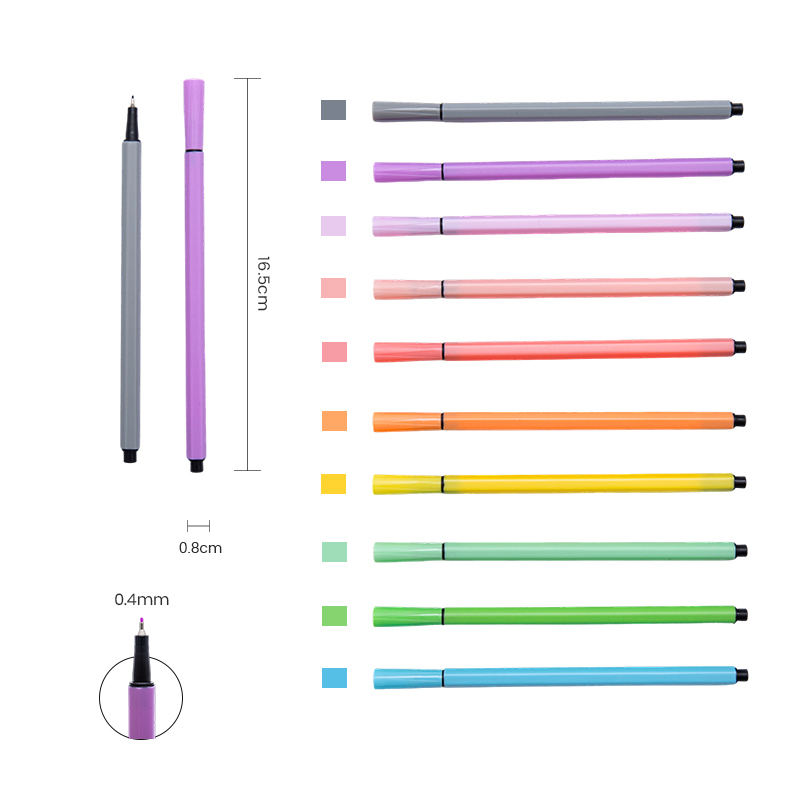
What Are Watercolor Markers?
Watercolor markers are specially designed markers filled with water-based ink that mimics the fluidity and blending properties of traditional watercolors. Equipped with flexible brush tips or fine tips, they allow for both bold strokes and delicate details. Artists love them for their ability to create seamless gradients, soft washes, and intricate illustrations with ease.
Benefits of Using Watercolor Markers
Effortless Blending – Easily mix and layer colors to create smooth transitions and gradients.
Mess-Free Painting – Unlike traditional watercolors, there’s no need for multiple brushes or water cups.
Portable & Convenient – Perfect for artists on the go, these markers eliminate the hassle of carrying paints and palettes.
Versatile Application – Suitable for sketching, calligraphy, hand lettering, and mixed-media artwork.
Beginner & Kid-Friendly – Watercolor markers are easy to use, making them great for artists of all skill levels.
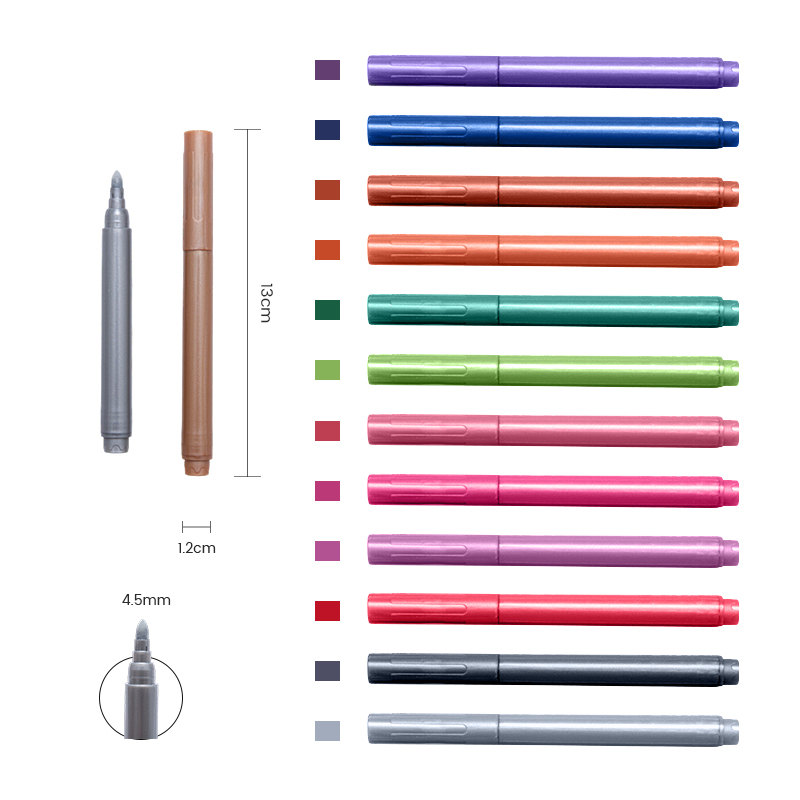
Understanding the Popularity of Watercolor Markers
Watercolor markers have become a widely used tool in creative, educational, and professional settings. Their popularity is not the result of a single trend, but rather a combination of practical features and evolving user needs.
Accessibility and Ease of Use
One of the primary reasons watercolor markers are popular is their accessibility. Unlike traditional watercolor paints, which often require palettes, brushes, water containers, and surface preparation, watercolor markers simplify the process. Users can apply color directly from the marker tip, reducing setup time and the learning curve.
For beginners, this ease of use is especially important. Watercolor markers allow new users to experiment with blending, shading, and gradients without needing advanced techniques. Even without prior art training, individuals can achieve visually pleasing results. This makes the medium approachable for students, hobbyists, and casual creators.
At the same time, experienced artists benefit from the control watercolor markers offer. Fine tips and brush tips enable detailed work, while water-reactive ink allows for smooth transitions. The balance between simplicity and creative potential contributes significantly to their widespread appeal.
Versatility Across Creative and Practical Applications
Another key factor driving popularity is versatility. Watercolor markers are not limited to traditional art projects. They are commonly used in hand lettering, journaling, sketching, fashion design drafts, and educational illustrations. This wide range of applications makes them attractive to users who want a single tool that can adapt to different tasks.
The ability to blend colors using water or a blending pen adds to their flexibility. Users can choose between bold, marker-like strokes or softer watercolor effects, depending on technique. This dual function allows watercolor markers to bridge the gap between drawing and painting.
In practical settings, such as classrooms or workshops, their versatility reduces the need for multiple supplies. Teachers and facilitators can introduce color theory, shading, and composition using one consistent medium. This adaptability supports creative exploration while maintaining organization and efficiency.
Portability and Workspace Efficiency
Portability is another perspective that explains the growing popularity of watercolor markers. Compared to traditional watercolor sets, markers are compact and easy to transport. There is no need to carry liquid paint, water containers, or cleaning materials, which makes them suitable for travel and outdoor use.
For individuals working in limited spaces, such as small studios or home offices, watercolor markers offer a cleaner and more controlled alternative. They minimize spills and reduce cleanup time, allowing users to focus more on the creative process. This efficiency aligns well with modern lifestyles that prioritize convenience and flexible work environments.
The portability factor also appeals to professionals who sketch ideas on the go, such as designers or architects. Watercolor markers allow for quick visual expression without compromising color quality, making them a practical choice for mobile creative work.
Visual Appeal and Learning Value
The visual qualities of watercolor markers play a significant role in their popularity. The transparent nature of the ink produces soft color transitions that are visually appealing without appearing heavy or overly saturated. This aesthetic suits current preferences for clean, balanced, and expressive visuals.
From an educational standpoint, watercolor markers are effective learning tools. They help users understand color blending, layering, and tonal variation in a controlled way. Because mistakes can often be softened with water or layered over, users feel more comfortable experimenting. This encourages creative confidence and sustained engagement.
Social media and digital sharing have amplified their appeal. The visually pleasing results created with watercolor markers translate well into photos and videos, inspiring others to try the medium. While trends may influence awareness, the lasting popularity of watercolor markers is rooted in their practical and educational value.
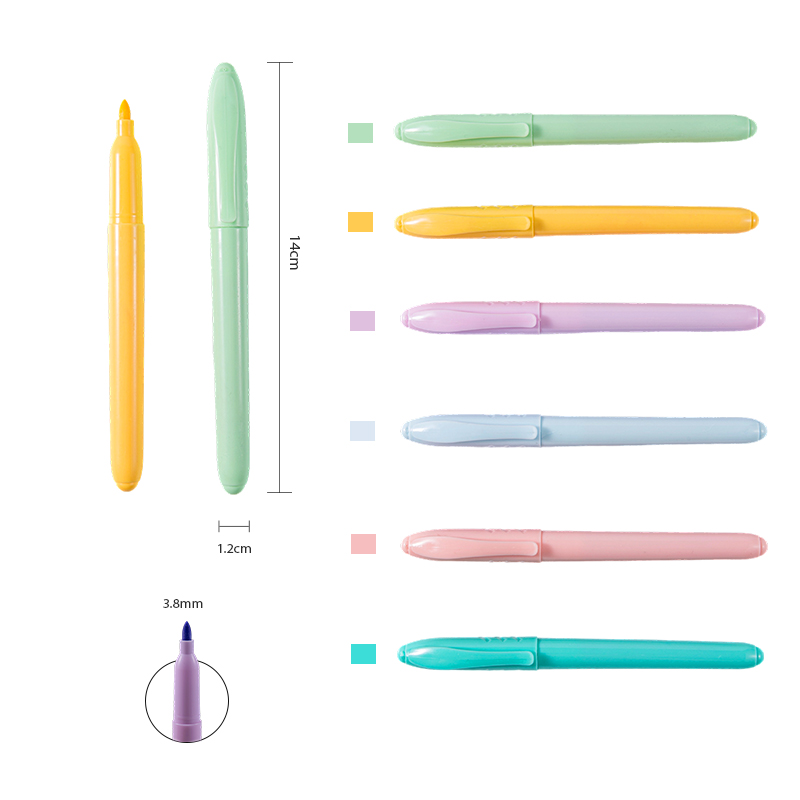
Dual-tip watercolor markers combine flexibility and convenience, making them a popular choice for artists, students, and creative professionals. By offering two different tips in one marker, they allow users to switch techniques without changing tools. The following frequently asked questions address key aspects of dual-tip watercolor markers and explain their practical value.
What are dual-tip watercolor markers and how do they work?
Dual-tip watercolor markers are markers designed with two distinct tips, usually a brush tip on one end and a fine or chisel tip on the other. Both tips are connected to the same water-based ink reservoir, which means the color remains consistent regardless of which tip is used. The brush tip is flexible and responsive to pressure, making it suitable for expressive strokes, shading, and blending. The finer tip, by contrast, is designed for outlining, lettering, or adding details.
The ink used in these markers is water-reactive. This allows users to blend colors with water, a damp brush, or a blending pen, creating effects similar to traditional watercolor painting. Because both tips share the same ink system, transitions between broad strokes and fine details feel natural and efficient during the creative process.
What are the main advantages of using dual-tip watercolor markers?
One of the primary advantages of dual-tip watercolor markers is efficiency. Having two tips in one marker reduces the need to switch tools, which helps maintain creative flow. This is particularly useful for projects that require both detailed line work and broader color application, such as illustration, hand lettering, or journaling.
Another advantage is space and cost efficiency. Instead of purchasing separate markers for different line widths, users can rely on a single dual-tip marker. This reduces storage requirements and simplifies organization, especially for larger color sets.
Dual-tip markers also support learning and experimentation. Beginners can explore different techniques using one tool, while more experienced users benefit from the control and flexibility the two tips provide. This combination of convenience and versatility contributes significantly to their popularity.

Who are dual-tip watercolor markers suitable for?
Dual-tip watercolor markers are suitable for a wide range of users. Beginners often appreciate their ease of use and reduced setup, as they allow exploration of watercolor effects without complex equipment. Students and hobbyists use them for note decoration, creative assignments, and personal projects.
Professional illustrators, designers, and calligraphers also find value in dual-tip markers. The ability to switch between detailed lines and expressive strokes supports efficient workflow, particularly in concept development and visual storytelling. Educators often choose these markers for classroom use because they are clean, portable, and adaptable to different skill levels.
Dual-tip watercolor markers appeal to anyone who values flexibility, control, and visual consistency in a compact tool.
How can users maintain and extend the lifespan of dual-tip watercolor markers?
Proper care plays an important role in extending the lifespan of dual-tip watercolor markers. One key practice is capping the markers securely after each use to prevent the water-based ink from drying out. Storing markers horizontally helps ensure even ink distribution between both tips.
Users should also apply moderate pressure, especially with brush tips. Excessive force can damage the fibers and affect ink flow. When blending with water, it is advisable to avoid oversaturating the paper, as excessive moisture can reduce control and waste ink.
Occasional use of both tips helps maintain balanced ink flow. If one end is used significantly more than the other, the marker may wear unevenly. By following these simple habits, users can maintain consistent performance and maximize the useful life of their markers.
Related Products
-
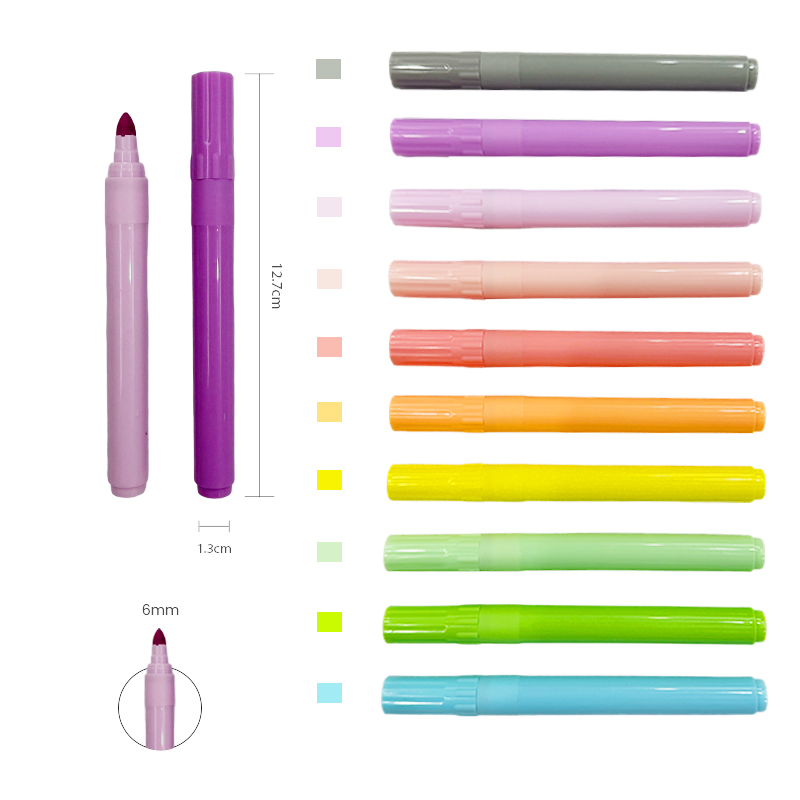
High-Opacity 6mm Round-Tip Watercolor Marker
Product Overview The High-Opacity 6mm Round-Tip Watercolor Marker stands out for its high-coverage gouache ink that colors directly on dark paper – ...
View More -
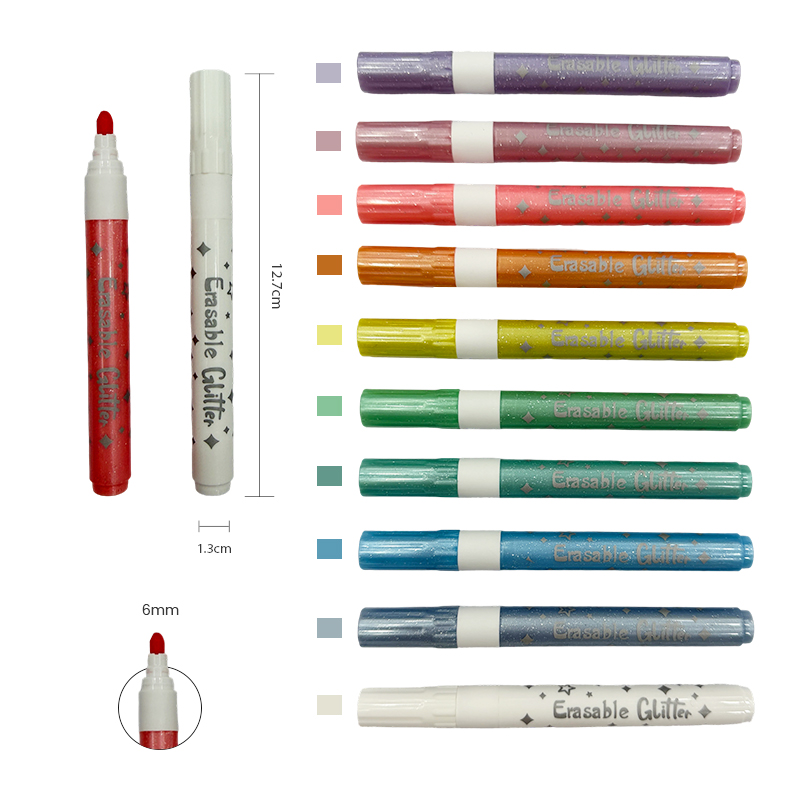
Eco-Friendly 6mm Round-Tip Erasable Highlighter Pen
Product Overview The Eco-Friendly 6mm Round-Tip Erasable Highlighter set includes 9 shimmering colored pens plus 1 dedicated white eraser pen. Featuri...
View More -
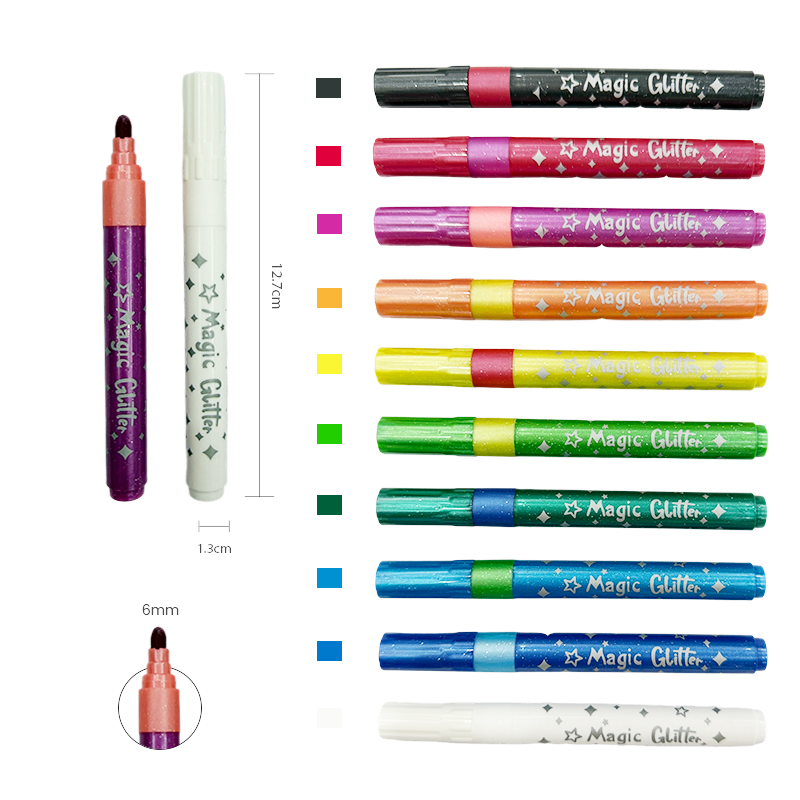
Children's Creative Magic Color-Changing Highlighter Set
Product Overview The Children's Creative Magic Color-Changing Highlighter set includes 9 shimmering colored pens in different color families plus 1 de...
View More -
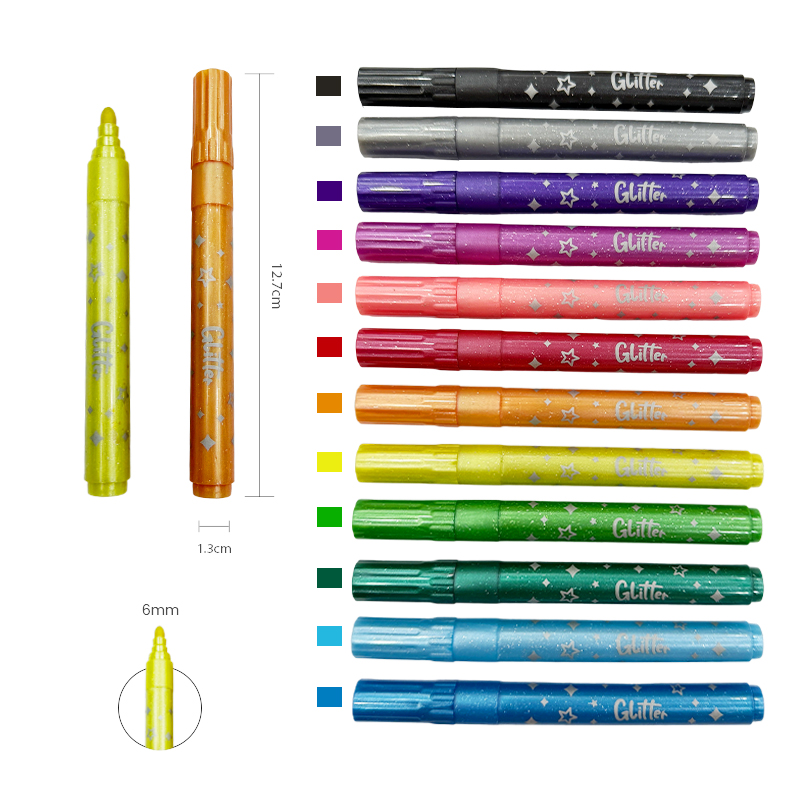
Vibrant 12-Color Single-Tip Highlighter Pen
Product Overview The Vibrant 12-Color Single-Tip Highlighter Pen set includes 12 single-tip shimmering colored pens filled with water-based glitter in...
View More -
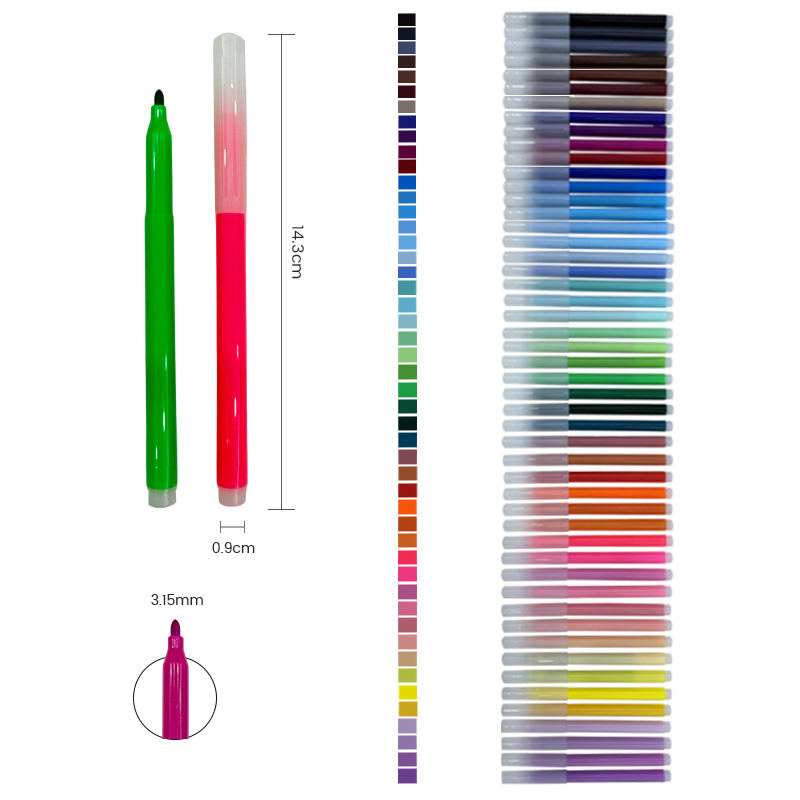
812-50 Smooth-Flowing 50-Color Watercolor Marker
812-50 Smooth-Flowing 50-Color Watercolor Marker is suitable for Art enthusiasts and students. 1. Core Advantages (3-in-1 Value Proposition) Smooth In...
View More -
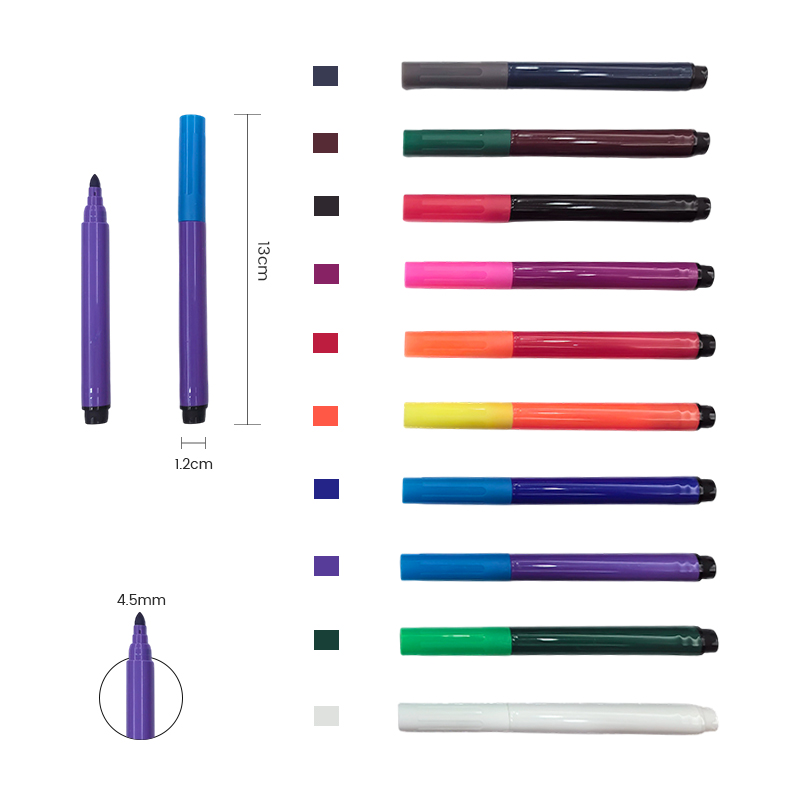
801M-10 Two-Tone Barrel Magic Markers for School
Designed to spark children's creativity and curiosity, these 801M-10 Two-Tone Barrel Magic Markers for School feature a unique characteristic: the ink...
View More -
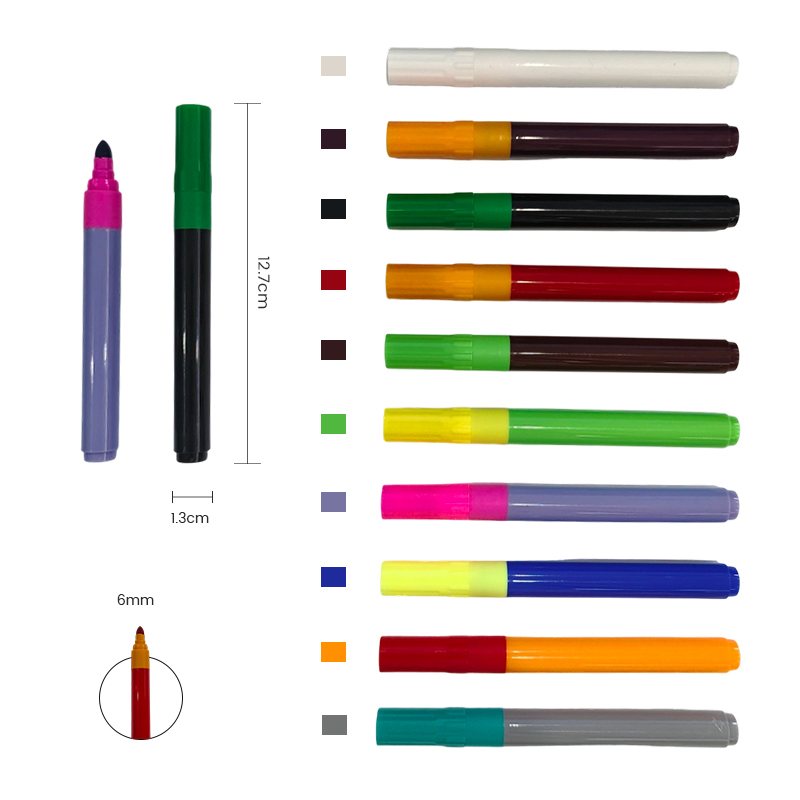
806M-10 Color Changing Magic Markers
806M-10 Color Changing Magic Markers are a set of fun drawing tools designed for children, students, and creative enthusiasts, combining three core fe...
View More -
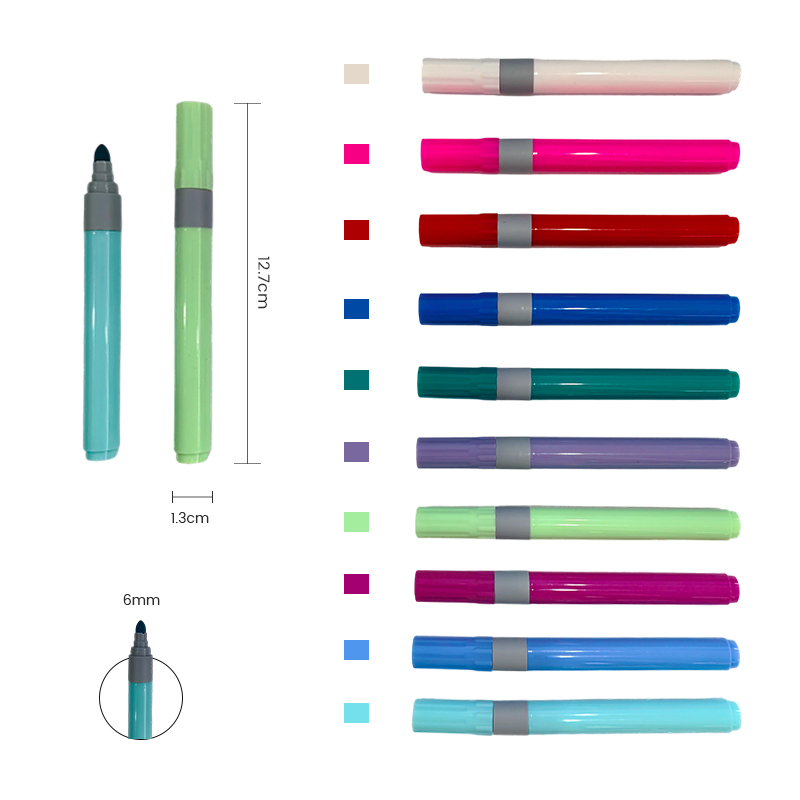
806E-10 Washable Erasable Magic Markers for Kids Drawing
Designed for children, students, and journaling enthusiasts, these magic markers combine three key advantages: safety and non-toxicity, vibrant colors...
View More


Information
-

TEL & Whatsapp: +86-15773630590
TEL : +86-13676769913
+86-19519895579 -

E-mail : [email protected]
[email protected]
[email protected]
[email protected] -
 Building 18-1, Lot 9, Wanyang Zhizao Town, Bihu Town, Liandu District, Lishui City, Zhejiang Province, China
Links
Contact Us
