

 English
 English
 русский
 Español
- Type:
- Industry News
- Date
- 2025-Apr-02
Industry News
The Versatility and Functionality of Dual Tip Color Highlighter Pens
Dual-tip color highlighter pens have become indispensable tools in various settings, from academic environments to professional workplaces and creative endeavors. Their versatility, functionality, and vibrant colors make them essential for highlighting, annotating, and organizing information.
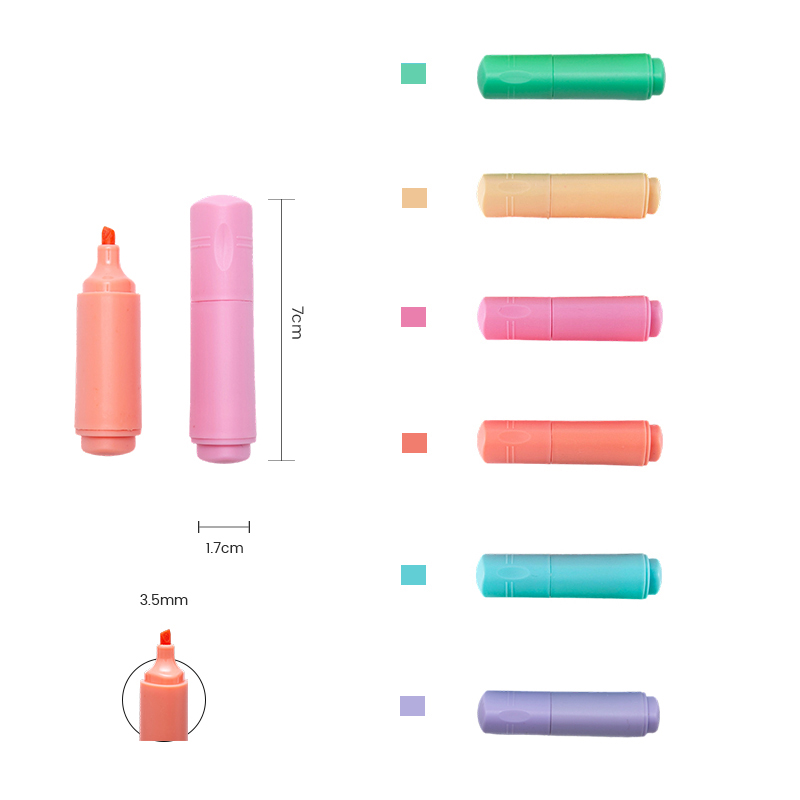
In academic settings, dual-tip color highlighter pens play a crucial role in studying, researching, and retaining information. Students utilize these pens to highlight key points, important definitions, and essential passages in textbooks, lecture notes, and study materials. The dual tips allow for precision highlighting of both broad sections and finer details, aiding in information retention and exam preparation.
Dual-tip color highlighter pens are invaluable tools for annotating texts, whether in printed books, articles, or digital documents. With one tip for highlighting and another for underlining or writing notes, users can create comprehensive annotations that provide additional context, explanations, or insights. This functionality is particularly useful for scholars, researchers, and professionals who need to engage critically with written material, analyze complex concepts, and make connections between different sources. By customizing colors and annotations, individuals can create a visual roadmap of their understanding and thought process.
In both academic and professional contexts, organizing information is essential for efficient workflow management and decision-making. Dual tip color highlighter pens offer a practical solution for categorizing, prioritizing, and structuring information according to importance, relevance, or urgency. By assigning different colors to various categories or tasks, individuals can create visual cues that streamline comprehension and facilitate decision-making processes. Whether planning a project, outlining a presentation, or studying for an exam, the ability to color-code and organize information enhances productivity and clarity of thought.
Beyond their utility in academic and professional settings, dual-tip color highlighter pens inspire creativity and self-expression. Artists, designers, and hobbyists utilize these pens to add vibrant accents, embellishments and highlights to their creations. The dual tips enable precise control over line thickness and intensity, allowing for intricate detailing and shading techniques. Whether sketching, coloring, or journaling, the diverse range of colors sparks imagination and encourages experimentation. By incorporating dual-tip color highlighter pens into their artistic toolkit, individuals can add depth, dimension, and personality to their creations.
Dual tip color highlighter pens also play a role in promoting accessibility and inclusivity, particularly for individuals with visual impairments or learning differences. The combination of vivid colors and dual tips enhances readability and comprehension for individuals who benefit from visual aids or alternative learning strategies. By offering multiple options for highlighting, underlining, and annotating, these pens cater to diverse learning styles and preferences. Additionally, the tactile feedback and ergonomic design ensure comfortable usage for extended periods, accommodating individuals with mobility or dexterity challenges.
Dual-tip color highlighter pens are versatile tools with a wide range of applications across academic, professional, creative, and inclusive settings. Their dual tips, vibrant colors, and ergonomic design enhance productivity, creativity, organization, and accessibility. Whether highlighting key points in textbooks, annotating research articles, organizing information, fostering creative expression, or promoting inclusivity, these pens empower individuals to engage more effectively with information and ideas.
How did Dual Tip Highlighter Pens become popular?
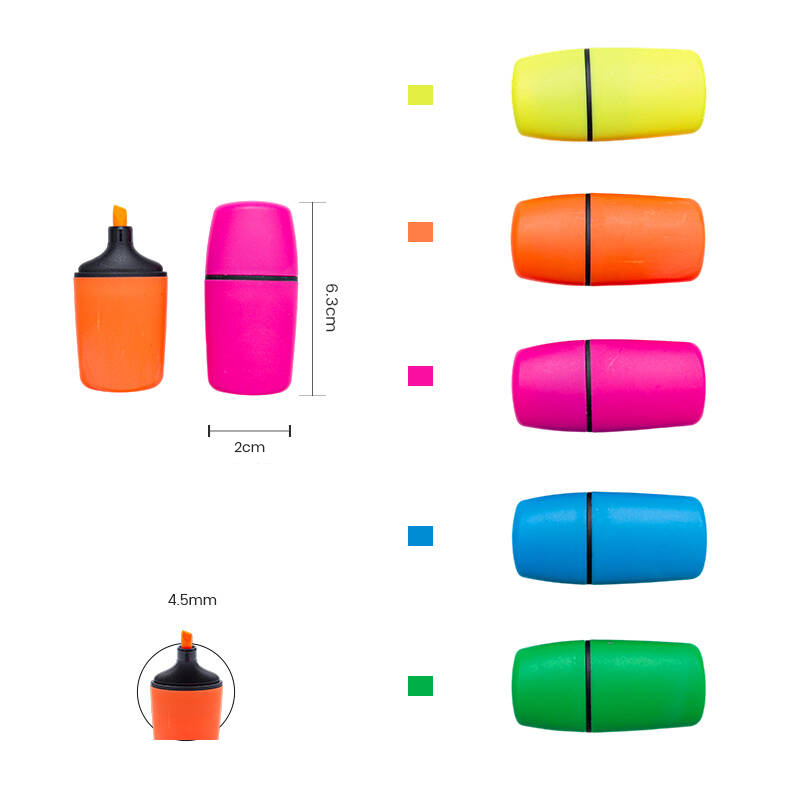
The popularity of dual-tip highlighter pens can be attributed primarily to a convergence of practical demand and consumer preference for efficiency and minimalism. Initially, highlighters served a singular function: applying a translucent swath of color to text. However, users frequently found themselves switching between a highlighter for emphasis and a fine-liner or ballpoint pen for annotation, underlining, or writing notes in margins. This constant tool-swapping was an interruption to workflow, especially in fast-paced environments like lectures, meetings, or research sessions.
The dual-tip design emerged as an elegant solution to this minor but persistent inefficiency. By combining a traditional chisel highlighter tip on one end with a fine-point pen—often in black, grey, or a coordinating color—on the other, manufacturers created a single, consolidated tool. This integration catered to the user’s natural workflow, allowing for highlighting and annotating in one fluid motion without fumbling for a second instrument. Furthermore, the design appealed to a growing desire for streamlined organization, reducing clutter in pencil cases, desk drawers, and bags. The convenience of carrying and managing one tool instead of two, coupled with the intuitive logic of the pairing, propelled the dual-tip highlighter from a niche product to a mainstream staple, representing a shift towards multifunctional accessories in daily life.
What changes in appearance and function have Color Highlighter Pens undergone?
The changes in the appearance and function of color highlighter pens have been driven by advancements in ink technology, ergonomic considerations, and a broader understanding of how color impacts cognitive function and well-being. Early highlighters were often utilitarian in design, with bright plastic barrels and intensely fluorescent inks that could be harsh on the eyes and sometimes bleed through paper.
In terms of appearance and ergonomics, modern highlighters exhibit considerable refinement. Barrel designs have diversified to include slim, triangular grips that reduce hand fatigue during extended use, retractable models that eliminate lost caps, and even elegant, pen-like bodies suitable for professional settings. Aesthetically, color palettes have expanded far beyond the classic neon yellow, pink, blue, and green. The significant functional shift has been the widespread adoption of "mild" or "pastel" highlighters. These use less saturated, softer-colored inks that provide sufficient contrast for emphasis without the visual aggression of fluorescent tones. This development acknowledges concerns about eye strain and creates a more pleasant reading experience.
.jpg)
Functionally, ink formulations have improved to be more forgiving on paper. Many contemporary highlighters are specifically engineered to be "non-bleed"or "quick-dry,"preventing smudging of printer toner or smearing of handwritten ink—a common frustration with older models. Furthermore, the concept of function has expanded beyond mere text emphasis. Color-coding systems are now integral to methodologies like bullet journaling, where specific highlighter shades represent different task categories, priorities, or calendar entries. This evolution transforms the highlighter from a passive tool for marking existing text into an active instrument for personal information management and creative planning, with its color selection being a deliberate part of an organizational strategy.
One of the significant developments is the double-sided or dual-tip highlighter, which contrasts with the traditional single-tipped design. This innovation prompts a practical evaluation: which format serves the user better? A clear comparison reveals that the choice is not universally but depends heavily on specific needs and contexts.
Functionality and Versatility
Double-Sided Advantages:
- Integrated Toolset: The primary benefit is the consolidation of two functions into one barrel. A typical configuration pairs a standard chisel highlighter tip with a fine-line pen (often in black, grey, or a complementary color). This allows for seamless switching between highlighting text and writing annotations, underlining, or marginal notes without changing instruments.
- Dual Highlighting Styles: Some models feature two different highlighter tips, such as a broad chisel and a fine point. This enables both large-area marking and precise highlighting of single lines or words, offering greater control within a single tool.
Single-Tip Advantages:
- Focused Performance: A dedicated single-tip highlighter is often optimized for one task. The ink flow and tip construction are designed solely for highlighting, which can result in a more consistent, saturated, and streak-free application.
- Specialized Formulations: For niche needs—such as non-bleed ink for delicate Bible paper, dry highlighters for library books, or archival-quality pigments—the options are frequently available only in single-tip formats, where the engineering focuses on that one specialized ink property.
Portability and Organization
Double-Sided Advantages:
Space Efficiency: For individuals who carry a full kit, a set of five double-sided pens effectively provides ten functions (e.g., five highlighter colors and five annotation pens). This significantly reduces the number of items in a pencil case, backpack, or desk drawer, clutter.
Single-Tip Disadvantages:
Potential for Clutter: Maintaining separate highlighters and fine-liner pens requires more physical space and organization. It increases the likelihood of losing one component of your workflow, such as having a highlighter but no pen handy for notes.
Single-Tip Advantages:
- Simplified Replacement: When a single-tip highlighter runs out or is lost, only one color or function is affected. Its replacement is straightforward and inexpensive.
- Ergonomic Design: Some single-tip models feature advanced ergonomic grips or retractable bodies that are designed around a single use, potentially offering greater comfort during prolonged highlighting sessions.
Cost and Longevity
Double-Sided Disadvantages:
- Premature Obsolescence: A significant drawback is differential wear. If one tip (often the finer one) is used more heavily or fails , the entire pen becomes less useful or is discarded, even if the other tip still has considerable ink remaining. This can waste and a higher long-term cost-per-use.
- Higher Initial Purchase Price: Individual double-sided pens are typically more expensive than their single-tip counterparts.
Single-Tip Advantages:
Economical and Predictable: Single-tip highlighters are generally less expensive upfront. Their lifespan is predictable and singular; the pen is exhausted only when its specific ink supply runs out.
Flexible Restocking: Users can replace colors or pens independently based on actual usage rates, allowing for a more customized and economical maintenance of their supplies.
User Experience and Convenience
Double-Sided Advantages:
- Workflow Fluidity: The ability to highlight and annotate in one continuous motion is a major efficiency boost, particularly in dynamic settings like lectures or meetings where speed is beneficial.
- Reduced Cognitive Load: Having one tool instead of two to manage simplifies the physical process of studying or reviewing documents.
Double-Sided Disadvantages:
- Tip Confusion and Inadvertent Marks: Users can accidentally deploy the wrong tip, unintended pen marks on a text meant for highlighting, or vice-versa. This requires a moment of visual confirmation before use.
- Potential for Bulkier Design: To accommodate two ink chambers, the barrel may be wider or less comfortable to hold than a streamlined single-tip model.
Single-Tip Advantages:
- Simplicity and Reliability: The user experience is direct and unambiguous. The tool performs one action reliably, eliminating the risk of using the wrong end.
- Color Range: For artists, coders, or planners who use extensive color-coding systems, single-tip highlighters are available in vastly wider color spectrums, including pastel, neon, and dark-tone varieties.
Related Products
-
High-Opacity 6mm Round-Tip Watercolor Marker
Product Overview The High-Opacity 6mm Round-Tip Watercolor Marker stands out for its high-coverage gouache ink that colors directly on dark paper – ...
View More -
Eco-Friendly 6mm Round-Tip Erasable Highlighter Pen
Product Overview The Eco-Friendly 6mm Round-Tip Erasable Highlighter set includes 9 shimmering colored pens plus 1 dedicated white eraser pen. Featuri...
View More -
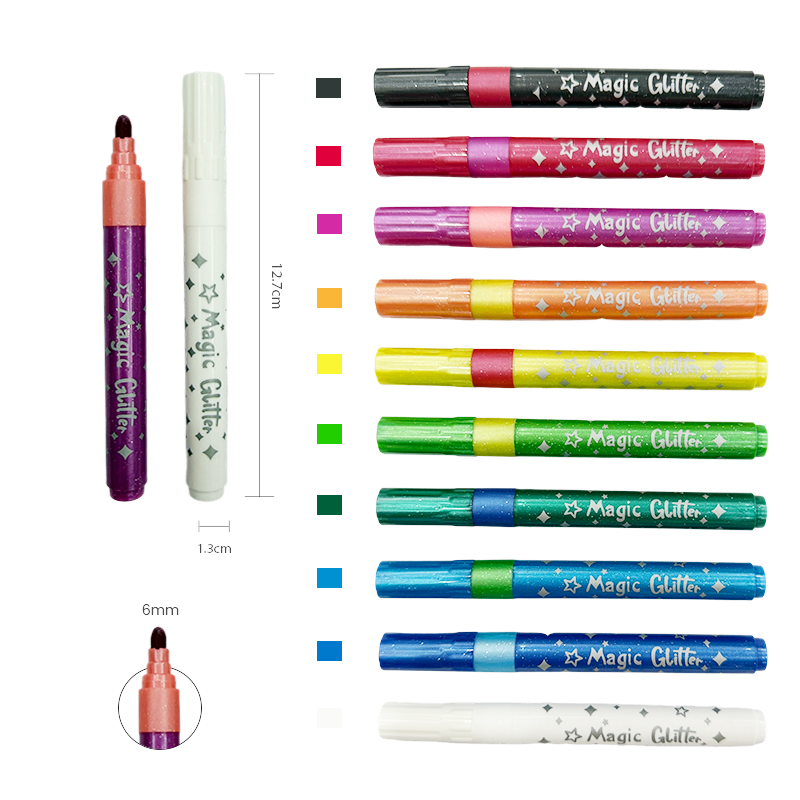
Children's Creative Magic Color-Changing Highlighter Set
Product Overview The Children's Creative Magic Color-Changing Highlighter set includes 9 shimmering colored pens in different color families plus 1 de...
View More -
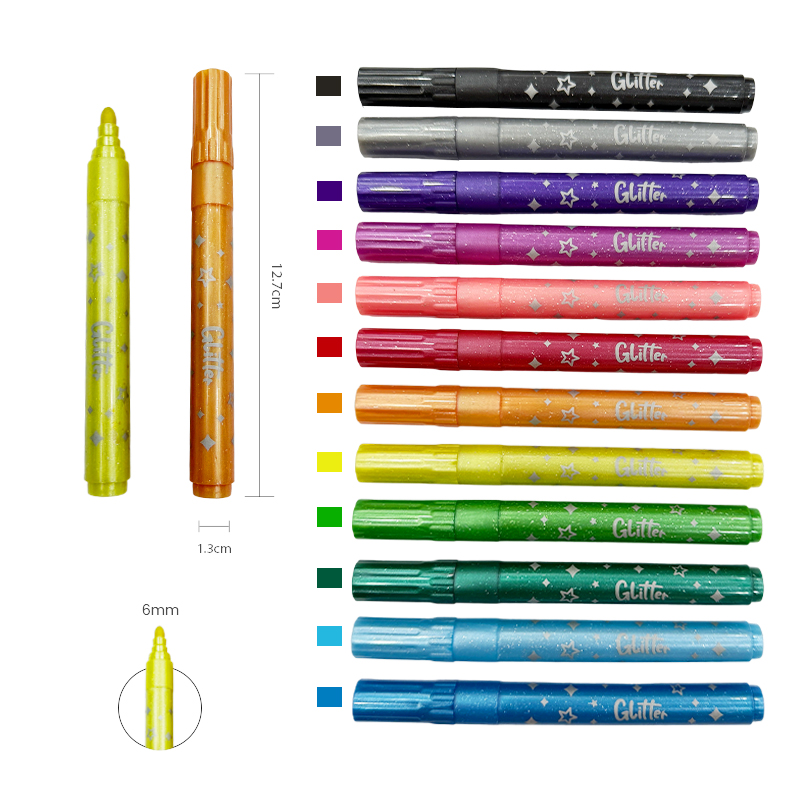
Vibrant 12-Color Single-Tip Highlighter Pen
Product Overview The Vibrant 12-Color Single-Tip Highlighter Pen set includes 12 single-tip shimmering colored pens filled with water-based glitter in...
View More -
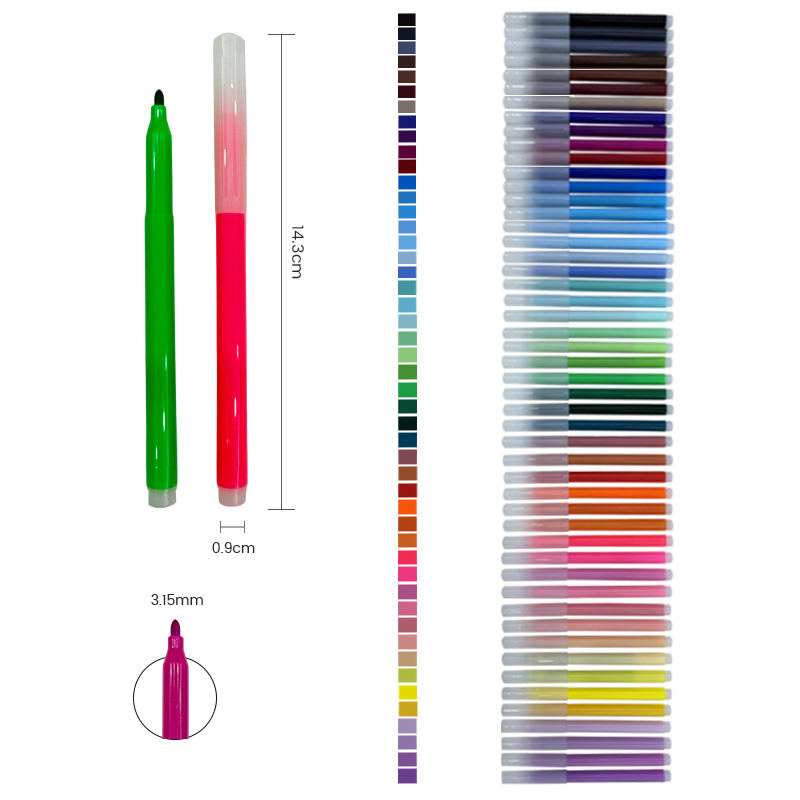
812-50 Smooth-Flowing 50-Color Watercolor Marker
812-50 Smooth-Flowing 50-Color Watercolor Marker is suitable for Art enthusiasts and students. 1. Core Advantages (3-in-1 Value Proposition) Smooth In...
View More -
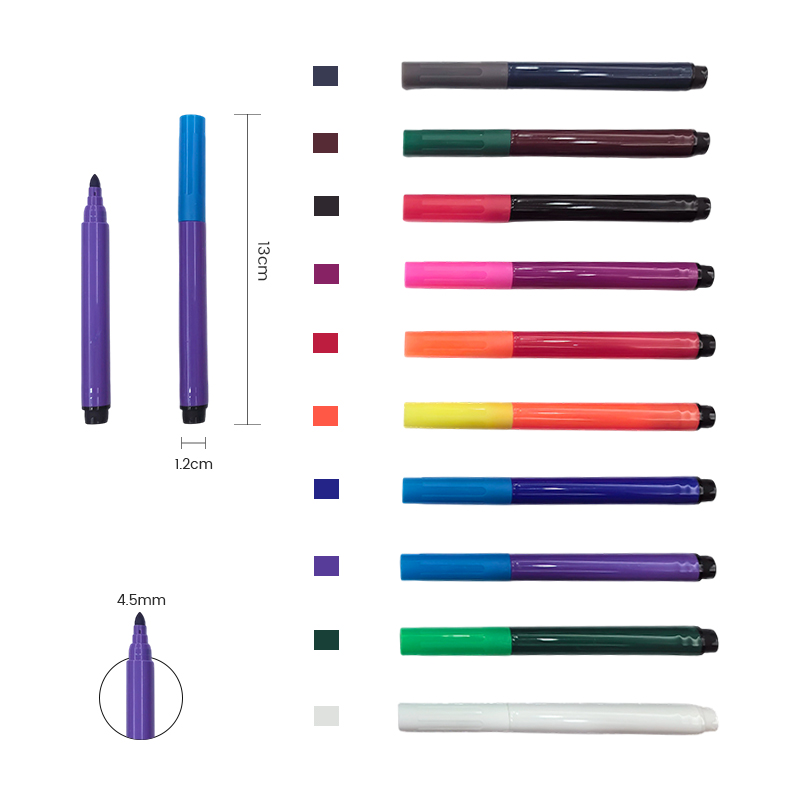
801M-10 Two-Tone Barrel Magic Markers for School
Designed to spark children's creativity and curiosity, these 801M-10 Two-Tone Barrel Magic Markers for School feature a unique characteristic: the ink...
View More -
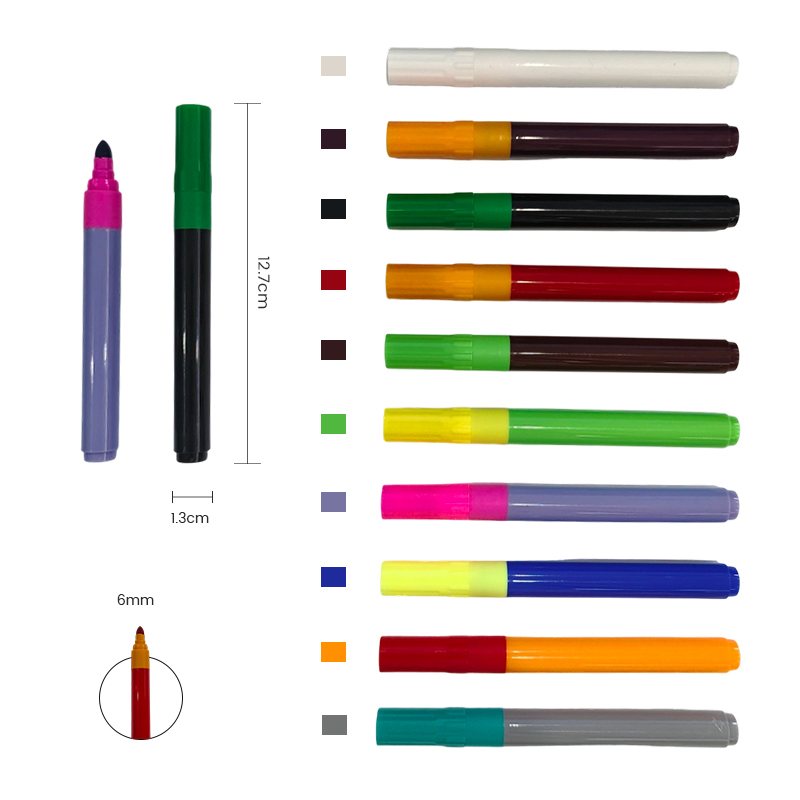
806M-10 Color Changing Magic Markers
806M-10 Color Changing Magic Markers are a set of fun drawing tools designed for children, students, and creative enthusiasts, combining three core fe...
View More -
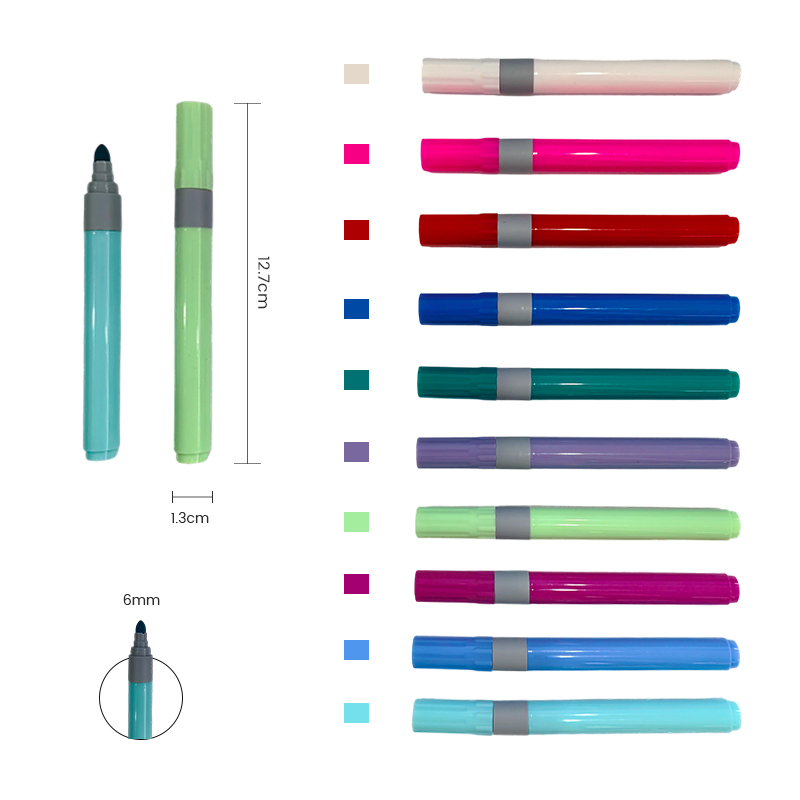
806E-10 Washable Erasable Magic Markers for Kids Drawing
Designed for children, students, and journaling enthusiasts, these magic markers combine three key advantages: safety and non-toxicity, vibrant colors...
View More


Information
-

TEL & Whatsapp: +86-15773630590
TEL : +86-13676769913
+86-19519895579 -

E-mail : [email protected]
[email protected]
[email protected]
[email protected] -
 Building 18-1, Lot 9, Wanyang Zhizao Town, Bihu Town, Liandu District, Lishui City, Zhejiang Province, China
Links
Contact Us
