

 English
 English
 русский
 Español
- Type:
- Industry News
- Date
- 2026-Jul-17
Industry News
Multiple Colors Marker Pen: Versatile Writing Tool for Every Need
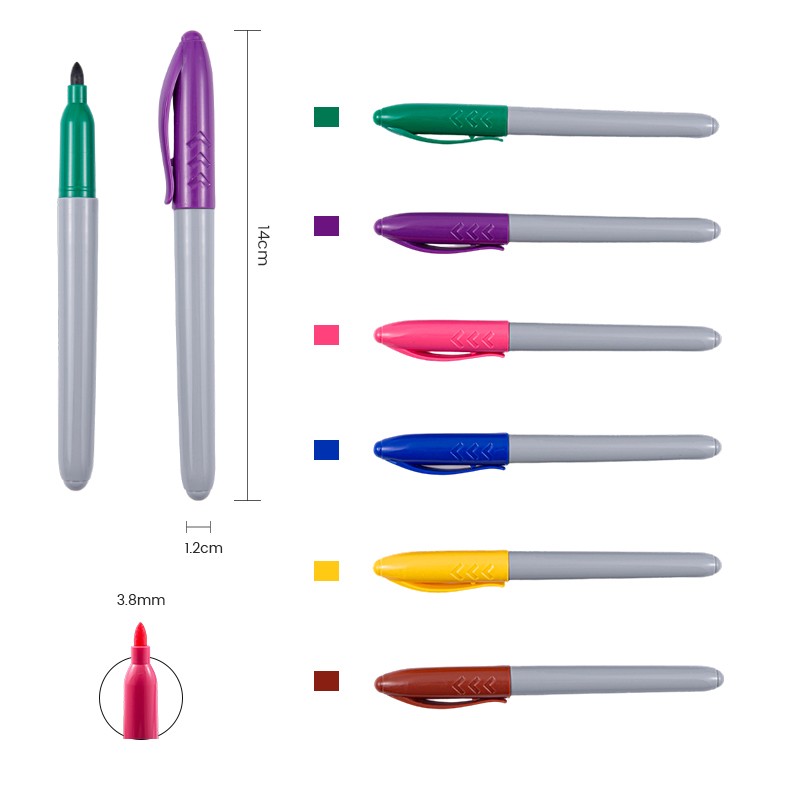
The multiple colors marker pen has become a staple in offices, classrooms, and creative studios, offering users a convenient all-in-one solution for color-coded notes, artistic sketches, and vibrant illustrations. This pen typically houses several ink cartridges in a single barrel, allowing quick switching between hues without carrying separate markers. Recent surveys indicate that these multi-color pens improve workflow efficiency by reducing desk clutter and eliminating time spent searching for the right color, making them particularly valuable during meetings, lectures, and travel where carrying a full set of individual markers is impractical.
Ink Formulation and Color Variety
The multiple colors marker pen contains water-based or alcohol-based ink formulations, each with distinct advantages for different applications. Water-based inks offer easy clean-up, low odor, and good color blending capabilities, making them suitable for general writing and children's art projects. Alcohol-based inks provide faster drying, permanent adhesion on non-porous surfaces, and predominant layering capabilities without damaging paper fibers. The color selection typically ranges from 4 to 12 hues per pen, with common assortments including:
Primary colors: red, blue, yellow for basic applications;
- Secondary colors: green, orange, purple for expanded creative options;
- Neutral tones: black, brown, gray for professional and everyday use;
- Fluorescent or pastel variants for special highlighting effects.
Each ink cartridge is individually sealed to prevent cross-contamination and premature drying. Premium models feature replaceable cartridges, extending the pen's lifespan and reducing plastic waste, while budget versions are disposable after ink depletion.
Barrel Design and Color Selection Mechanism
The multiple colors marker pen features a barrel that houses individual ink cartridges arranged radially or in-line, depending on the model and brand design. The selection mechanism varies across different pen types. Click-type designs allow users to press a button or slider corresponding to the desired color, extending that specific tip while retracting others automatically. Rotating barrel designs turn the barrel to align the chosen cartridge with the writing tip. Push-button advance mechanisms work similarly to mechanical pencils, where each color advances with a click. The transparent barrel allows users to see remaining ink levels and identify colors quickly without testing on paper. Ergonomic grips, often rubberized or contoured, reduce hand fatigue during extended writing sessions. The clip and cap design secure the pen to pockets or notebooks, preventing loss and protecting the tips from damage when not in use.
Tip Configurations and Line Characteristics
The multiple colors marker pen offers various tip configurations to suit different writing and drawing styles, with users selecting based on their specific needs and preferences. Bullet tips ranging from 0.5 to 1.0 millimeters are ideal for fine writing, detailed work, and precise line drawing. Chisel tips provide variable line widths from 1.0 to 3.0 millimeters, making them outstanding for lettering, calligraphy, and coloring large areas. Brush tips simulate paintbrush effects, offering flexible strokes for artistic shading and expressive handwriting. Needle-point tips at 0.3 to 0.4 millimeters excel in precision drawing and technical illustration. Fiber tips are durable and maintain consistent line quality over extended use, while felt tips deliver a softer, more expressive stroke that appeals to artists. Dual-tip designs combine fine and broad ends in one pen, offering big versatility without requiring additional tools. The tip material affects ink flow and durability, with premium options offering extended tip life even with heavy use.
Application Areas Across Professions and Settings
The multiple colors marker pen serves diverse applications across multiple fields and professional settings. In office and administrative tasks, they enable color-coded filing systems, calendar marking, project planning, and visual organization of complex information. Educational settings benefit from highlighting textbooks, creating visual aids for presentations, grading assignments with color differentiation, and student art projects. In artistic and creative work, these pens support illustration, hand lettering, coloring books, and mixed media projects. Business presentations are enhanced through charts, graphs, and flip chart annotations that help communicate data effectively. Medical professionals use color-coded markers for patient charts and medication tracking. Engineers and designers employ them for technical sketches, schematic annotations, and design revisions.
Drying Time, Blending Properties, and Paper Compatibility
Drying time significantly affects usability and depends on both ink type and paper surface characteristics. Water-based inks on absorbent paper typically dry within 15 to 30 seconds, while on glossy or coated surfaces may take up to 2 minutes. Alcohol-based inks dry nearly instantly on most surfaces, making them preferred for left-handed users to prevent smudging and for quick note-taking. Blending capabilities vary between ink types. Water-based inks can be blended while wet using a blending pen or water brush, allowing smooth gradients and transitions. Alcohol inks dry too quickly for wet blending but allow layering and color mixing through overlay techniques. Some markers are compatible with airbrush systems for large-area coloring. All ink types are generally compatible with standard copy paper, though premium results are achieved on marker-specific paper designed to prevent bleeding and feathering.
Maintenance, Storage, and Troubleshooting
To improve the lifespan and performance of the multiple colors marker pen, follow these essential maintenance practices:
- Replacing caps securely after each use to prevent ink evaporation and tip drying;
- Storing pens horizontally to keep ink flowing evenly to all cartridges;
- Avoiding exposure to bad temperatures which can alter ink consistency and flow;
- Cleaning tips occasionally by wiping with a lint-free cloth dampened with compatible solvent.
If tips become clogged, gently pressing them against scrap paper while rotating the pen often restores ink flow. When ink runs low in specific cartridges, replaceable cartridge systems allow continued use of the barrel. Check expiration dates on packaging, as some ink formulations degrade over time, affecting color vibrancy and flow consistency. For disposable pens, proper disposal is recommended.
Safety Standards and Usage Precautions
Multiple colors marker pens intended for general use meet safety standards including ASTM D-4236 for art materials, ensuring they are non-toxic when used as intended. Water-based versions are considered safe for children and educational environments. Alcohol-based markers carry warnings about solvent fumes and require adequate ventilation during extended use in enclosed spaces. Pens should be kept away from bad heat sources, as some ink formulations are flammable. For educational settings, choosing certified non-toxic markers ensures safety for young users. Adult supervision is recommended for children under 6 years old to prevent accidental ingestion or misuse.
Related Products
-
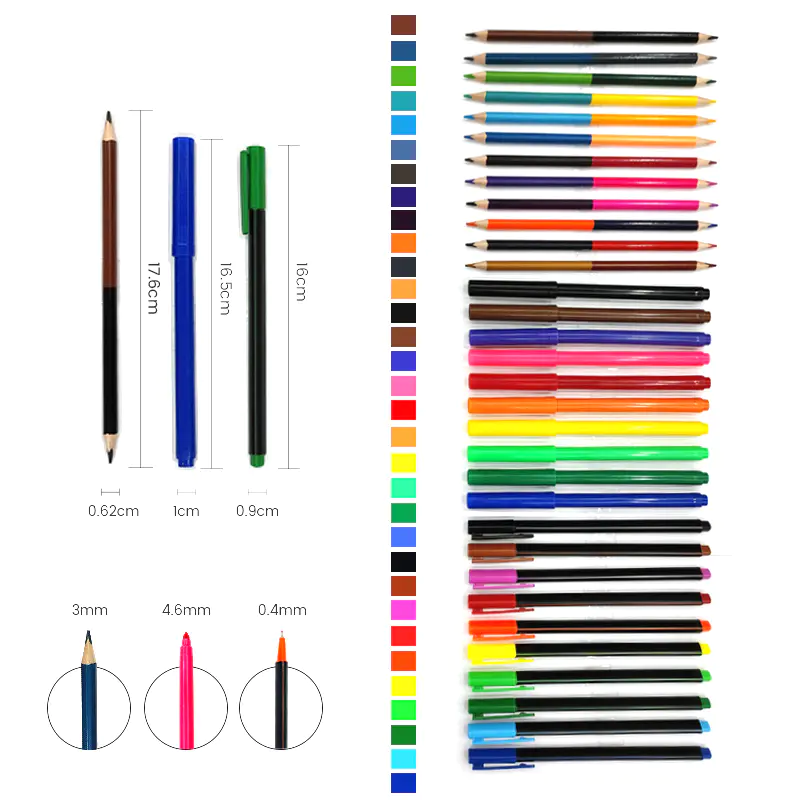
MBTZ-101 Watercolor Marker & Colored Pencil Set
Product OverviewThe MBTZ-101 Watercolor Marker & Colored Pencil Set combines fiber-tip watercolor markers, sharpenable wood-barrel colored pencils...
View More -
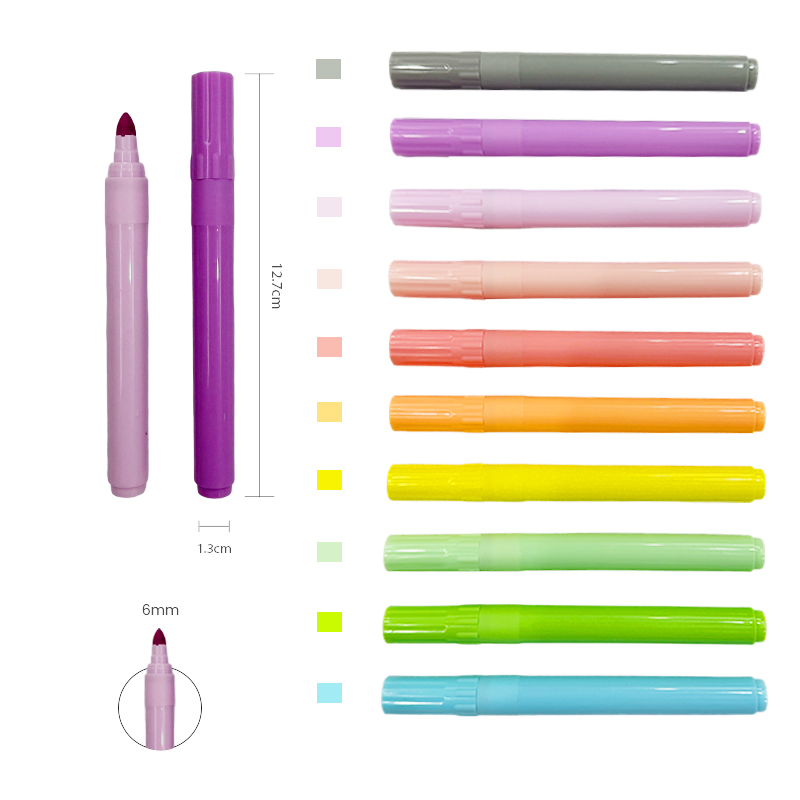
High-Opacity 6mm Round-Tip Watercolor Marker
Product Overview The High-Opacity 6mm Round-Tip Watercolor Marker stands out for its high-coverage gouache ink that colors directly on dark paper – ...
View More -
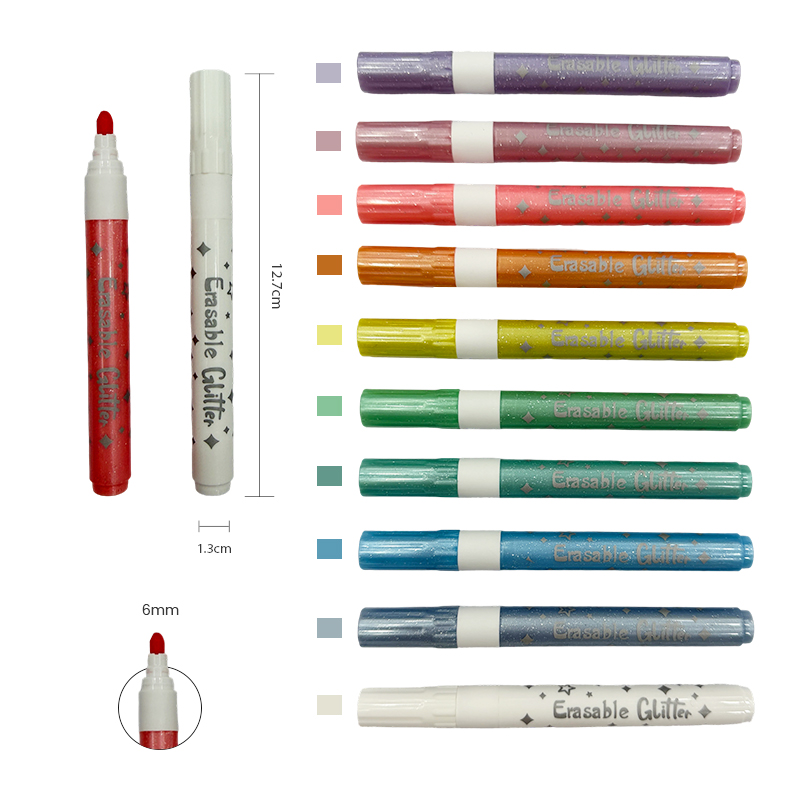
Eco-Friendly 6mm Round-Tip Erasable Highlighter Pen
Product Overview The Eco-Friendly 6mm Round-Tip Erasable Highlighter set includes 9 shimmering colored pens plus 1 dedicated white eraser pen. Featuri...
View More -
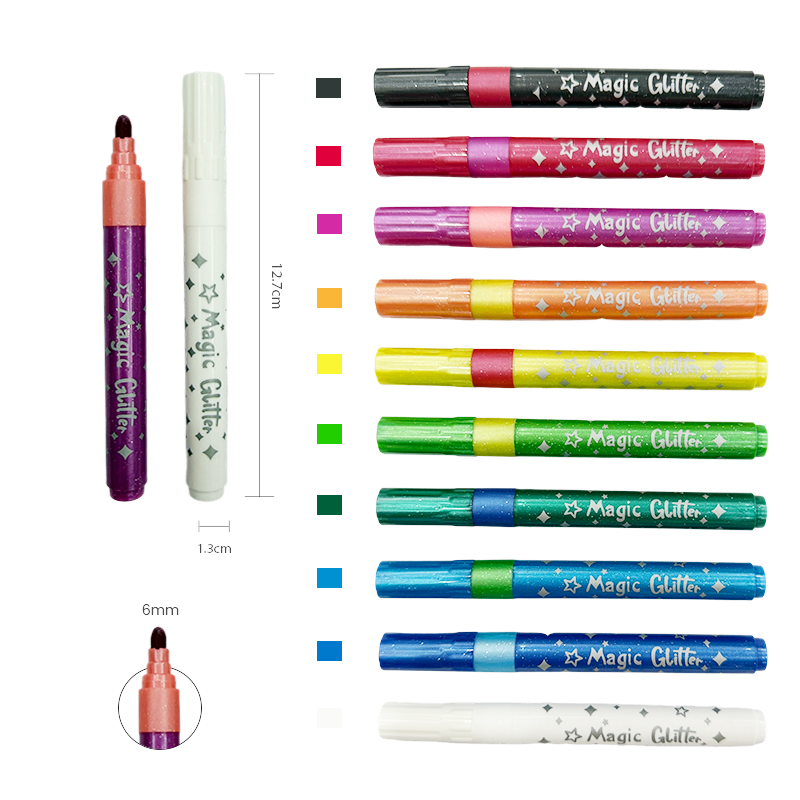
Children's Creative Magic Color-Changing Highlighter Set
Product Overview The Children's Creative Magic Color-Changing Highlighter set includes 9 shimmering colored pens in different color families plus 1 de...
View More -
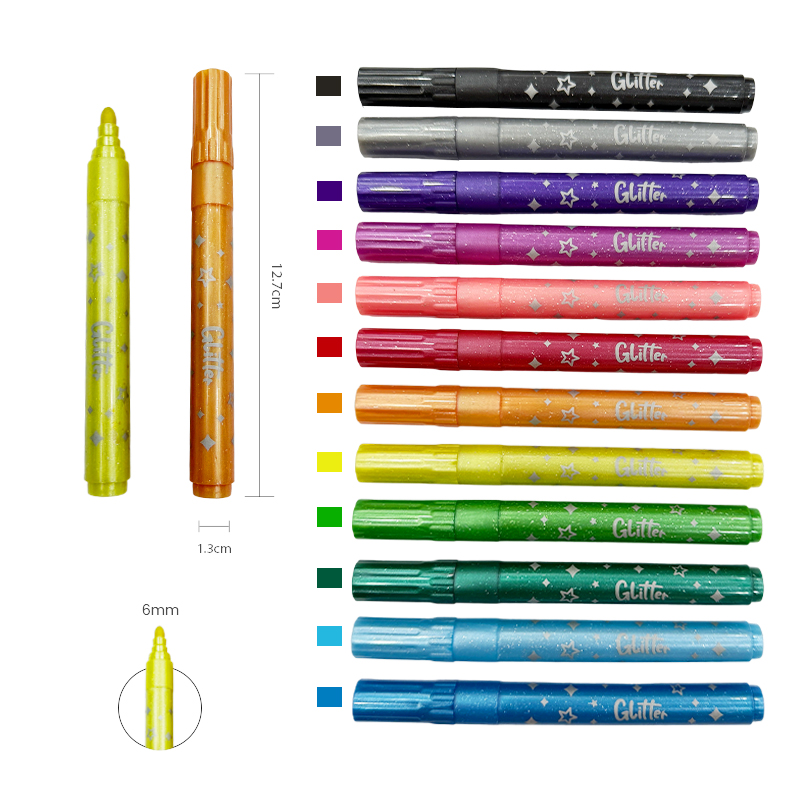
Vibrant 12-Color Single-Tip Highlighter Pen
Product Overview The Vibrant 12-Color Single-Tip Highlighter Pen set includes 12 single-tip shimmering colored pens filled with water-based glitter in...
View More -
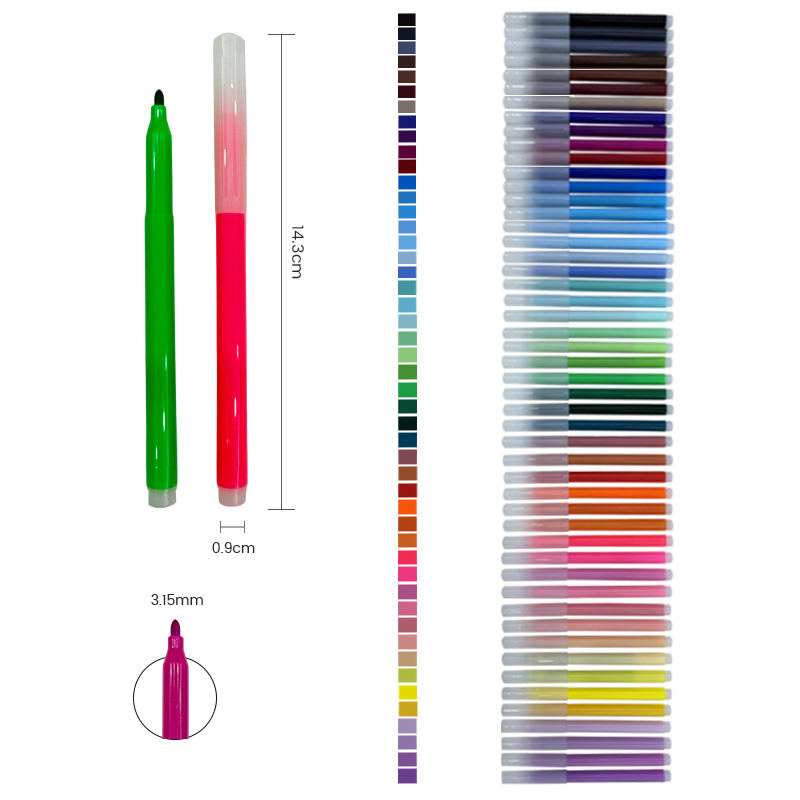
812-50 Smooth-Flowing 50-Color Watercolor Marker
812-50 Smooth-Flowing 50-Color Watercolor Marker is suitable for Art enthusiasts and students. 1. Core Advantages (3-in-1 Value Proposition) Smooth In...
View More -
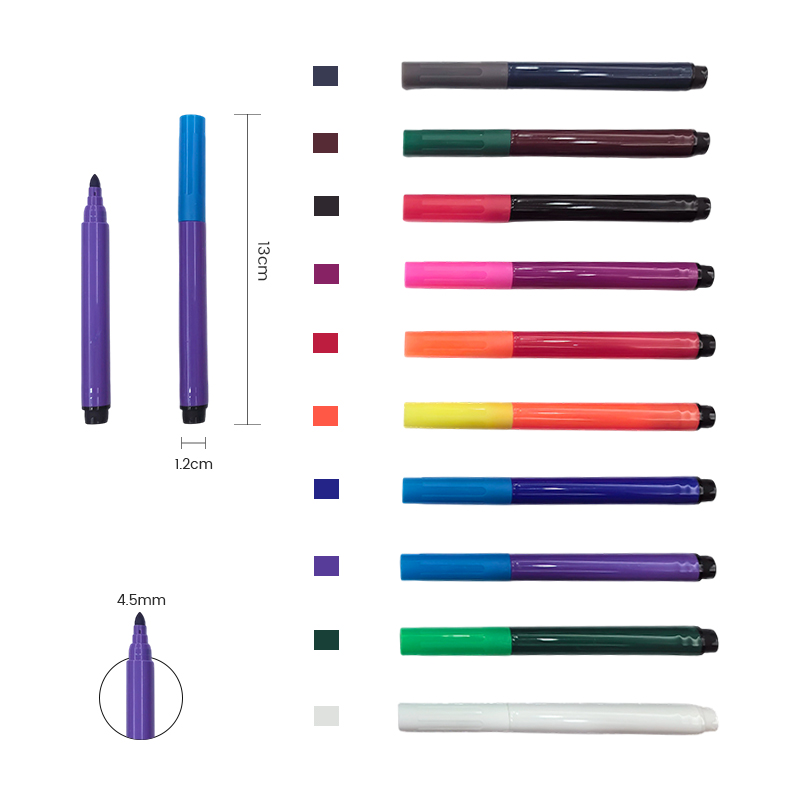
801M-10 Two-Tone Barrel Magic Markers for School
Designed to spark children's creativity and curiosity, these 801M-10 Two-Tone Barrel Magic Markers for School feature a unique characteristic: the ink...
View More -
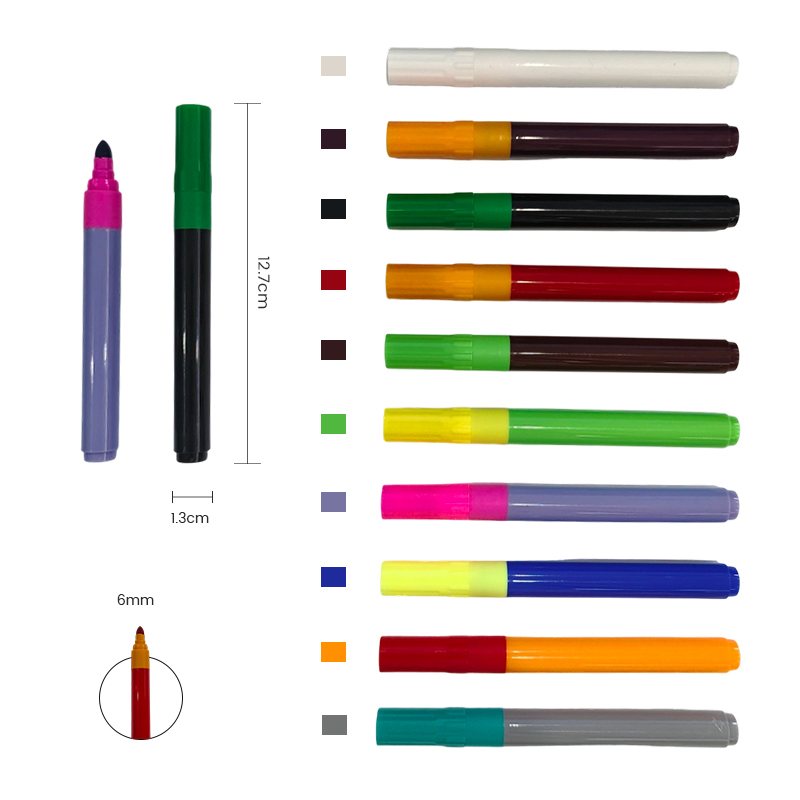
806M-10 Color Changing Magic Markers
806M-10 Color Changing Magic Markers are a set of fun drawing tools designed for children, students, and creative enthusiasts, combining three core fe...
View More


Information
-

TEL & Whatsapp: +86-15773630590
TEL : +86-13676769913
+86-19519895579 -

E-mail : [email protected]
[email protected]
[email protected]
[email protected] -
 Building 18-1, Lot 9, Wanyang Zhizao Town, Bihu Town, Liandu District, Lishui City, Zhejiang Province, China
Links
Contact Us
