English
 English
 русский
 Español
- Type:
- Industry News
- Date
- 2026-Jul-10
Industry News
Home / News / Industry News / Gold Glitterbody Glitter Color Marker: Creative Tool Adds Shimmer Effect
The gold glitterbody glitter color marker has gained popularity among artists, crafters, and educators as a versatile writing and decorating tool that combines vibrant ink with sparkling glitter particles. This marker features a transparent barrel filled with glitter suspended in a gel or water-based ink formula, allowing users to add metallic shimmer to paper, fabric, and other porous surfaces with each stroke. Recent product reviews indicate that these markers deliver consistent glitter dispersion and smooth flow, making them a preferred choice for card making, scrapbooking, and school projects.
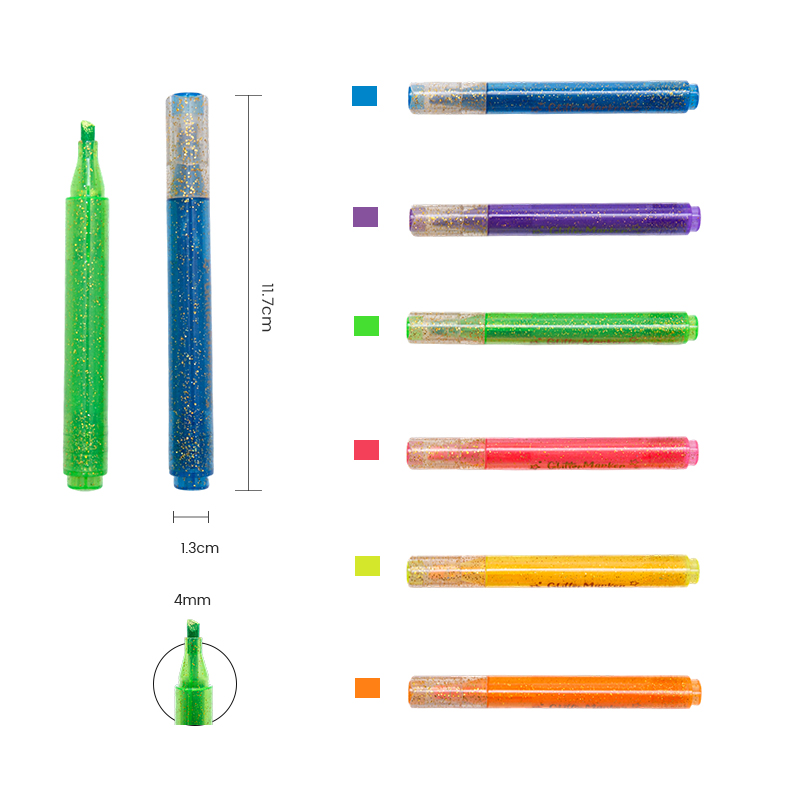
The marker contains a balanced blend of dye-based colorants, fine glitter particles ranging from 0.05 to 0.2 millimeters in diameter, and thickening agents that keep the glitter suspended evenly throughout the ink. The ink base is typically water-based for easy clean-up and low odor, though some professional-grade versions use alcohol-based formulas for faster drying and permanent adhesion. Key formulation elements include surfactants that prevent glitter clumping, rheology modifiers that control flow consistency, and UV stabilizers that reduce fading. The transparent polypropylene barrel allows users to see the glitter concentration before writing, and the sealed cap prevents drying when not in use.
Tip options vary by model and application:
The tip material is typically porous polymer or felt, designed to allow glitter particles to pass without clogging. The markers are available in a spectrum of base colors including red, blue, green, purple, pink, orange, and silver. The gold designation refers to the shimmering additive rather than the base color, with gold-toned particles reflecting light across all hues. Specialty versions offer multicolor glitter blends or holographic effects. On dark or glossy papers, the contrast between base color and reflective particles creates a luminous effect, while on light papers the glitter adds subtle sparkle.
The marker performs outstanding on smooth, non-absorbent surfaces where glitter remains on top rather than sinking into fibers. Ideal surfaces include coated paper, cardstock, vellum, and glossy photo paper. The marker can also write on glass, plastic, and metal with proper surface preparation. Common applications include:
Drying time varies with formulation—water-based versions dry in 30 to 60 seconds on absorbent paper, while alcohol-based versions dry in 5 to 15 seconds and provide better water resistance. For permanent results on frequently handled items, a clear sealant spray preserves the glitter effect.
Proper care extends marker life and maintains consistent ink flow. Recommended practices include storing the marker horizontally to keep the tip saturated, shaking vigorously before each use to redistribute settled glitter, capping immediately after use to prevent drying, and cleaning the tip occasionally with a damp cloth. If the tip clogs, pressing it gently against scrap paper while shaking often clears the obstruction. Water-based formulations are typically non-toxic and conform to ASTM D-4236 standards, making them suitable for school and home environments. The glitter particles are usually made from polyester film or aluminum-coated mica, which are considered safe for incidental skin contact. Parental supervision is recommended for very young children.
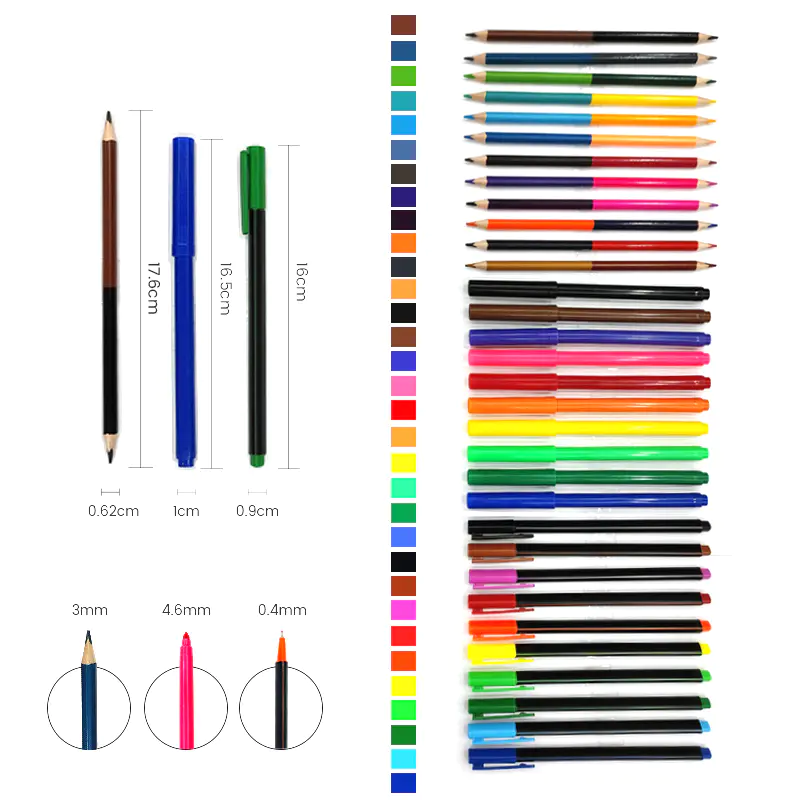
Product OverviewThe MBTZ-101 Watercolor Marker & Colored Pencil Set combines fiber-tip watercolor markers, sharpenable wood-barrel colored pencils...
View More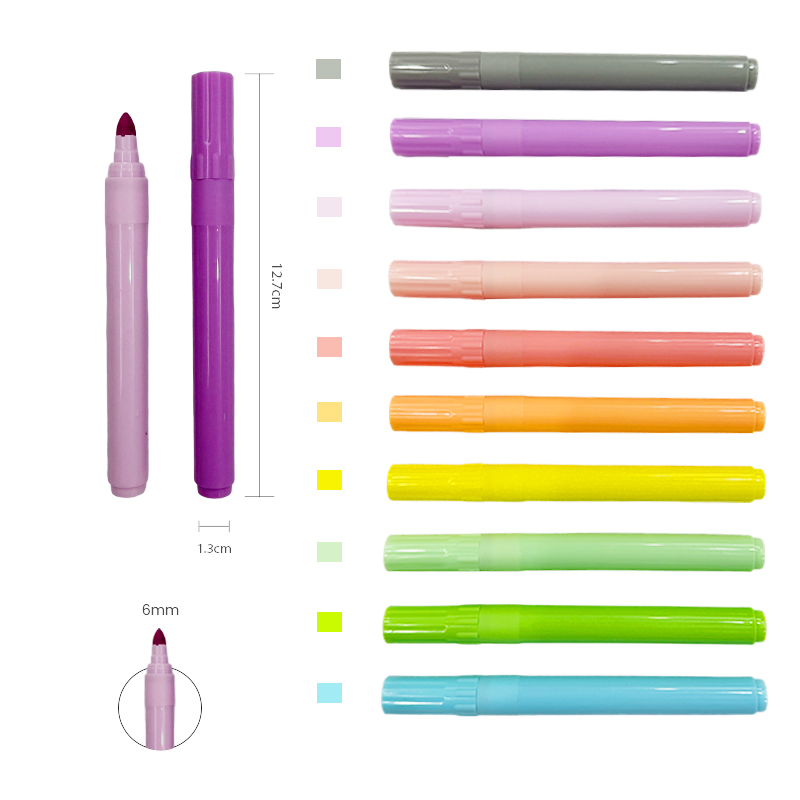
Product Overview The High-Opacity 6mm Round-Tip Watercolor Marker stands out for its high-coverage gouache ink that colors directly on dark paper – ...
View More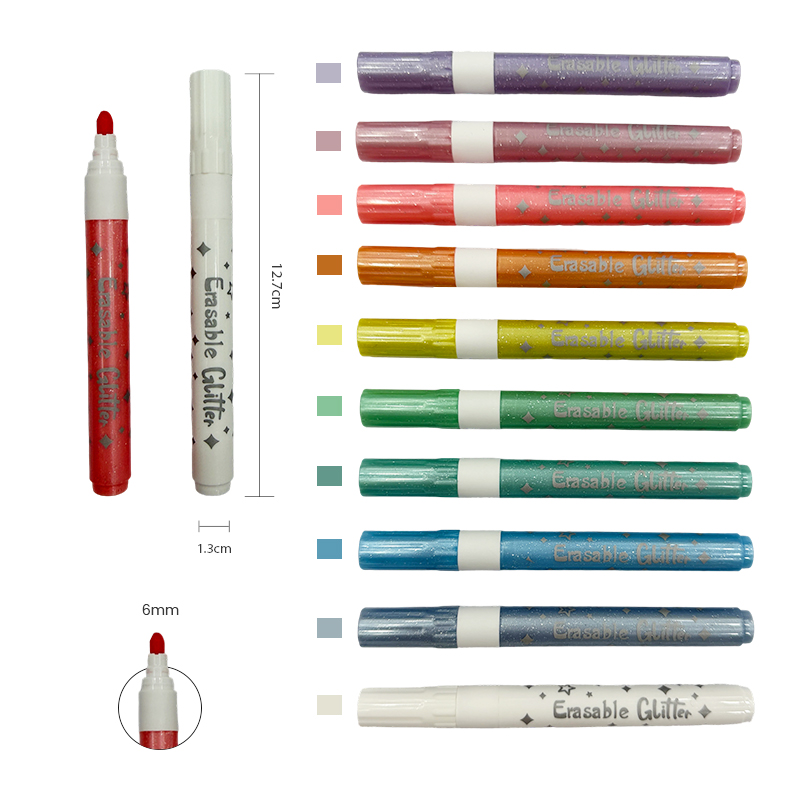
Product Overview The Eco-Friendly 6mm Round-Tip Erasable Highlighter set includes 9 shimmering colored pens plus 1 dedicated white eraser pen. Featuri...
View More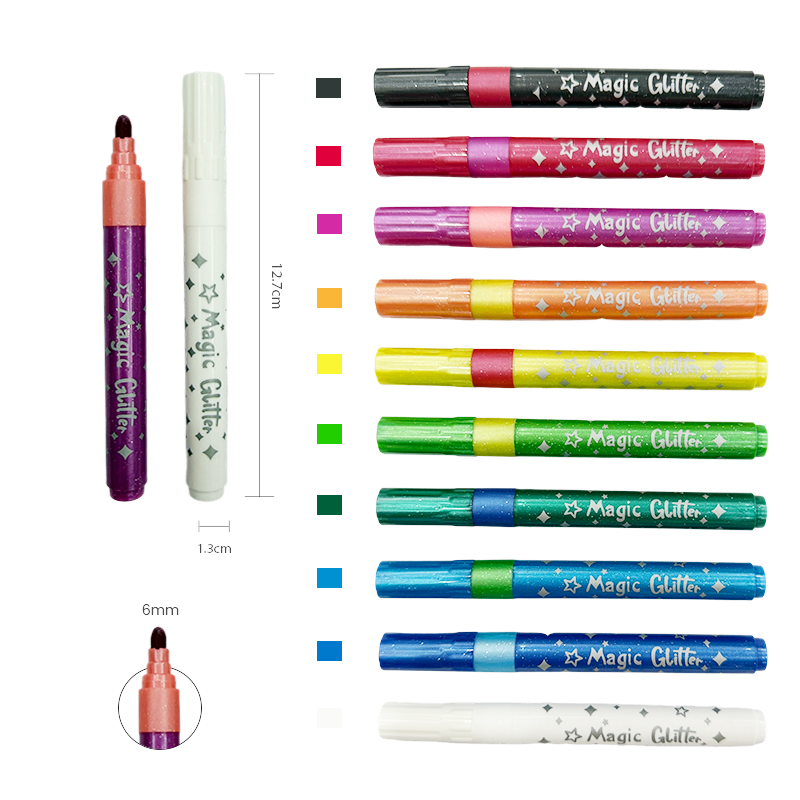
Product Overview The Children's Creative Magic Color-Changing Highlighter set includes 9 shimmering colored pens in different color families plus 1 de...
View More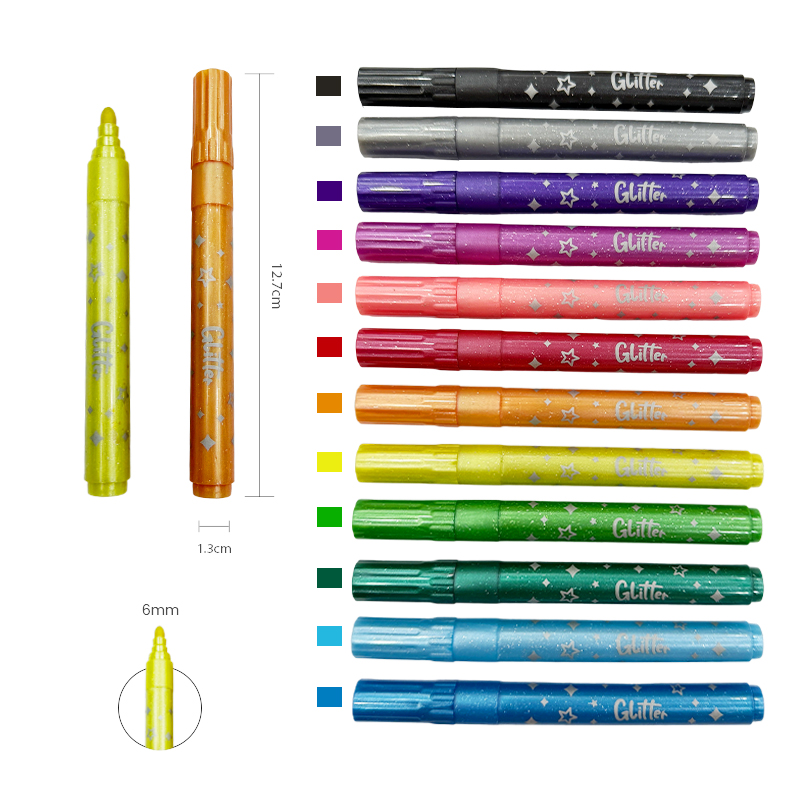
Product Overview The Vibrant 12-Color Single-Tip Highlighter Pen set includes 12 single-tip shimmering colored pens filled with water-based glitter in...
View More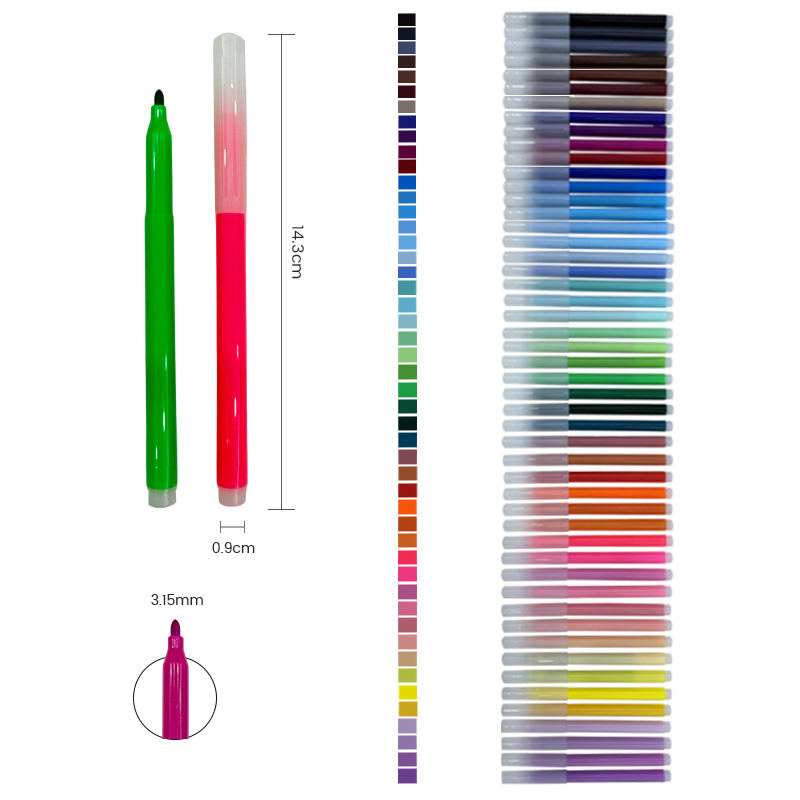
812-50 Smooth-Flowing 50-Color Watercolor Marker is suitable for Art enthusiasts and students. 1. Core Advantages (3-in-1 Value Proposition) Smooth In...
View More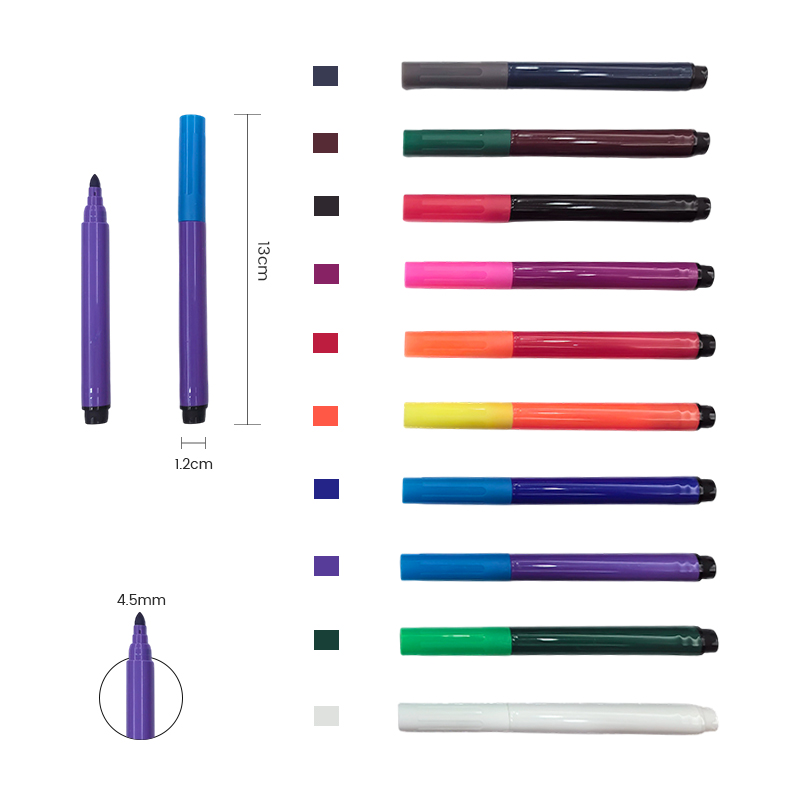
Designed to spark children's creativity and curiosity, these 801M-10 Two-Tone Barrel Magic Markers for School feature a unique characteristic: the ink...
View More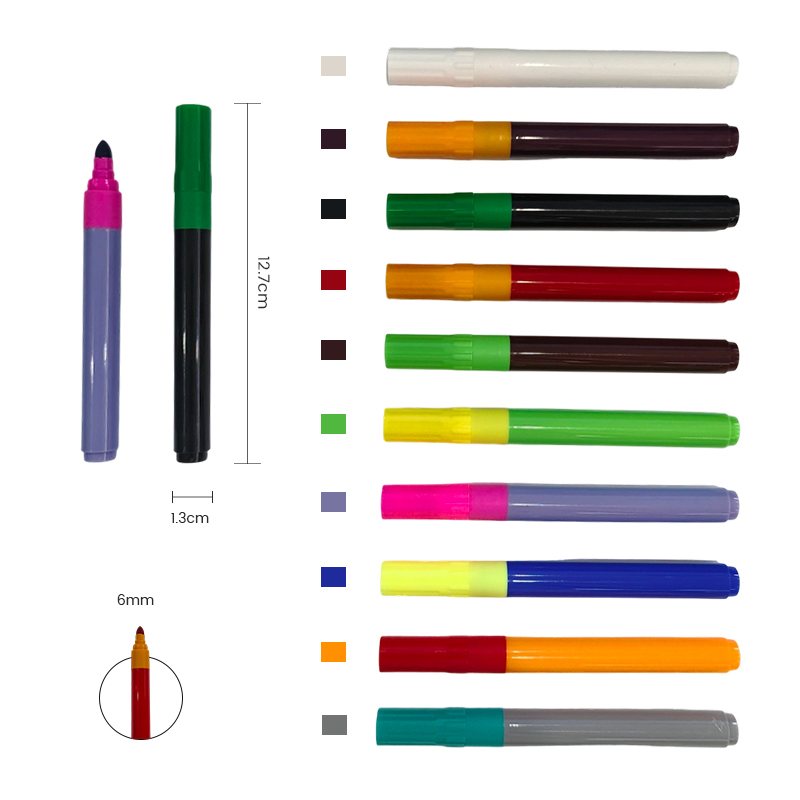
806M-10 Color Changing Magic Markers are a set of fun drawing tools designed for children, students, and creative enthusiasts, combining three core fe...
View More
TEL & Whatsapp: +86-15773630590
TEL :
+86-13676769913
+86-19519895579

E-mail :
[email protected]
[email protected]
[email protected]
[email protected]