

 English
 English
 русский
 Español
- Type:
- Industry News
- Date
- 2026-Aug-21
Industry News
Water Soluble Watercolor Marker: The Pen That Paints Without a Brush
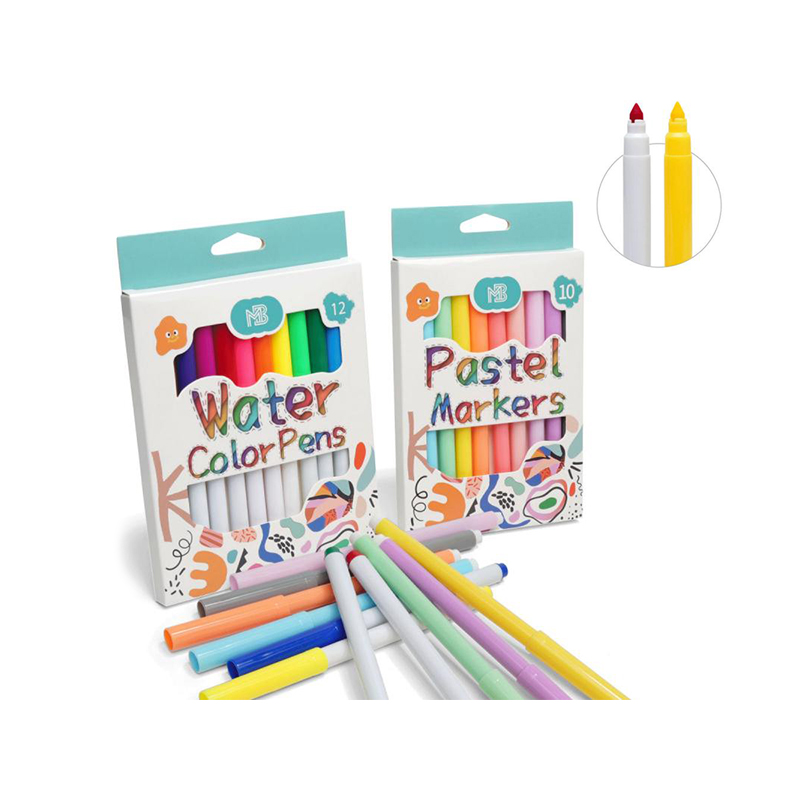
A brush, a palette, and a tin of watercolor half-pans. That is the traditional setup. A water soluble watercolor marker replaces all three with a pen. The marker lays down concentrated ink on paper. A wet brush follows, pulling color from the line into washes, gradients, and blends. The marker tip puts the color where the artist wants it. The brush spreads it. For illustrators, urban sketchers, and journal keepers, the marker turns a line drawing into a watercolor painting without the studio setup.
Ink That Re-Wets on Demand
The ink is water-soluble dye, not pigment. It dries on the paper like any marker ink, but it re-wets the moment a damp brush touches it. A water soluble watercolor marker with properly formulated ink lifts cleanly and spreads evenly. The line dissolves into a wash without leaving a hard edge where the line originally sat.
Blendability is the performance metric. Two colors laid down side by side and brushed together should create a smooth transition, not a muddy line. A water soluble watercolor marker with compatible dye formulations across the color range lets the artist blend adjacent hues without fighting the chemistry.
The ink works on watercolor paper, mixed media paper, and heavy sketchbook stock. Thin paper buckles under the water from the brush. A water soluble watercolor marker is not responsible for paper choice, but the ink should not bleed through or feather on appropriate surfaces.
The Tip That Delivers the Color
The tip is porous fiber or felt, typically a brush tip or a broad chisel. A brush tip flexes like a paintbrush and lays down variable line width. A chisel tip gives broad coverage for large areas and thin lines from the edge. A water soluble watercolor marker with a brush tip feels like painting even before the water touches the page.
Tip durability matters over the life of the marker. A tip that frays or mushrooms changes the line quality. A water soluble watercolor marker with a well-bonded fiber tip holds its shape from the first stroke to the last.
The ink delivery system feeds the tip from a reservoir inside the barrel. A water soluble watercolor marker with a consistent feed puts down even color without pooling or fading mid-stroke.
Here is what the marker needs to deliver:
- Water-soluble dye ink that re-wets and lifts cleanly with a damp brush
- Blendable formulation across the color range
- Brush or chisel tip that holds shape through the ink load
- Consistent ink feed without pooling or skipping
Where the Marker Replaces the Paint Set
Urban sketchers carry a handful of markers and a water brush instead of a palette and tubes. A water soluble watercolor marker puts down the initial color. The water brush pulls it into a wash. The whole setup fits in a pencil case.
Illustrators use the markers for color studies, storyboards, and finished work that will be scanned. The dry time is fast. The re-wet time is instant.
Journal keepers and scrapbookers add color to layouts without the mess of paint. A water soluble watercolor marker borders a photo, adds a wash to a journal page, and dries flat.
What Fails When the Ink Is Wrong
The line will not re-wet. The ink dried waterproof instead of water-soluble. A water soluble watercolor marker with the wrong formulation is just a regular marker. The line stays put and the brush does nothing. The color turns muddy when blended with a neighboring color. Dye incompatibility creates brown where blue and yellow should make green. The tip frays and the line width changes from precise to fuzzy. A water soluble watercolor marker with a durable tip keeps the line quality consistent.
A water soluble watercolor marker is a pen and paint in one tool. It draws a line that becomes a wash with a brush. Choose one with ink that re-wets cleanly, a tip that holds its shape, and colors that blend without fighting. The sketchbook becomes a painting studio. That is the point.
Related Products
-
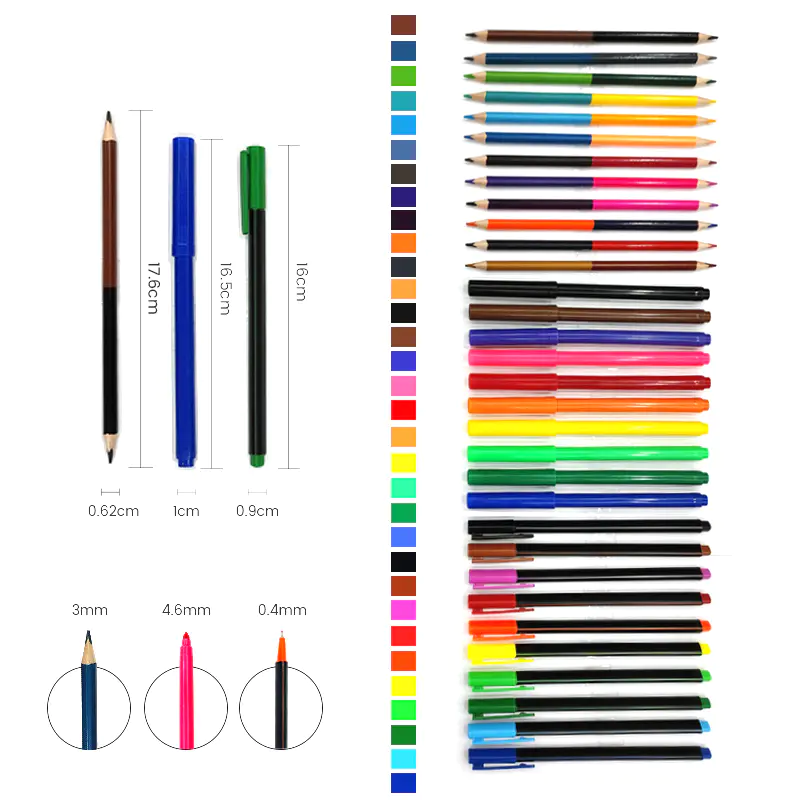
MBTZ-101 Watercolor Marker & Colored Pencil Set
Product OverviewThe MBTZ-101 Watercolor Marker & Colored Pencil Set combines fiber-tip watercolor markers, sharpenable wood-barrel colored pencils...
View More -
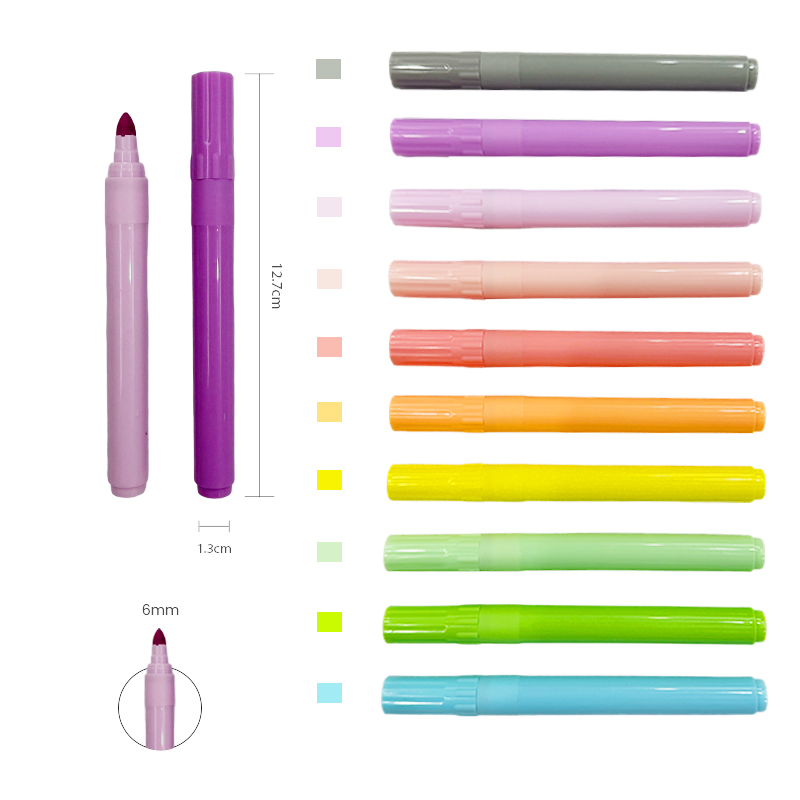
High-Opacity 6mm Round-Tip Watercolor Marker
Product Overview The High-Opacity 6mm Round-Tip Watercolor Marker stands out for its high-coverage gouache ink that colors directly on dark paper – ...
View More -
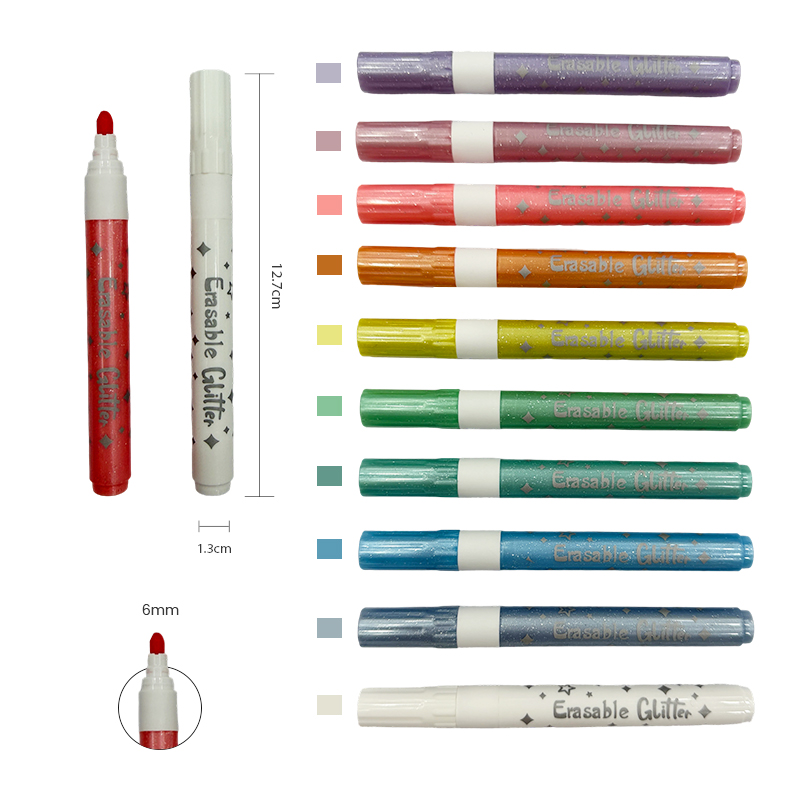
Eco-Friendly 6mm Round-Tip Erasable Highlighter Pen
Product Overview The Eco-Friendly 6mm Round-Tip Erasable Highlighter set includes 9 shimmering colored pens plus 1 dedicated white eraser pen. Featuri...
View More -
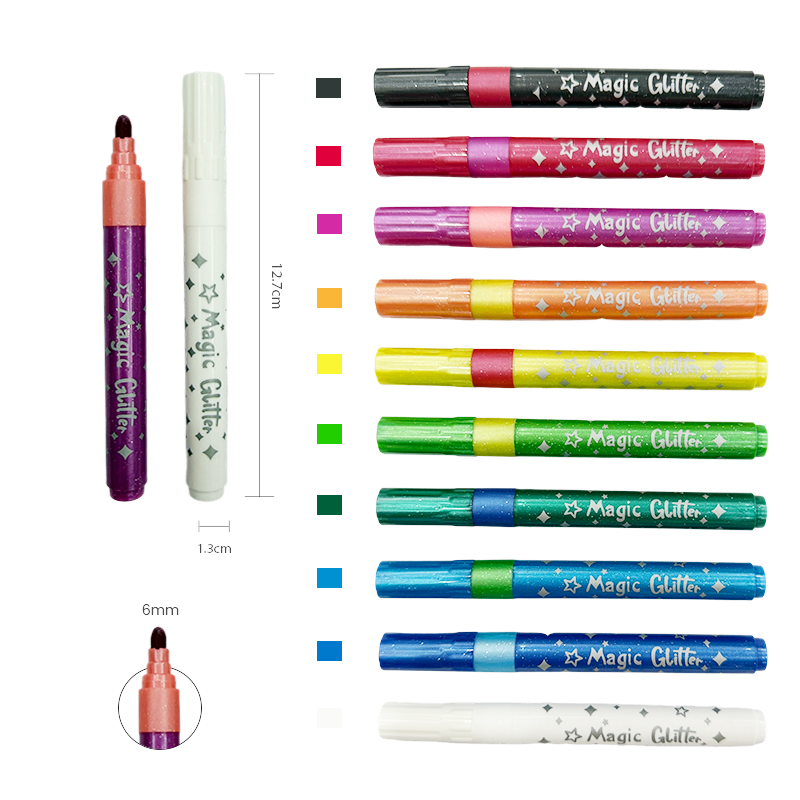
Children's Creative Magic Color-Changing Highlighter Set
Product Overview The Children's Creative Magic Color-Changing Highlighter set includes 9 shimmering colored pens in different color families plus 1 de...
View More -
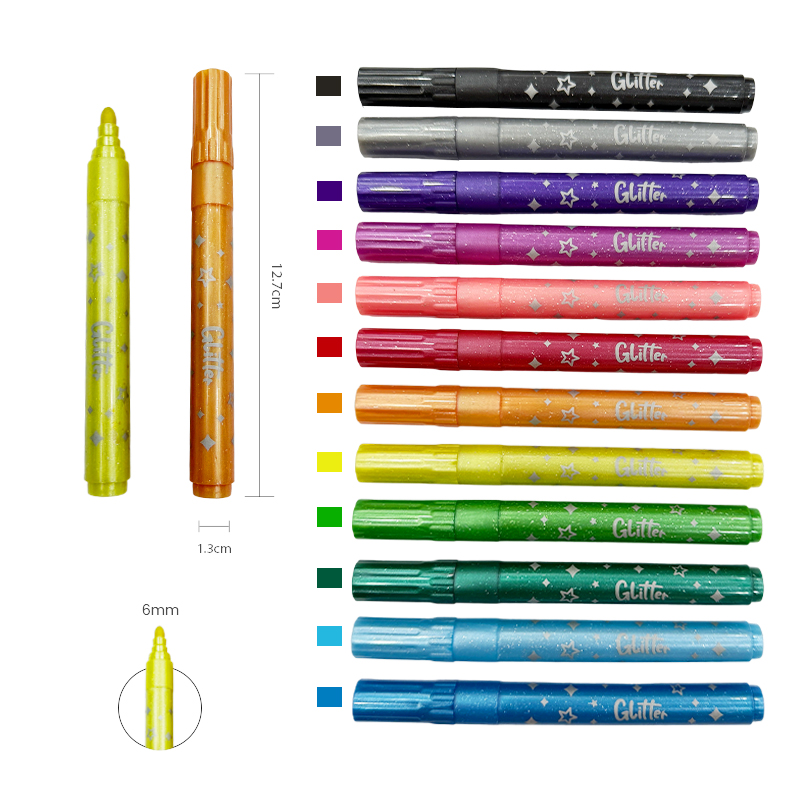
Vibrant 12-Color Single-Tip Highlighter Pen
Product Overview The Vibrant 12-Color Single-Tip Highlighter Pen set includes 12 single-tip shimmering colored pens filled with water-based glitter in...
View More -
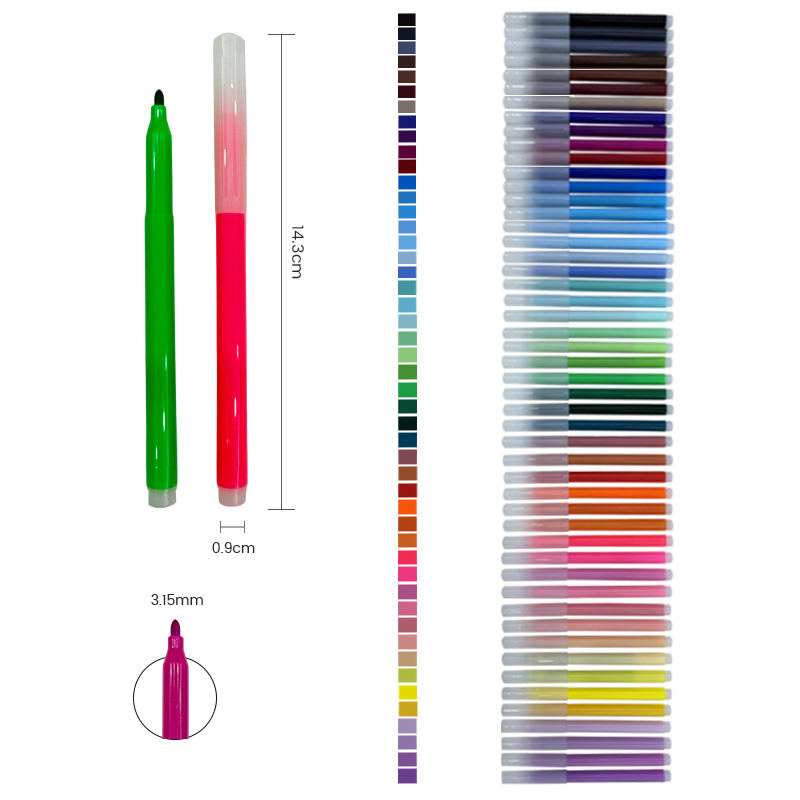
812-50 Smooth-Flowing 50-Color Watercolor Marker
812-50 Smooth-Flowing 50-Color Watercolor Marker is suitable for Art enthusiasts and students. 1. Core Advantages (3-in-1 Value Proposition) Smooth In...
View More -
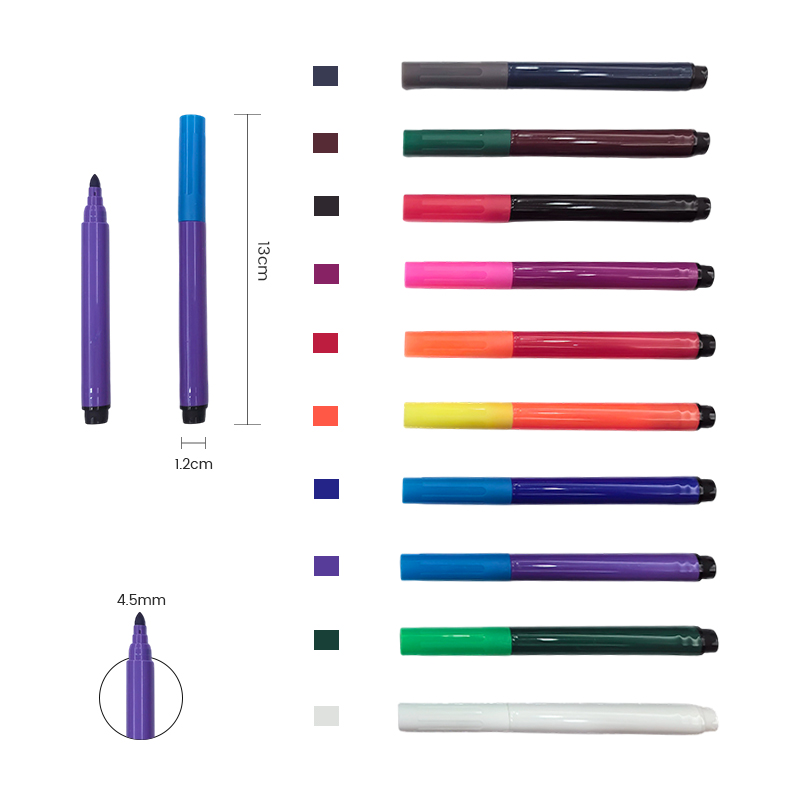
801M-10 Two-Tone Barrel Magic Markers for School
Designed to spark children's creativity and curiosity, these 801M-10 Two-Tone Barrel Magic Markers for School feature a unique characteristic: the ink...
View More -
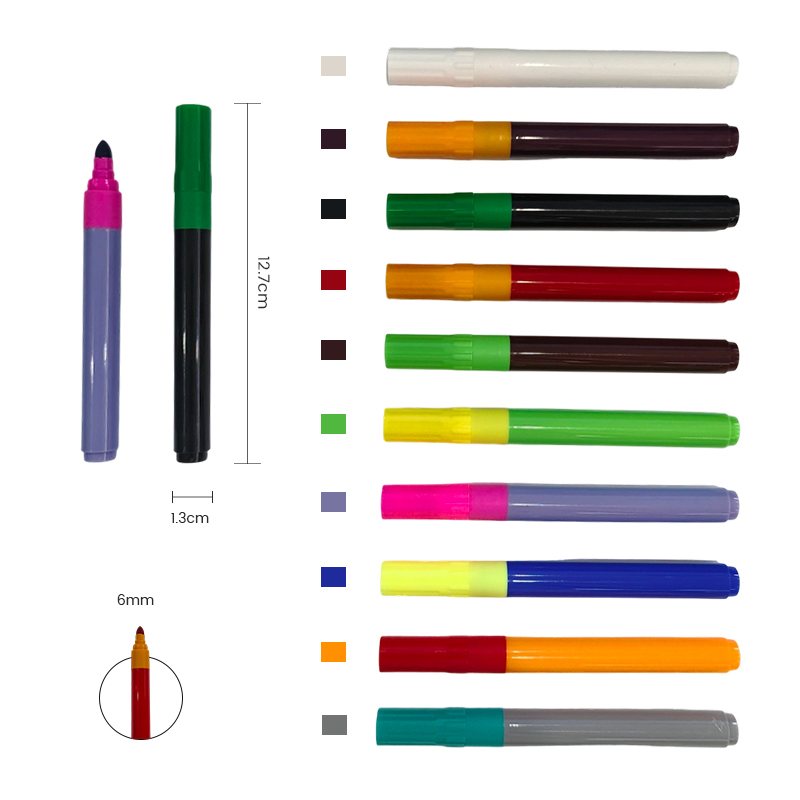
806M-10 Color Changing Magic Markers
806M-10 Color Changing Magic Markers are a set of fun drawing tools designed for children, students, and creative enthusiasts, combining three core fe...
View More


Information
-

TEL & Whatsapp: +86-15773630590
TEL : +86-13676769913
+86-19519895579 -

E-mail : [email protected]
[email protected]
[email protected]
[email protected] -
 Building 18-1, Lot 9, Wanyang Zhizao Town, Bihu Town, Liandu District, Lishui City, Zhejiang Province, China
Links
Contact Us
