

 English
 English
 русский
 Español
- Type:
- Industry News
- Date
- 2026-Aug-28
Industry News
Gouache Color Watercolor Marker: The Pen That Paints With Opacity
Watercolor washes are transparent. Gouache is not. It covers. It layers light over dark. It dries to a flat, velvety surface that looks like paint straight from the tube. A gouache color watercolor marker puts that opacity in a pen. The tip lays down thick, pigmented ink that sits on top of the paper instead of soaking into it. A wet brush pulls the color into opaque washes. A dry tip adds crisp, solid highlights over a dark background. For illustrators, designers, and lettering artists, the marker does what transparent watercolors cannot.
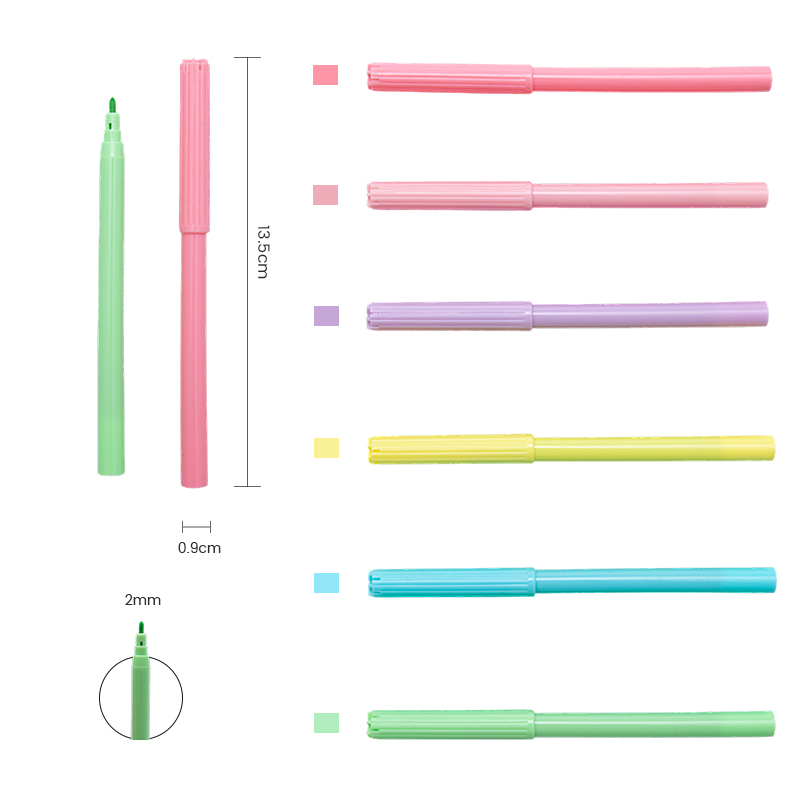
Pigment, Not Dye
Most water-soluble markers use dye-based ink. Dye dissolves completely and stains the paper. It is transparent by nature. Gouache color watercolor marker ink is loaded with pigment particles. The pigment sits on the paper surface and reflects light back. The result is flat, solid color that covers pencil lines, dark paper, and previous layers of dry paint.
The pigment concentration determines opacity. More pigment means better coverage. A gouache color watercolor marker with a high pigment load covers black ink and dark paper in fewer passes. Lower pigment loads need multiple layers and never quite hide what is underneath.
The binder inside the ink holds the pigment together and sticks it to the paper. When a wet brush touches the dried line, the binder re-wets and the pigment lifts. A gouache color watercolor marker with a properly balanced binder re-wets smoothly without turning gummy or peeling off in chunks.
Matte Finish and Layering
Gouache dries flat. No shine. No glare. That matte surface scans and photographs well. A gouache color watercolor marker laid down in a solid block of color dries to an even, velvety finish. Transparent watercolors dry with visible brushstrokes and uneven pooling. Gouache hides both.
Layering is the technique that sets gouache apart. Light colors go over dark. A white gouache marker adds highlights to a night sky. A yellow marker puts stars over a blue wash. A gouache color watercolor marker with opaque enough coverage layers without the dark color bleeding through.
Rewetting a dried gouache layer is different from re-wetting watercolor. Gouache reactivates more aggressively. The pigment lifts fast and spreads. A gouache color watercolor marker designed for controlled reactivation lets the artist work back into a dried area without accidentally erasing the base layer.
The Tip That Delivers Thick Ink
Gouache ink is thicker than dye-based ink. The marker tip has to pass a viscous fluid without clogging. A gouache color watercolor marker with a felt or fiber tip sized for pigment ink lays down consistent color without skipping or drying out mid-stroke.
Brush tips are common in gouache markers. The flexible tip mimics a paintbrush and lays down variable line width. A gouache color watercolor marker with a brush tip feels like painting. The artist draws fine lines with the point and fills broad areas with the side.
Chisel tips cover larger areas faster. A broad chisel lays down a solid band of opaque color. A gouache color watercolor marker with a chisel tip suits backgrounds, block lettering, and large-format work.
Here is what the marker needs to deliver:
- Pigment-based ink with high opacity for coverage over dark surfaces
- Flat, matte finish that scans and photographs without glare
- Controlled reactivation that lifts for blending but does not erase
- Tip design matched to the ink viscosity for consistent flow
Where Opaque Markers Prove Their Worth
Illustrators layer gouache markers over ink drawings. The color sits on top of black lines without hiding them completely unless the artist wants it to. A gouache color watercolor marker adds shadows and highlights to a finished ink drawing without a brush and palette.
Lettering artists use white and light-colored gouache markers for highlights on dark paper. The opaque ink pops against black cardstock and dark watercolor washes. A gouache color watercolor marker with a fine tip adds serifs, dots, and accents to finished lettering pieces.
Designers use gouache markers for mockups and concept sketches where flat, opaque color represents final product finishes. A gouache color watercolor marker covers a section of a sketch in seconds and dries to a presentation-ready matte surface.
What Fails When the Pigment Is Weak
The color goes on thin and the dark surface shows through. A gouache color watercolor marker with insufficient pigment load never covers. Multiple passes build up gummy layers that peel. The ink separates inside the marker. Pigment settles to the bottom and clear binder flows to the tip. The user shakes the marker to remix it before every stroke. A gouache color watercolor marker with a well-formulated suspension stays mixed.
The tip clogs because the pigment particles are too large to pass through the fiber. A gouache color watercolor marker with pigment ground fine enough for the tip diameter flows smoothly from first use to last.
A gouache color watercolor marker paints with opacity. It covers dark lines and dark paper. It layers light over dark. Choose one with high pigment load, a tip that handles the ink, and a matte finish that photographs flat. The color sits on top of the paper where it belongs. That is the point.
Related Products
-
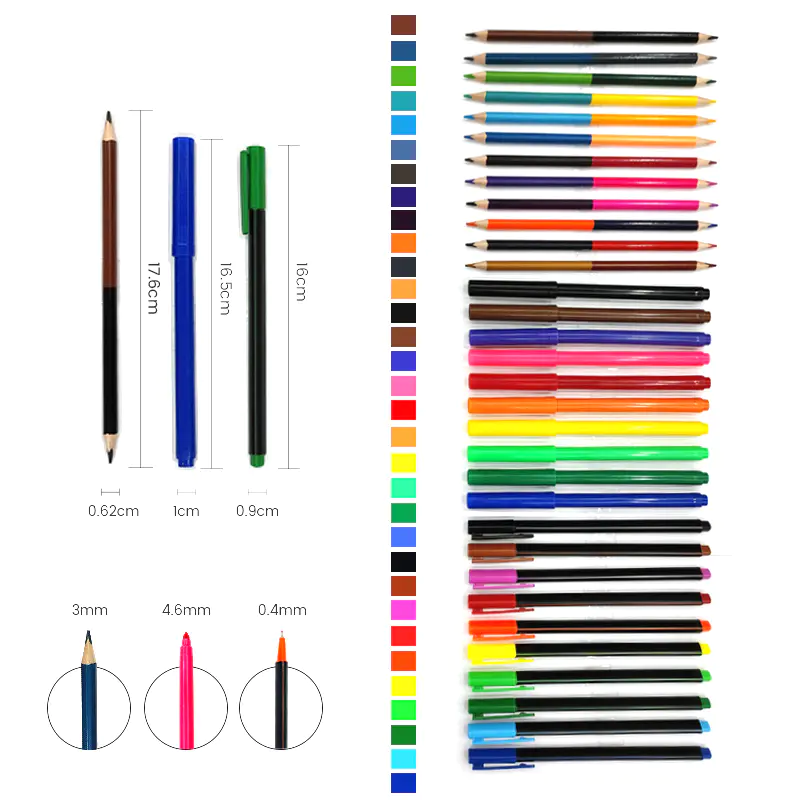
MBTZ-101 Watercolor Marker & Colored Pencil Set
Product OverviewThe MBTZ-101 Watercolor Marker & Colored Pencil Set combines fiber-tip watercolor markers, sharpenable wood-barrel colored pencils...
View More -
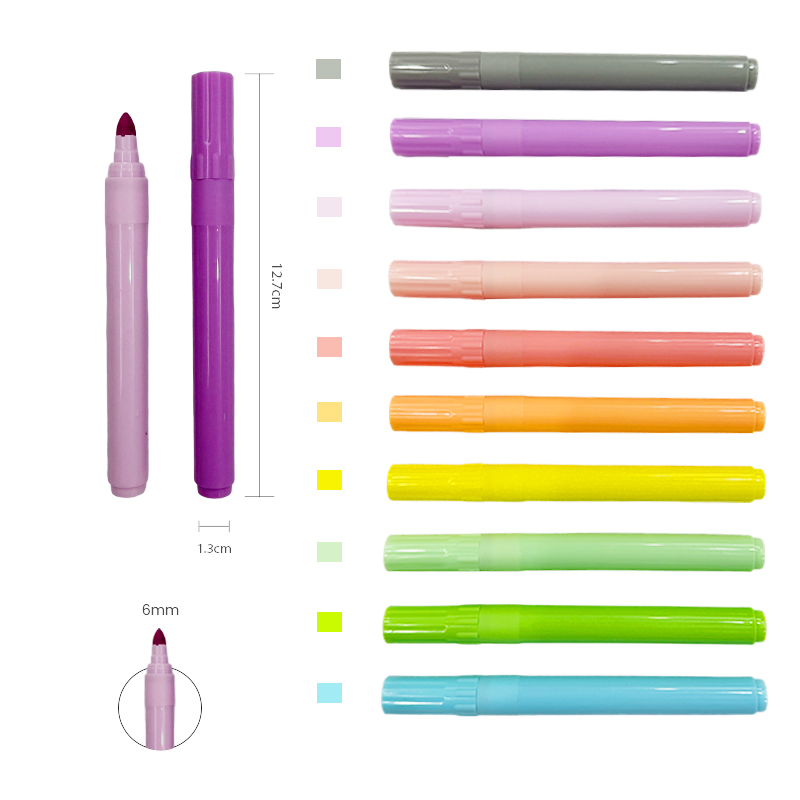
High-Opacity 6mm Round-Tip Watercolor Marker
Product Overview The High-Opacity 6mm Round-Tip Watercolor Marker stands out for its high-coverage gouache ink that colors directly on dark paper – ...
View More -
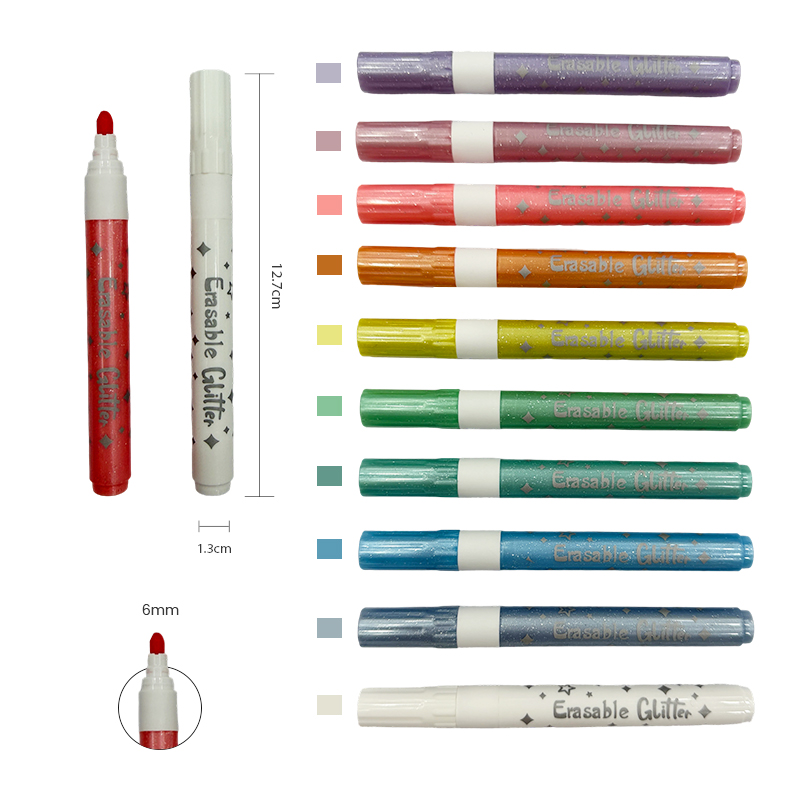
Eco-Friendly 6mm Round-Tip Erasable Highlighter Pen
Product Overview The Eco-Friendly 6mm Round-Tip Erasable Highlighter set includes 9 shimmering colored pens plus 1 dedicated white eraser pen. Featuri...
View More -
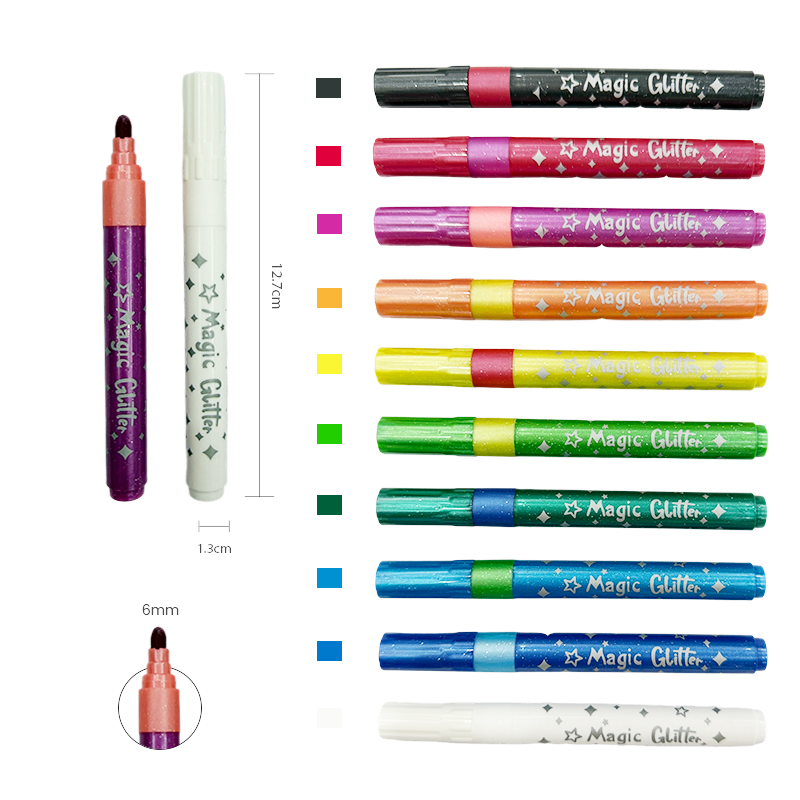
Children's Creative Magic Color-Changing Highlighter Set
Product Overview The Children's Creative Magic Color-Changing Highlighter set includes 9 shimmering colored pens in different color families plus 1 de...
View More -
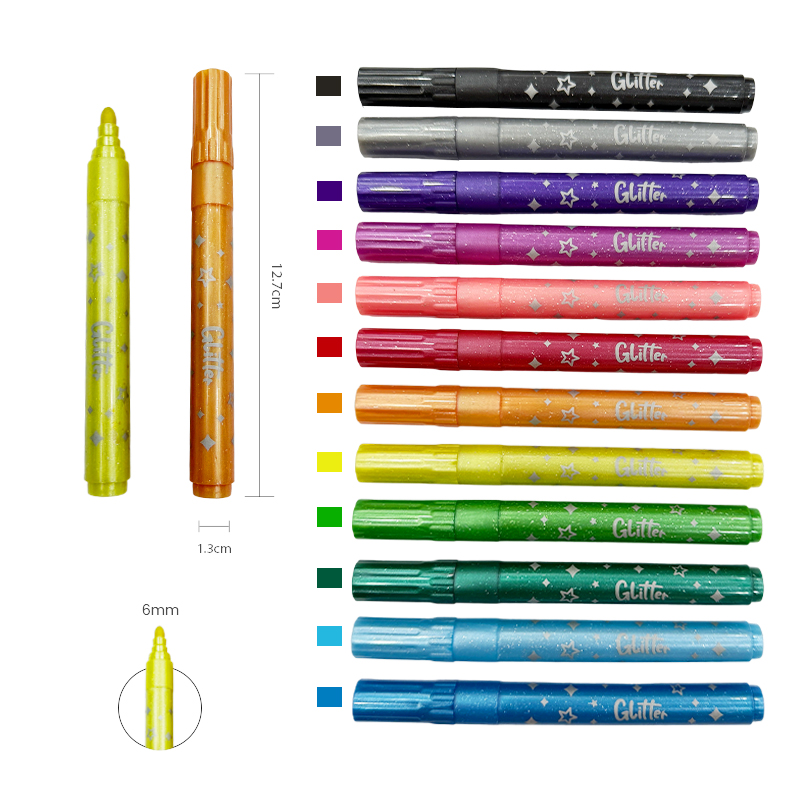
Vibrant 12-Color Single-Tip Highlighter Pen
Product Overview The Vibrant 12-Color Single-Tip Highlighter Pen set includes 12 single-tip shimmering colored pens filled with water-based glitter in...
View More -
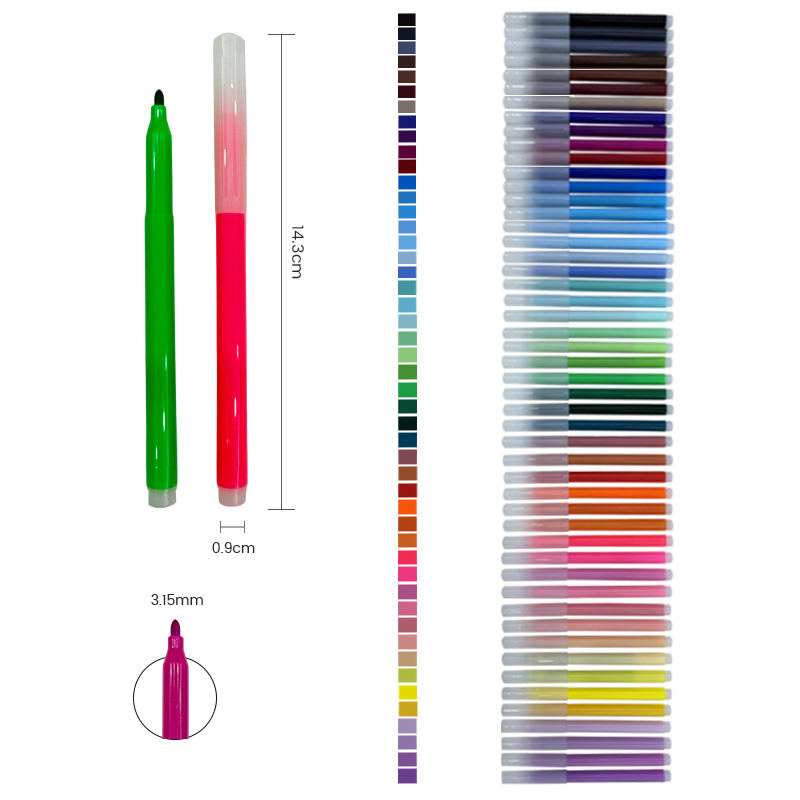
812-50 Smooth-Flowing 50-Color Watercolor Marker
812-50 Smooth-Flowing 50-Color Watercolor Marker is suitable for Art enthusiasts and students. 1. Core Advantages (3-in-1 Value Proposition) Smooth In...
View More -
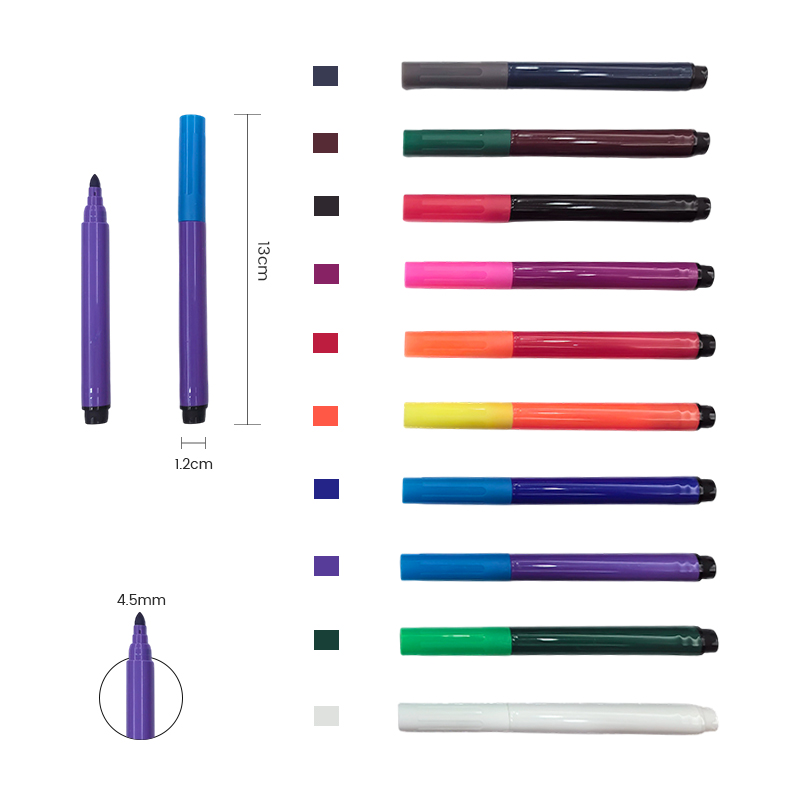
801M-10 Two-Tone Barrel Magic Markers for School
Designed to spark children's creativity and curiosity, these 801M-10 Two-Tone Barrel Magic Markers for School feature a unique characteristic: the ink...
View More -
806M-10 Color Changing Magic Markers
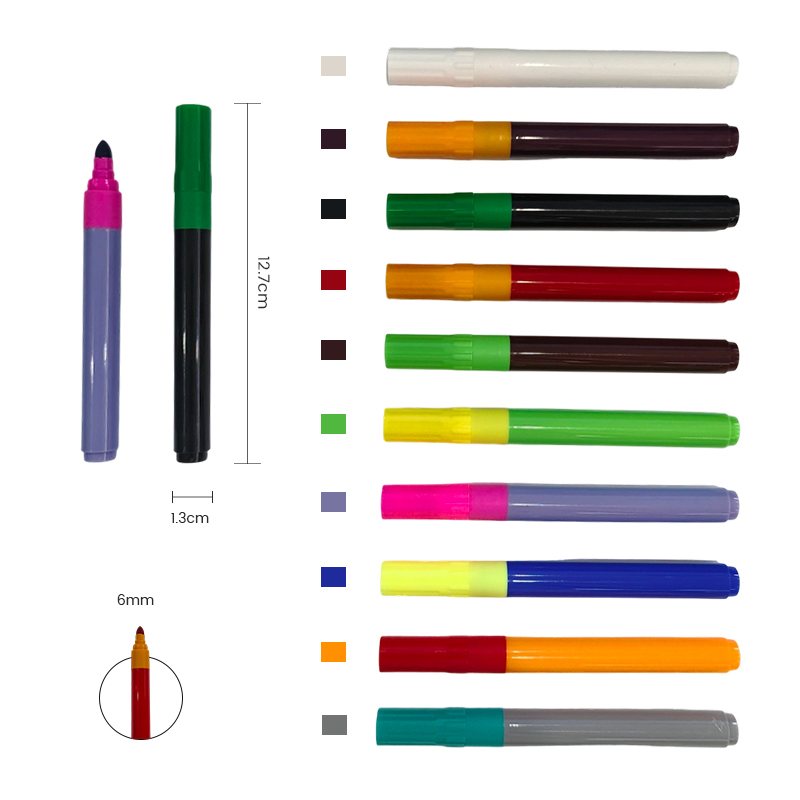
806M-10 Color Changing Magic Markers are a set of fun drawing tools designed for children, students, and creative enthusiasts, combining three core fe...
View More


Information
-

TEL & Whatsapp: +86-15773630590
TEL : +86-13676769913
+86-19519895579 -

E-mail : [email protected]
[email protected]
[email protected]
[email protected] -
 Building 18-1, Lot 9, Wanyang Zhizao Town, Bihu Town, Liandu District, Lishui City, Zhejiang Province, China
Links
Contact Us
