

 English
 English
 русский
 Español
- Type:
- Industry News
- Date
- 2026-Jul-31
Industry News
Multiple Colors Watercolor Marker: Vibrant Painting Tool for Artists
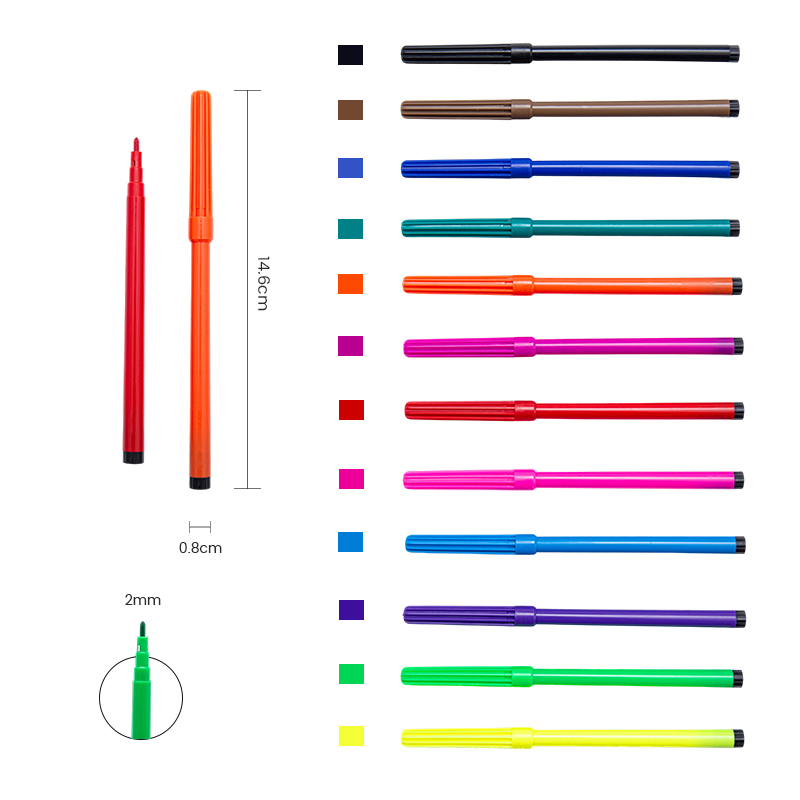
The multiple colors watercolor marker has gained popularity among painters, illustrators, and hobbyists as a versatile medium that combines the convenience of a marker with the fluid blending effects of traditional watercolor paint. This marker contains water-based pigment or dye ink that can be applied directly to paper and then activated with water to create washes, gradients, and soft transitions. Recent art supply reviews indicate that these markers offer consistent color payoff and smooth application, making them a preferred choice for urban sketching, travel journals, and mixed media artwork.
Ink Formulation and Color Range
The multiple colors watercolor marker contains water-based ink formulated with finely ground pigments or high-quality dyes that dissolve easily when water is applied. The pigments are suspended in a water-soluble binder that allows for smooth flow through the marker tip while enabling reactivation with water. The color range typically includes a broad spectrum of hues spanning primary colors (red, yellow, blue), secondary colors (orange, green, purple), earth tones (brown, umber, sienna), and pastel or neon shades for special effects. Each marker is labeled with a color name or number for easy identification, and many brands offer swatch charts to help users select coordinating palettes. The ink is fade-resistant and archival-quality in many premium lines.
Tip Designs and Application Techniques
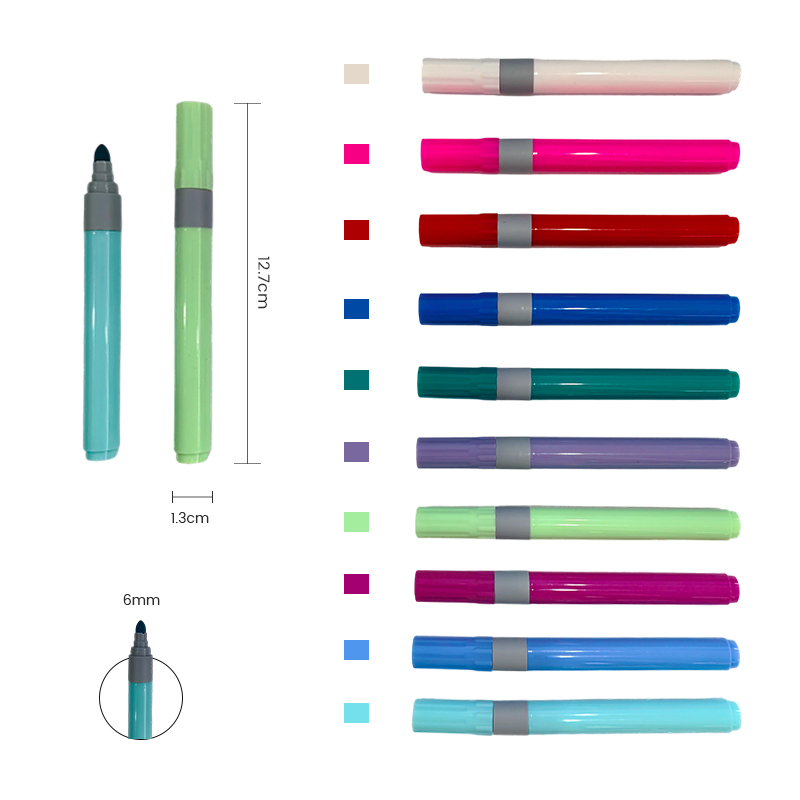
The multiple colors watercolor marker offers various tip configurations to suit different painting styles:
- Brush tips for flexible, paintbrush-like strokes suitable for washes and expressive lines;
- Bullet tips from 1 to 3 millimeters for fine details and controlled application;
- Chisel tips offering variable line widths for filling larger areas and bold strokes;
- Dual-tip designs combining two tip types in one marker for big versatility.
Key application techniques include direct painting on dry paper, water activation by spreading applied ink with a wet brush, color blending where multiple colors are merged with water, and layering where dried layers are reactivated for added depth.
Paper Compatibility and Water Activation Effects
The marker performs outstanding on watercolor paper, which has sizing that prevents excessive absorption and allows the ink to flow and blend effectively. Cold-pressed paper offers a textured surface suitable for most watercolor techniques, while hot-pressed paper provides a smooth finish for detailed work. Mixed media paper also offers versatility for combining markers with other materials. The defining characteristic of the marker is its ability to be activated with water after application. Users can apply the marker to dry paper, then use a wet brush to spread the pigment, creating gradients and soft edges. Drying time varies based on ink saturation and paper absorbency, with thin applications drying within 30 seconds to 1 minute and heavy washes taking 3 to 5 minutes. Once dry, the water-soluble nature means colors can be reactivated with water even after drying, allowing for adjustments.
Drying, Permanence, and Maintenance
Fade resistance varies by brand, with pigment-based markers typically offering longer-lasting results than dye-based versions. Artists often spray finished pieces with fixative to protect against accidental reactivation. To maintain marker performance and extend service life, follow these practices:
- Capping markers immediately after use to prevent tip drying and contamination;
- Storing markers horizontally to keep ink flowing evenly to the tip and prevent pigment settling;
- Cleaning brush tips by drawing on scrap paper or wiping with a damp cloth;
- Avoiding prolonged exposure to direct sunlight to prevent ink degradation.
If a marker tip becomes dried or clogged, dipping the tip in water for a few seconds often restores flow, though this should be done sparingly. Water-based formulations are generally non-toxic and meet ASTM D-4236 standards, making them safe for artists of all ages. The markers are free from harmful solvents and heavy metals.
Related Products
-
High-Opacity 6mm Round-Tip Watercolor Marker
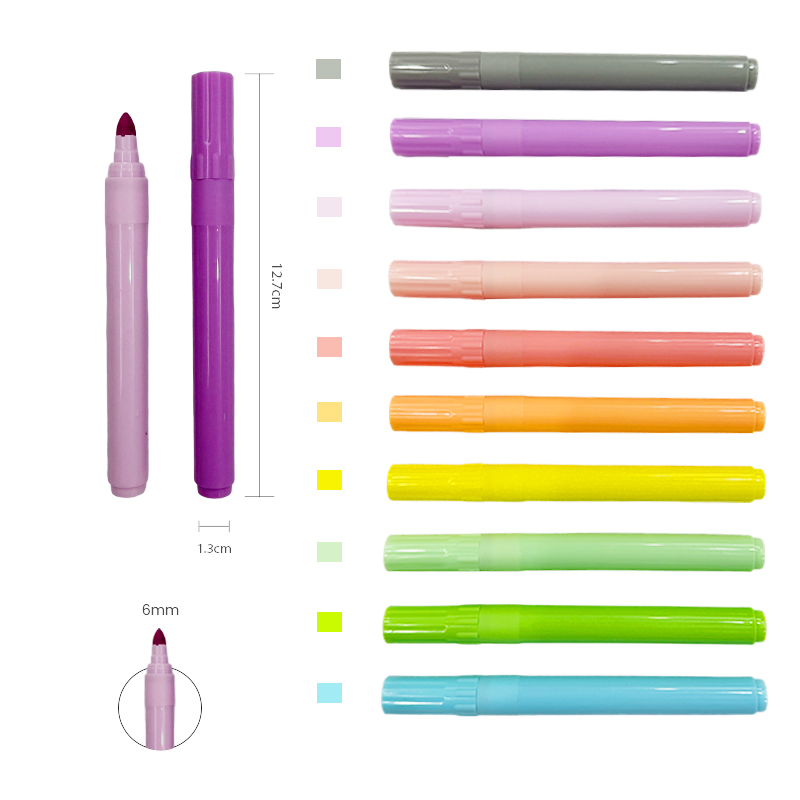
Product Overview The High-Opacity 6mm Round-Tip Watercolor Marker stands out for its high-coverage gouache ink that colors directly on dark paper – ...
View More -
Eco-Friendly 6mm Round-Tip Erasable Highlighter Pen
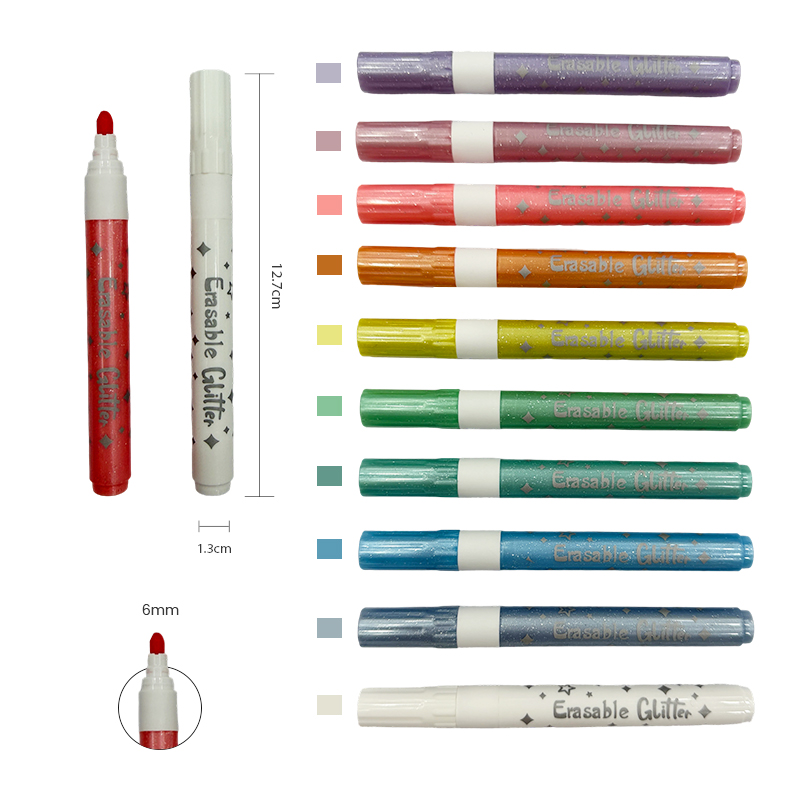
Product Overview The Eco-Friendly 6mm Round-Tip Erasable Highlighter set includes 9 shimmering colored pens plus 1 dedicated white eraser pen. Featuri...
View More -
Children's Creative Magic Color-Changing Highlighter Set
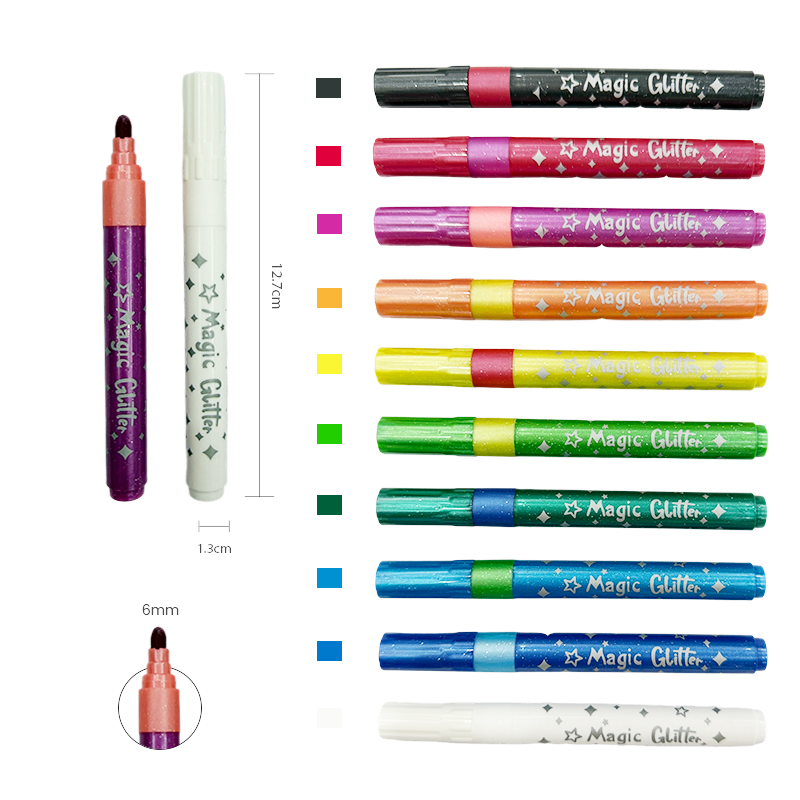
Product Overview The Children's Creative Magic Color-Changing Highlighter set includes 9 shimmering colored pens in different color families plus 1 de...
View More -
Vibrant 12-Color Single-Tip Highlighter Pen
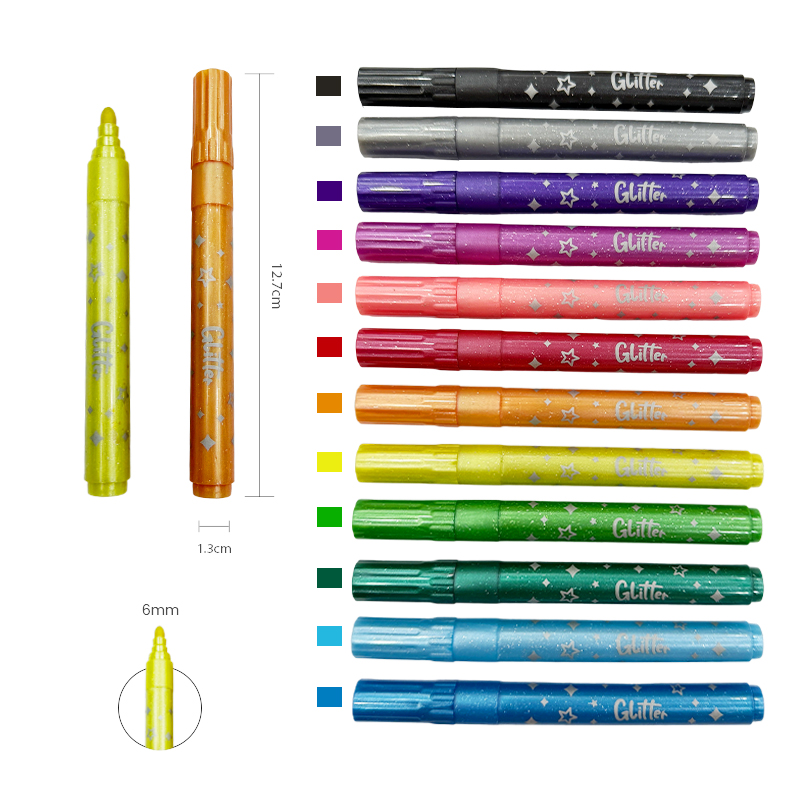
Product Overview The Vibrant 12-Color Single-Tip Highlighter Pen set includes 12 single-tip shimmering colored pens filled with water-based glitter in...
View More -
812-50 Smooth-Flowing 50-Color Watercolor Marker
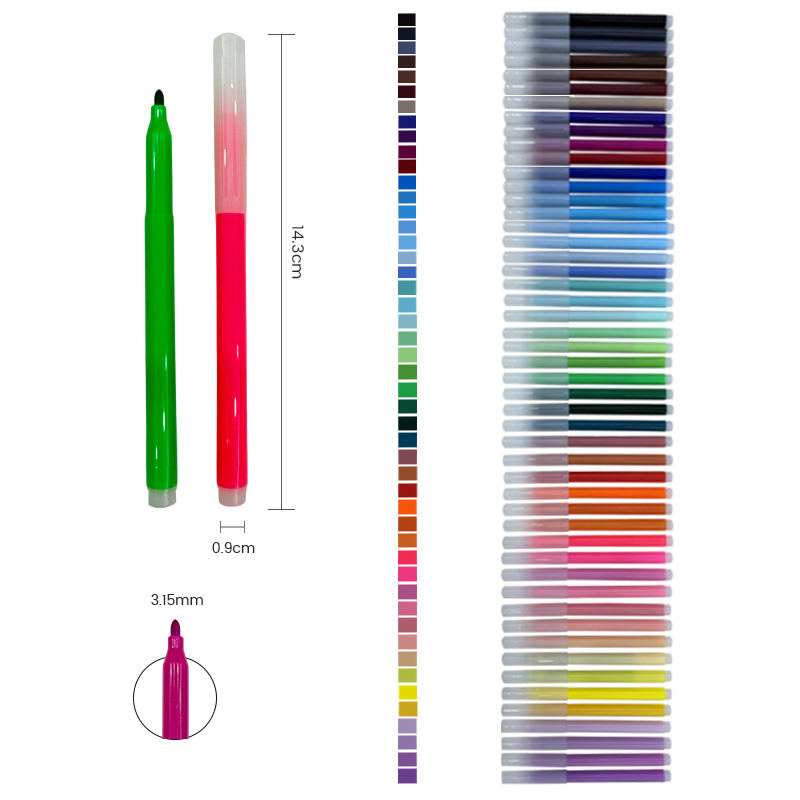
812-50 Smooth-Flowing 50-Color Watercolor Marker is suitable for Art enthusiasts and students. 1. Core Advantages (3-in-1 Value Proposition) Smooth In...
View More -
801M-10 Two-Tone Barrel Magic Markers for School
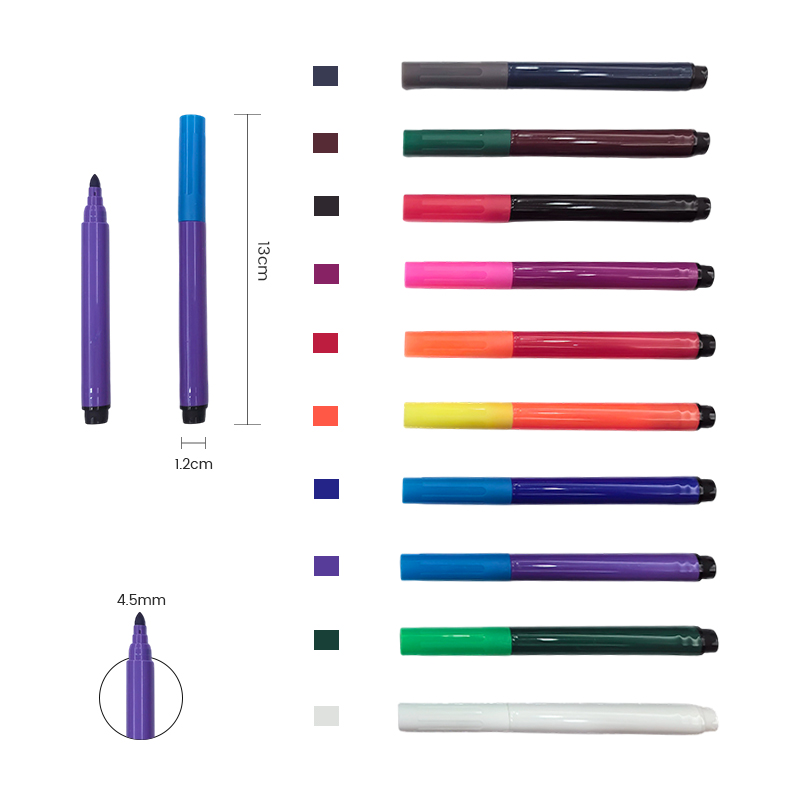
Designed to spark children's creativity and curiosity, these 801M-10 Two-Tone Barrel Magic Markers for School feature a unique characteristic: the ink...
View More -
806M-10 Color Changing Magic Markers
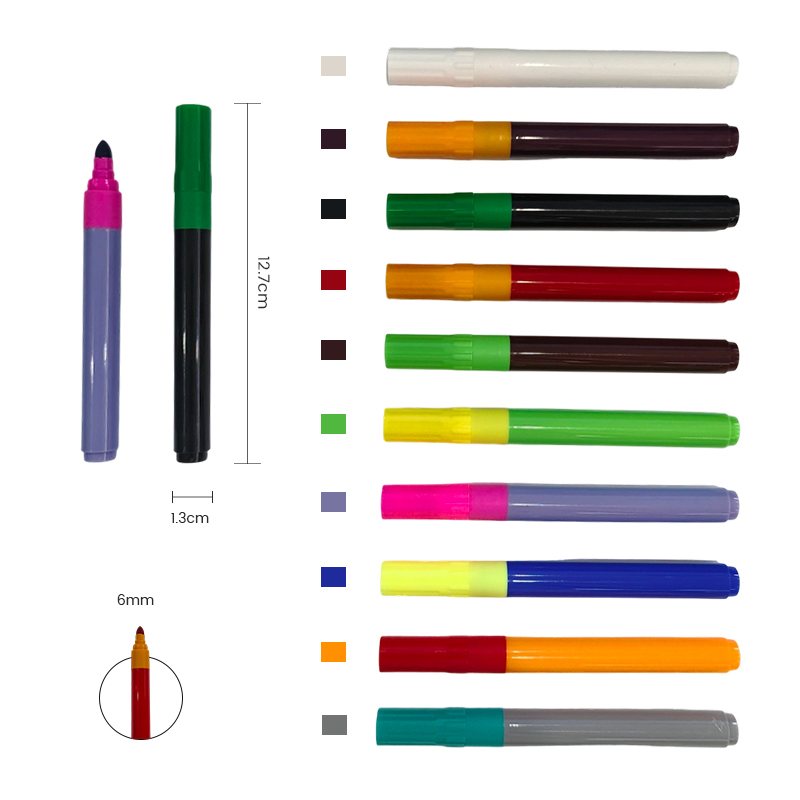
806M-10 Color Changing Magic Markers are a set of fun drawing tools designed for children, students, and creative enthusiasts, combining three core fe...
View More -
806E-10 Washable Erasable Magic Markers for Kids Drawing
Designed for children, students, and journaling enthusiasts, these magic markers combine three key advantages: safety and non-toxicity, vibrant colors...
View More


Information
-

TEL & Whatsapp: +86-15773630590
TEL : +86-13676769913
+86-19519895579 -

E-mail : [email protected]
[email protected]
[email protected]
[email protected] -
 Building 18-1, Lot 9, Wanyang Zhizao Town, Bihu Town, Liandu District, Lishui City, Zhejiang Province, China
Links
Contact Us
