

 English
 English
 русский
 Español
Double Head Acrylic Marker
The Double Head Acrylic Marker is designed to meet the needs of artist...
Read More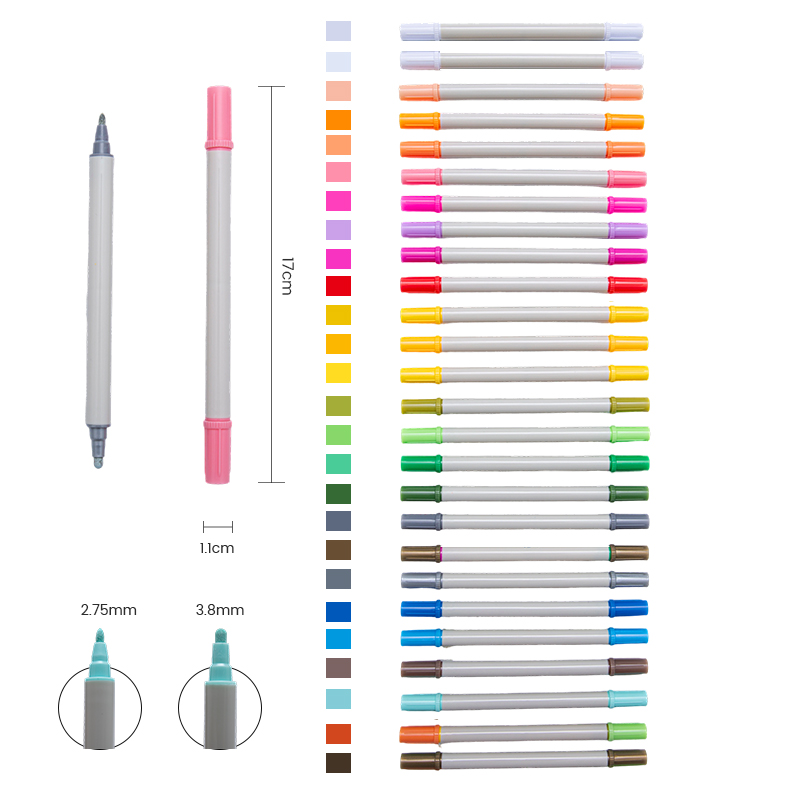
The Double Head Acrylic Marker is designed to meet the needs of artist...
Read More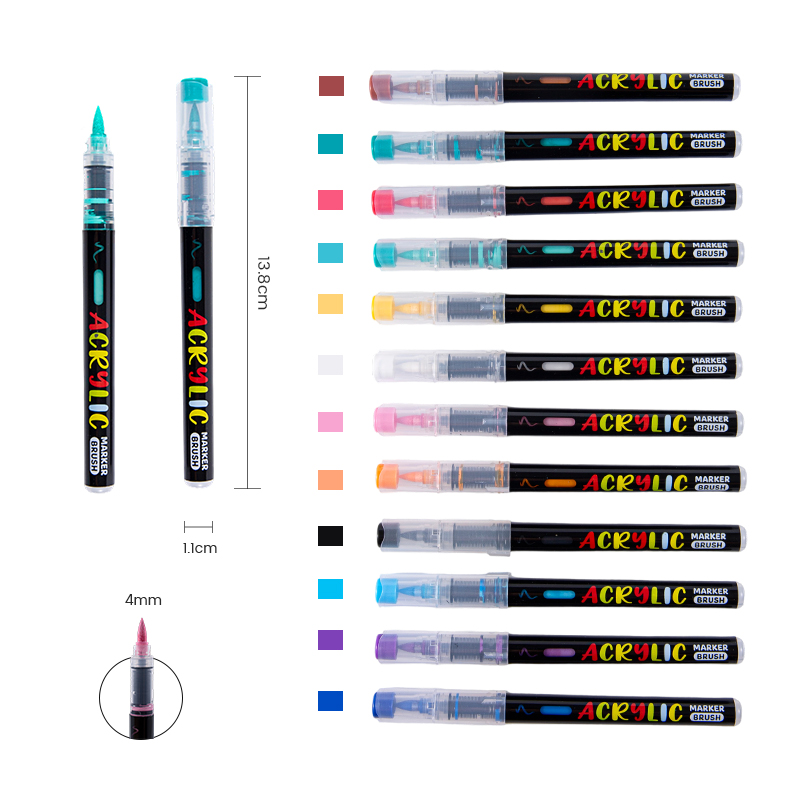
The Transparent Pen Cap Acrylic Marker is a versatile tool designed fo...
Read More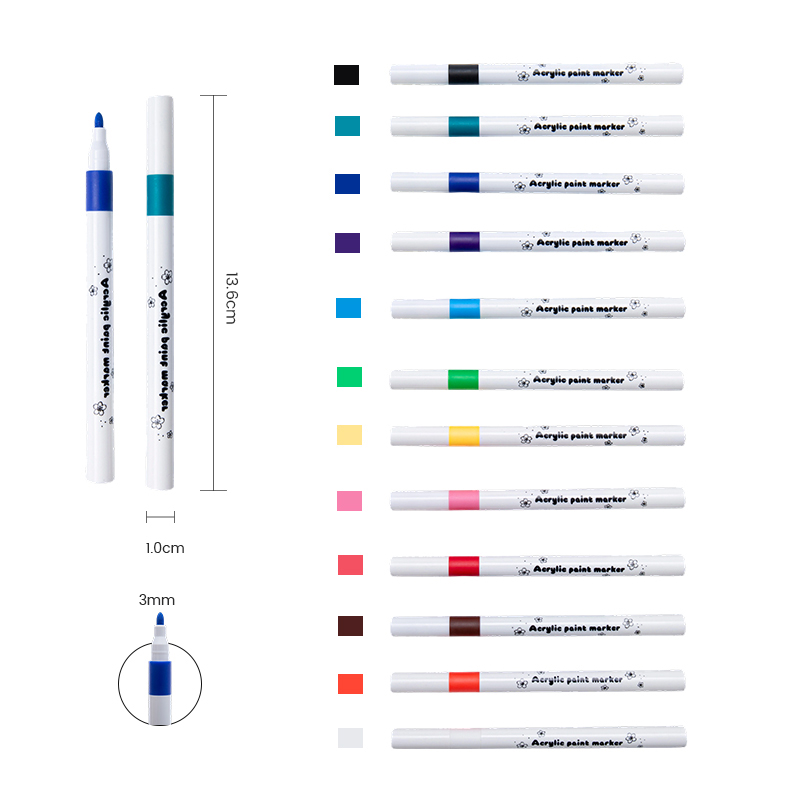
The White Acrylic Marker With Pattern is designed to provide smooth an...
Read MoreAcrylic markers are designed to provide smooth and consistent coverage on a wide range of surfaces. They can be used on paper, canvas, wood, glass, plastic, stone, and fabric, making them suitable for different creative and practical projects. Their water-based pigment ink allows for even application, helping users achieve clean lines and clear details.
Rich and Durable Color
One of the key advantages of acrylic markers is the vivid and opaque color they deliver. The ink is formulated to remain visible on both light and dark surfaces, offering flexibility in design. Once dried, the color becomes water-resistant and long-lasting, which helps preserve artwork or decorative details over time. This durability makes the markers suitable for indoor and outdoor use.
Easy to Use
The pen-style design provides comfortable handling, while the fine or medium tips allow users to choose the right precision for their project. The ink flows smoothly without the need for additional tools, and the controlled release ensures minimal smudging or leakage. Whether for drawing, lettering, outlining, or coloring large areas, acrylic markers offer a convenient solution.
Safe and Practical Choice
Acrylic markers typically use water-based, low-odor ink that is safe for general use. This makes them a practical option for schools, workshops, studios, or home projects. They are also easy to clean from skin and most non-porous surfaces before drying, adding to their user-friendly qualities.
Creative Potential
With a wide variety of colors available, these markers encourage creativity in both professional and hobby settings. They can be layered, blended, or combined with other art materials to create unique effects. This flexibility allows artists, designers, and DIY enthusiasts to explore multiple techniques and achieve diverse results.
Zhejiang Meibao Stationery Co., Ltd. is Wholesale Acrylic Marker Manufacturer and China Acrylic Marker Factory, and has over 20 years of experience in the Stationery field mainly engaged in producing and selling Watercolor pens, fine liners, Highlighter, and Markers, It insists on a "quality first, reputation first" business purpose, and hold the tireless hard work of faith to make our production technology and product quality reached a new level. The factory has passed the BSCl WCA audit and the products are in conformity with European CE, EN71-1/2/3/9/11, BS7272, REACH, PAHs, MSDS, and American LHAMA, ASTM-D4236 safe standard testing requirements and are sold in America, Europe, the Middle East, and Southeast Asia Highly praised by customers.

In recent years, everyday writing tools have evolved beyond simple functionality and are now becoming creative instrumen...
Creative writing tools are experiencing a resurgence as more people rediscover the joy of artistic expression through si...
Personal journaling has evolved far beyond simple diary writing. Today, it has become a creative lifestyle activity embr...
Creative expression has always evolved alongside new tools and materials. Recently, social platforms have seen a renewed...
Acrylic markers are essentially liquid acrylic paint housed in a pen-like applicator. Their core materials and resulting characteristics define their performance.
Core Material: Acrylic Polymer Emulsion: The ink is a precisely formulated, water-based acrylic paint. This polymer emulsion consists of pigment suspended in an acrylic binder, which dries to form a flexible, waterproof, and durable plastic film.
Applicator Tips: Tips are typically made from compressed, porous felt or nylon. They are engineered to control paint flow and come in various shapes—including bullet, chisel, and fine points—to create different line weights and effects.
Key Characteristics:
Opacity and Vibrancy: Many acrylic paint markers offer coverage and highly pigmented, vibrant colors, effectively covering dark or colored surfaces.
Quick-Drying and Permanent: Once dry, the acrylic film is water-resistant, lightfast, and adheres firmly to many substrates, making the artwork durable.
Multi-Surface Application: They are designed to work on a far broader range of surfaces than markers, including canvas, wood, metal, glass, ceramic, plastic, stone, and fabric.
Layerability: Artists can build up layers of color without reactivating the dried paint beneath, allowing for techniques like highlighting, shading, and correction.
The appeal of acrylic paint pens lies in their ability to translate a classic artistic medium into a more accessible and controlled form. Their narrative is one of expanding creative boundaries.
Bridging Precision and Paint
Traditional tube acrylics are celebrated for their texture and body but can be challenging for fine detail work. Acrylic paint pens solve this by delivering the same paint in a contained, precise format. This allows artists to execute intricate line work, stippling, dot art (like mandalas), and precise lettering directly onto complex surfaces like round ceramics or textured canvas, achieving a level of control that is difficult with a brush alone.
The Gateway to Mixed Media and Upcycling
Their multi-surface capability makes them a cornerstone of mixed-media art and DIY upcycling projects. A single set of markers can be used to personalize a ceramic mug, decorate a pair of canvas shoes, add permanent designs to a vinyl record, or embellish a wooden jewelry box. This versatility encourages experimentation and transforms ordinary objects into personalized artworks, reducing the need for specialized paints for each material.
From Studio to Street: Expanded Venues
The portability and lack of required setup (no easel, water, or palette) have moved acrylic painting out of the traditional studio. They are favored by illustrators for adding final opaque highlights, by crafters at workshops, and even in public art for touch-ups and adding fine details to murals. This adaptability has made the medium more democratic, supporting artistic expression in diverse, non-traditional settings.
The primary advantage is convenience and efficiency. A dual-tip pen consolidates two essential tools into one, reducing the number of individual markers an artist needs to manage, store, and purchase. This is particularly beneficial for detailed projects requiring constant switching between outlining (fine tip) and filling in areas (broad tip), streamlining the creative workflow without the need to search for and recap multiple pens.
This is a recognized consideration. While the ink reservoir is shared, prolonged non-use of one tip while the other is active can potentially the unused tip becoming clogged with dried acrylic paint. To mitigate this, it is recommended to briefly test and draw with both tips on a scrap surface during each use. Storing the pen horizontally with the caps securely fastened also helps maintain even ink distribution and tip health.
Their suitability depends on the project's demands. For professional work requiring absolute consistency in line width or very specialized tip shapes, dedicated single-tip markers might be preferred. However, dual-tip pens are extensively used by professionals—including illustrators, graphic designers, and muralists—for sketching, planning, adding details, and projects where efficiency and versatility are paramount. Their quality is determined by the pigment density and lightfastness of the ink, with professional-grade options available from several brands.

Copyright ©
Zhejiang Meibao Stationery Co., Ltd. All Rights
Reserved.

Dual Tip Acrylic Paint Pens Supply

TEL & Whatsapp: +86-15773630590
TEL :
+86-13676769913
+86-17385445716(claire)

E-mail :
[email protected]
[email protected]
[email protected]

