

 English
 English
 русский
 Español
- Type:
- Industry News
- Date
- 2026-Jun-19
Industry News
Metallic Marker Pen: Shine That Sticks to Almost Anything
A regular marker writes on paper. That is about all it does. A metallic marker pen works on paper, glass, plastic, metal, and ceramic. The ink has metallic pigments that bounce light back at you. It shines. Crafters love them for scrapbooks. Sign makers use them on windows. Factory workers mark metal parts that move down assembly lines. One pen replaces a handful of other tools.
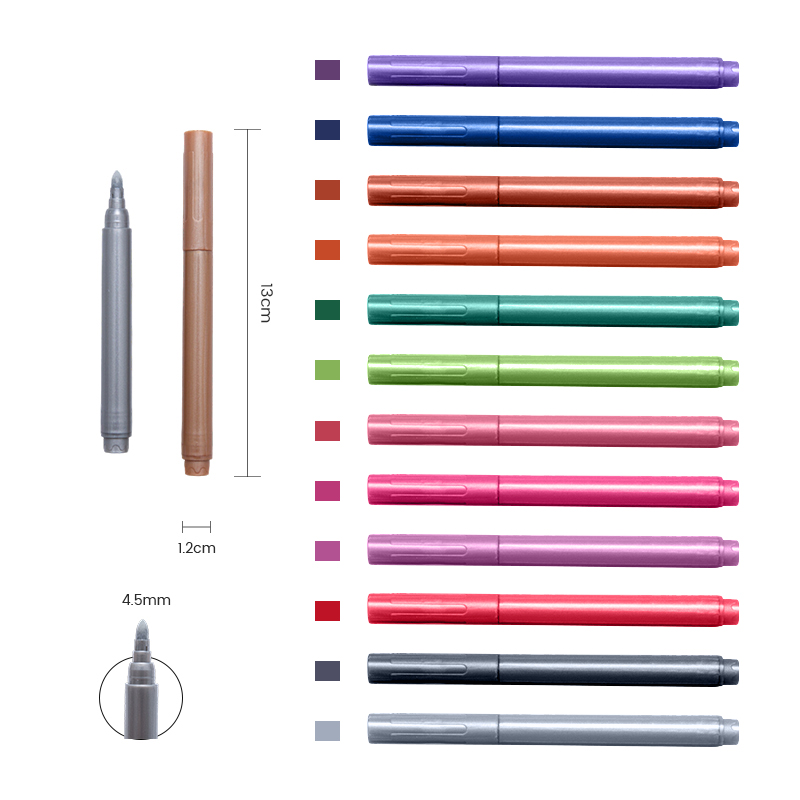
What Makes the Ink Shine
Tiny metal flakes reflect light like a mirror
The magic is in the pigment. Aluminum flakes give you silver. Bronze and copper give you gold and copper tones. These flakes are tiny—small enough to pass through the tip, big enough to catch light. When the ink dries, the flakes sit flat on the surface. Light hits them. It bounces back. That is the shine.
The solvent does the delivery work. It carries the pigment out of the pen and onto whatever you are writing on. Then it evaporates. The pigment stays behind. The mark becomes permanent on many surfaces.
The tip controls how the ink flows
The tip is felt or fiber. Fine tips lay down thin, precise lines. Broad tips cover more area, good for coloring or thick lettering. Bullet tips are round. Chisel tips have a flat edge—they make thick strokes when held flat and thin strokes when tilted.
But the tip has a hard job. It has to hold up to the solvent in the ink. Cheap tips break down. They swell, soften, or dissolve. The marker starts skipping or stops writing altogether.
Where a Metallic Marker Pen Proves Useful
Crafters use them for scrapbook titles and borders
A page full of photos needs a title that stands out. Silver on dark paper catches the eye. Gold on white paper looks warm. Copper works well on earth tones. The metallic finish draws attention without being flashy.
Retailers use them for window signs and price tags
A shop window needs to be readable from the street. Glass does not hold regular marker ink well. It beads up and wipes off. A metallic marker pen sticks to glass. The mark does not smear. It does not wipe off with a dry cloth. Shop owners write daily specials. They change prices. The marks stay sharp.
Industrial workers use them to mark parts
Metal parts need identification numbers. Production dates. Batch codes. The ink on a metallic marker pen resists oil. It resists grease. It does not fade on a factory floor. The mark stays legible through handling and storage.
What to Look for When Buying One
Ink type determines where you can use it
Water-based markers are safe and low odor. They work on paper. They are easy to clean up. They do not stick to glass or metal. Solvent-based markers are permanent. They bond to glass, metal, and plastic. They have a strong smell. You need ventilation. Oil-based markers sit between the two. They work well on metal and glass. They take longer to dry.
Here is what ink types are good for:
- Water-based — paper, cardboard, safe for kids, low odor
- Solvent-based — glass, metal, plastic, outdoor use, permanent
- Oil-based — metal, glass, slower drying, good for industrial use
Tip size changes what you can do with it
A 0.7mm tip writes small, legible letters. Good for labeling bins or writing dates. A 2mm tip works for bold headlines and thick lines. A chisel tip covers both broad strokes and fine lines, depending on the angle you hold it.
Color selection matters for the look you want
Gold and silver are the many popular. They work on light and dark surfaces. Copper is good for earthy projects. Colored metallics—red, blue, green—are less common but useful for matching brand colors or seasonal themes.
What Goes Wrong with Cheap Ones
The pigment settles and clogs the tip
Metallic pigment is heavy. It sinks to the bottom of the ink reservoir. You shake the pen to mix it. Cheap pens have poor pigment suspension. You shake it. It mixes for five strokes. Then it settles again. The tip clogs. The marker stops writing.
The ink fades in sunlight
Cheap pigment breaks down in UV light. The silver turns gray. The gold turns brown. The shine is gone. The mark is still there, but it looks dull. That is not what you bought it for.
The tip frays on rough surfaces
Glass and metal are abrasive. The tip grinds against them. Cheap tips fray. The line becomes blotchy. The marker is useless for fine work.
The cap does not seal
Solvent evaporates through a loose cap. The ink dries inside the tip. Left uncapped for an hour, the marker is dead. You cannot revive it. Cheap pens cut corners on cap seals to save money.
A good metallic marker pen costs more upfront. The pigment stays mixed. The tip lasts. The cap seals tight. For crafters, sign makers, and industrial workers, it is a tool that delivers. Store it horizontally. Keep the cap on. It will write until the ink runs out. That is what you pay for.
Related Products
-
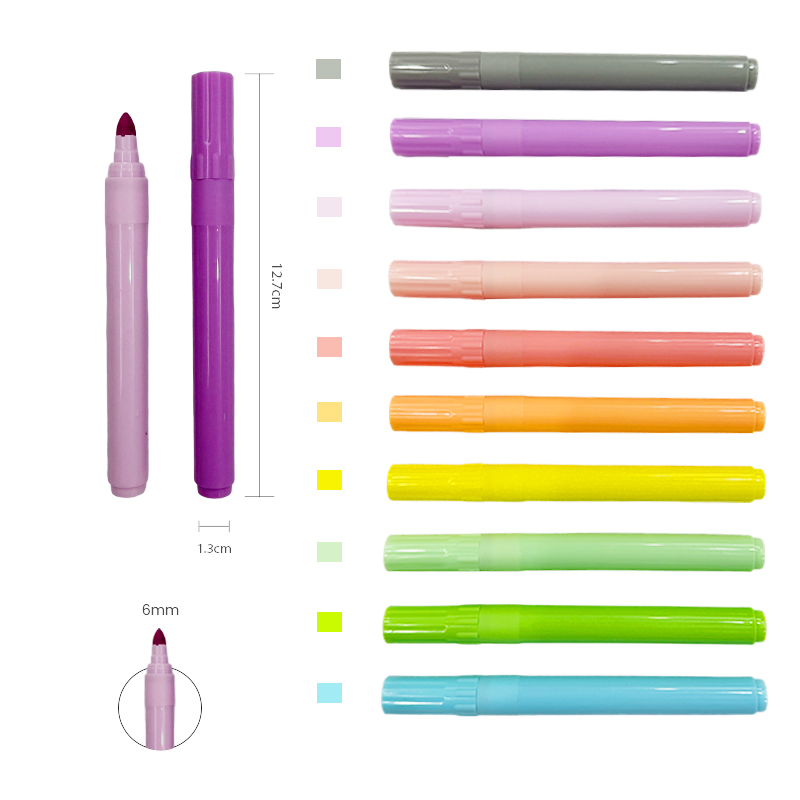
High-Opacity 6mm Round-Tip Watercolor Marker
Product Overview The High-Opacity 6mm Round-Tip Watercolor Marker stands out for its high-coverage gouache ink that colors directly on dark paper – ...
View More -
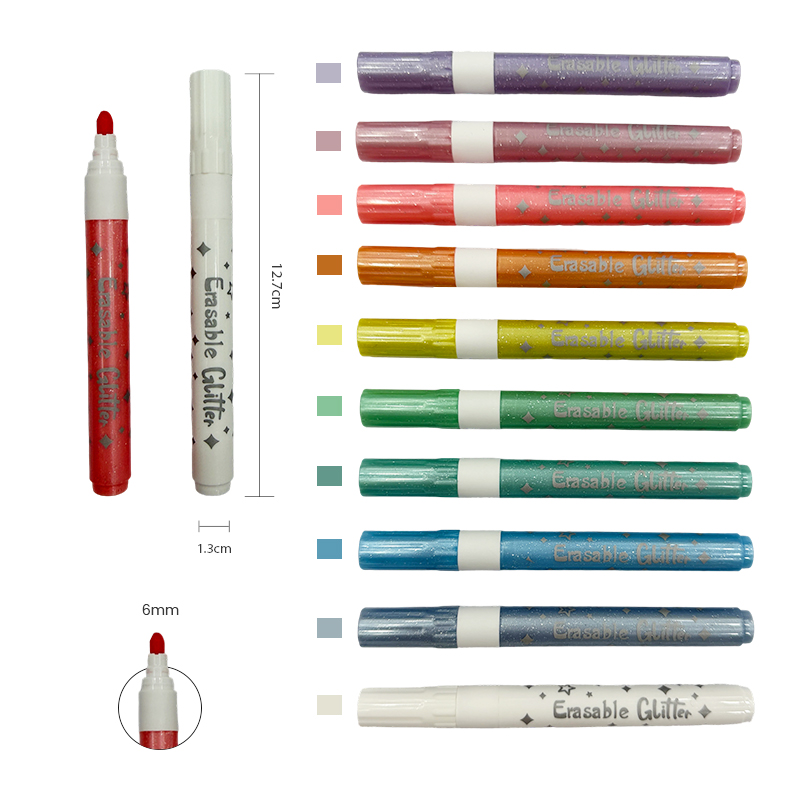
Eco-Friendly 6mm Round-Tip Erasable Highlighter Pen
Product Overview The Eco-Friendly 6mm Round-Tip Erasable Highlighter set includes 9 shimmering colored pens plus 1 dedicated white eraser pen. Featuri...
View More -
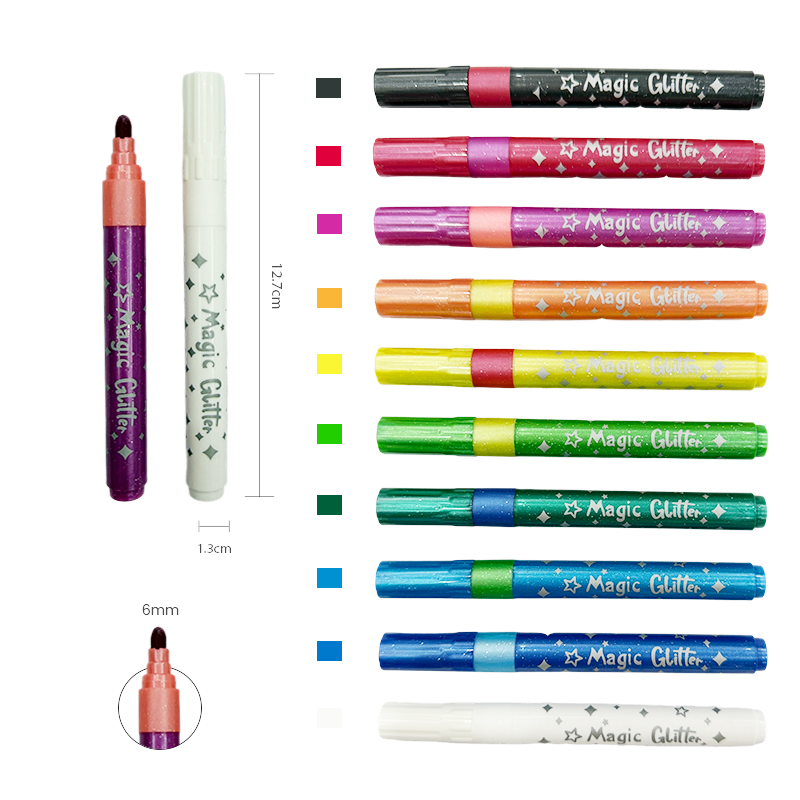
Children's Creative Magic Color-Changing Highlighter Set
Product Overview The Children's Creative Magic Color-Changing Highlighter set includes 9 shimmering colored pens in different color families plus 1 de...
View More -
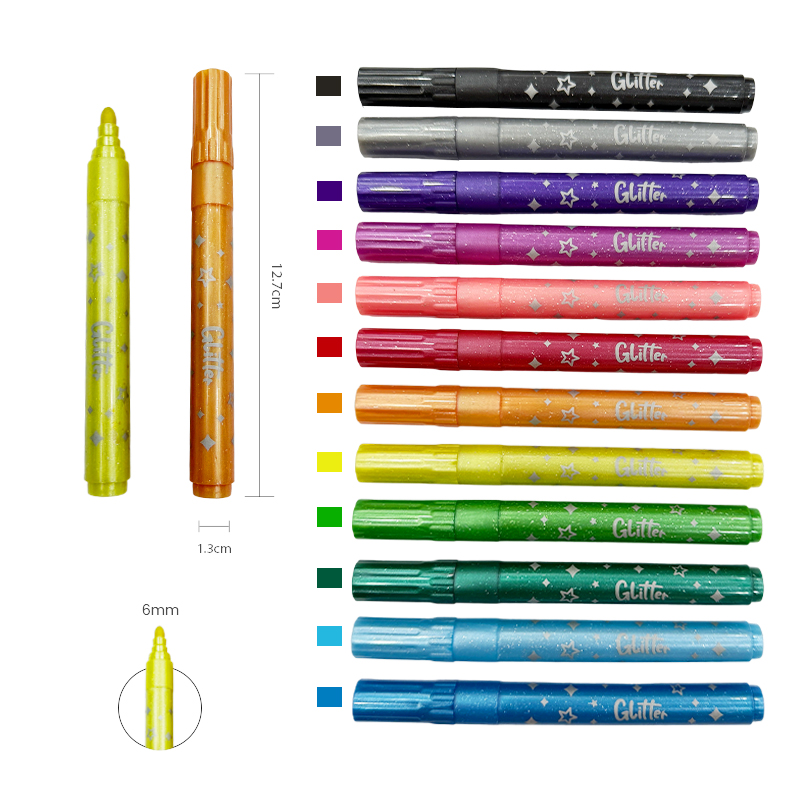
Vibrant 12-Color Single-Tip Highlighter Pen
Product Overview The Vibrant 12-Color Single-Tip Highlighter Pen set includes 12 single-tip shimmering colored pens filled with water-based glitter in...
View More -
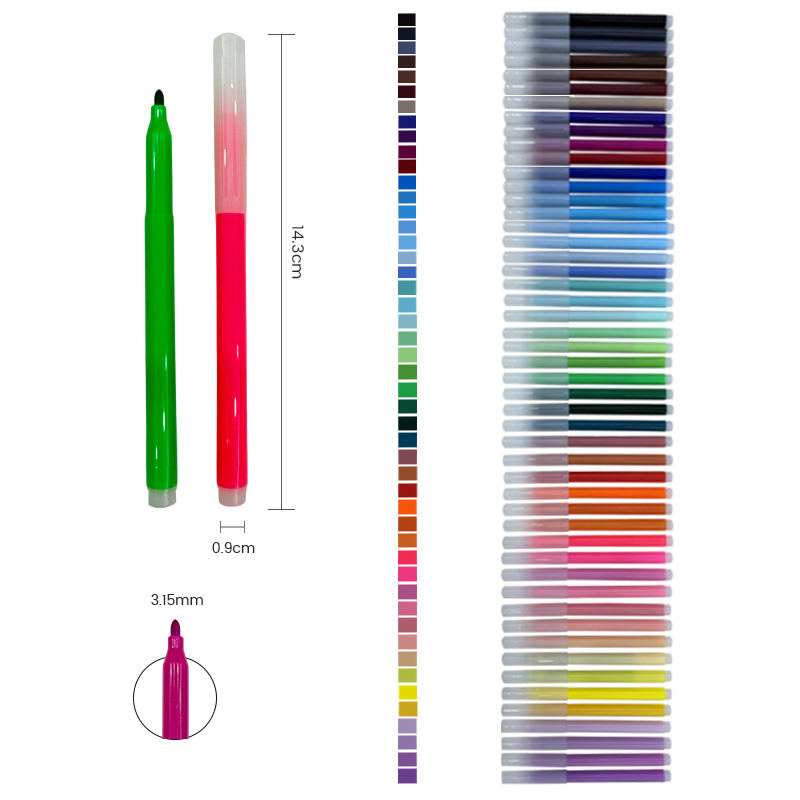
812-50 Smooth-Flowing 50-Color Watercolor Marker
812-50 Smooth-Flowing 50-Color Watercolor Marker is suitable for Art enthusiasts and students. 1. Core Advantages (3-in-1 Value Proposition) Smooth In...
View More -
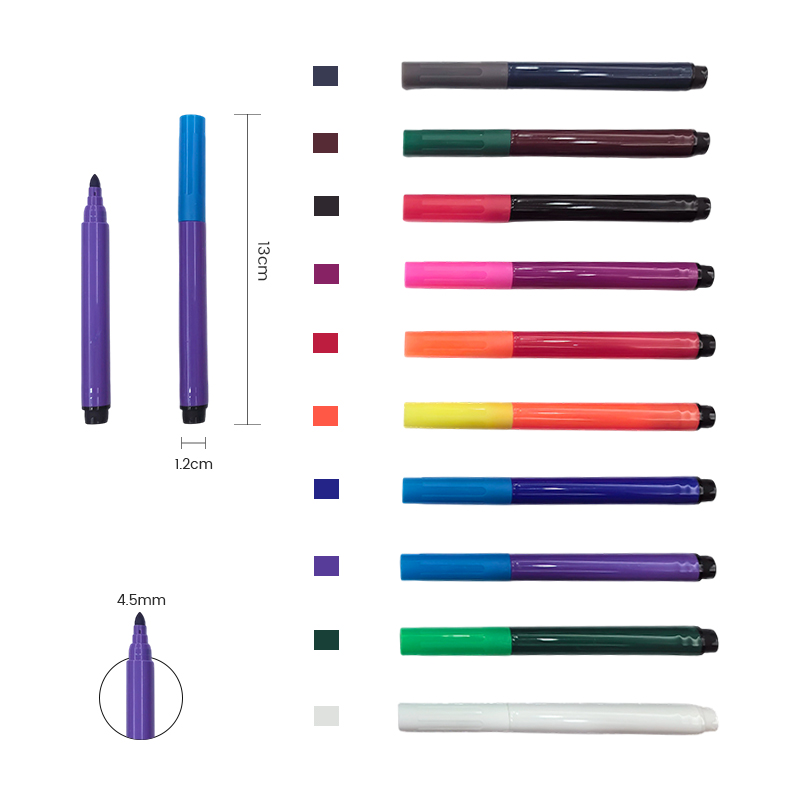
801M-10 Two-Tone Barrel Magic Markers for School
Designed to spark children's creativity and curiosity, these 801M-10 Two-Tone Barrel Magic Markers for School feature a unique characteristic: the ink...
View More -
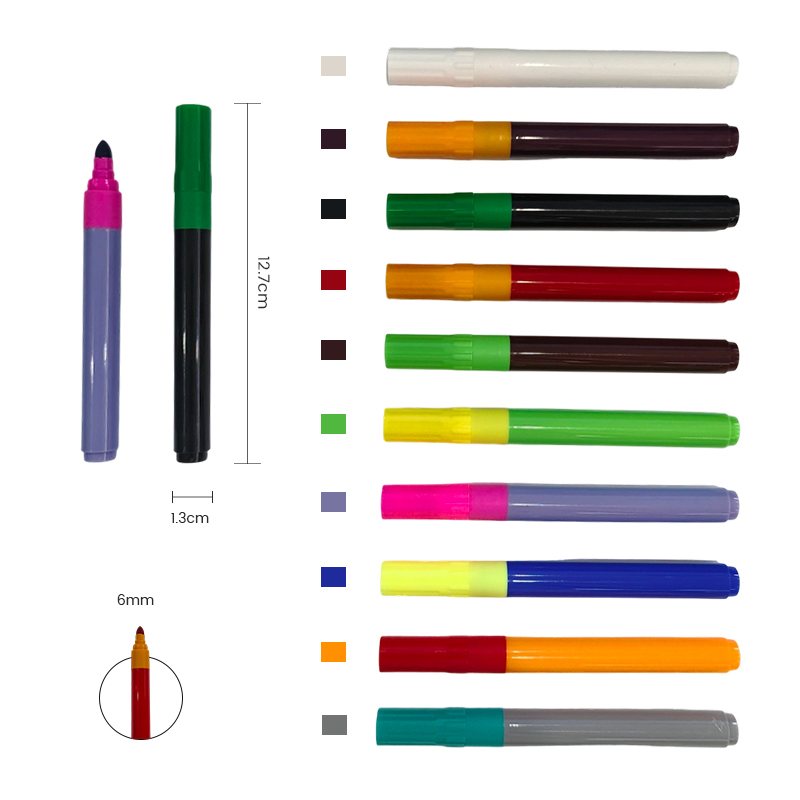
806M-10 Color Changing Magic Markers
806M-10 Color Changing Magic Markers are a set of fun drawing tools designed for children, students, and creative enthusiasts, combining three core fe...
View More -
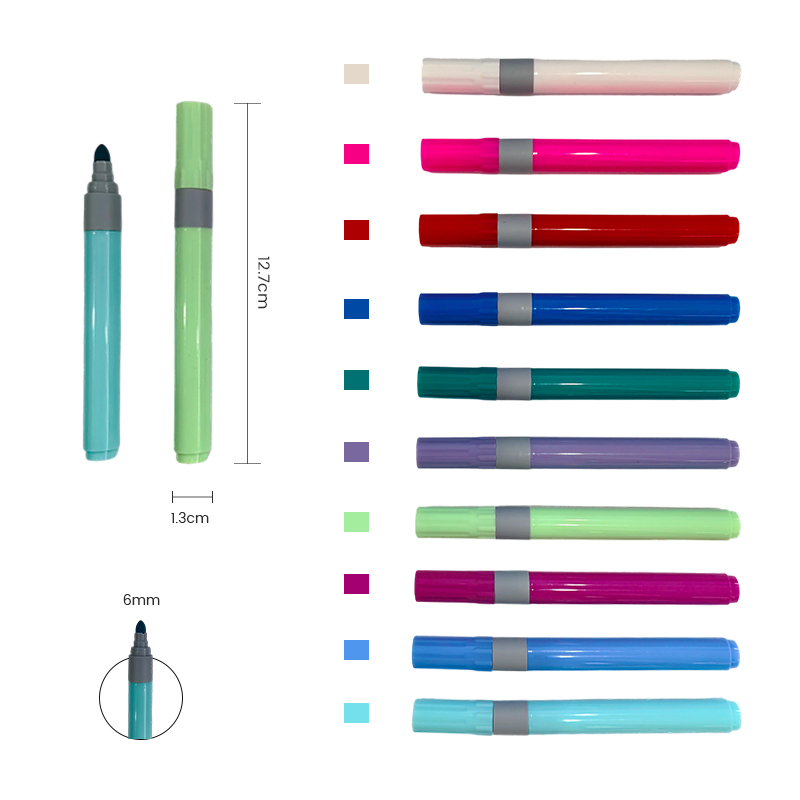
806E-10 Washable Erasable Magic Markers for Kids Drawing
Designed for children, students, and journaling enthusiasts, these magic markers combine three key advantages: safety and non-toxicity, vibrant colors...
View More

Information
-

TEL & Whatsapp: +86-15773630590
TEL : +86-13676769913
+86-19519895579 -

E-mail : [email protected]
[email protected]
[email protected]
[email protected] -
 Building 18-1, Lot 9, Wanyang Zhizao Town, Bihu Town, Liandu District, Lishui City, Zhejiang Province, China
Links
Contact Us
