

 English
 English
 русский
 Español
- Type:
- Industry News
- Date
- 2026-Jun-05
Industry News
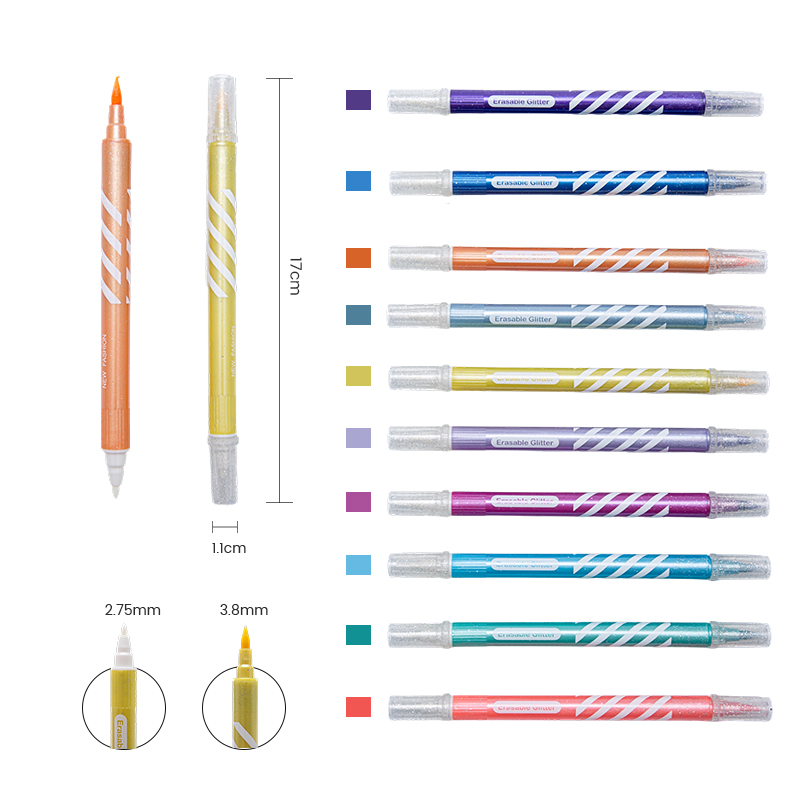
Double-Headed Pen: Two Tips, One Tool, Twice the Function
You have been there. You are taking notes and need to switch between black and red ink. Or you are sketching and need a fine line for details and a broad line for shading. Instead of carrying two pens, you grab one. A double-headed pen puts two different tips in the same barrel. One end. Then the other. No digging through a bag. No lost caps. Just flip and write.
Two Tips, Two Jobs
Not every double-headed pen is the same. The combination of tips depends on what the manufacturer expects you to do with it.
The common setup is fine point on one end and medium point on the other. You get a 0.5 millimeter tip for detailed writing. Flip it over, and you get a 0.8 or 1.0 millimeter tip for bolder notes. One pen handles both without switching tools.
Another popular configuration is standard ink on one end and highlighter on the other. A double-headed pen like this works for students. Write your notes with the pen tip. Flip to the highlighter to mark key terms. No need to keep two separate tools on the desk.
Color combos are common too. A double-headed pen might have black ink on one end and red on the other. Or blue and green. Or a set of coordinated colors in a single barrel. Teachers like these for grading. Planners use them for color-coded scheduling.
Some double-headed pen designs go further. One end has a pen tip. The other end has a stylus for touchscreens. Or an eraser for whiteboard pens. Or a magnet for sticking to metal surfaces. The two ends do completely different jobs, but you only carry one barrel.
Ink Types and Writing Feel
The ink in a double-headed pen has to work for both tips. Cheap double-ended pens sometimes have inconsistent ink flow. One tip writes dry. The other writes wet. The writing experience changes depending on which end you use.
Good double-headed pen products use the same ink formulation for both ends. The color matches. The flow rate matches. You get a consistent line regardless of which tip you choose.
Here is what goes wrong with cheap double-headed pens:
- One end dries out faster because it gets used less and the cap seal is poor
- Ink leaks when left in a hot car — cheap watery ink expands and pushes out
- Tip wobbles because the tolerances are loose, making your handwriting messy
- The color on one end does not match the color on the other end
Cap or Retractable?
Here is a decision that matters. Does the double-headed pen use caps or a retractable mechanism?
Capped designs are simpler. One cap covers each end. The pen is shorter when capped. But you have to keep track of two caps. Lose one, and that end dries out. Some manufacturers connect the two caps with a small bridge. They stay together as one piece. You cannot lose just one.
Retractable double-headed pen designs use a twist or a sliding mechanism. Twist the barrel one way, one tip extends. Twist the other way, that tip retracts and the other extends. No caps to lose. But the mechanism adds complexity. Cheap retractable double-ended pens fail quickly.
Spring-loaded designs exist but are uncommon. Push a button on one end, the other end extends. The mechanism has to be precise. manufacturers stick to caps for reliability.
Who Actually Uses Double-Headed Pens
Students are the biggest users. A double-headed pen with fine and medium tips covers note-taking and highlighting. A student carries one pen instead of three. Less weight in the bag. Less clutter on the desk.
Artists use them too. A double-headed pen with a brush tip on one end and a fine liner on the other lets you sketch and ink with one tool. The brush tip lays down thick, expressive lines. The fine liner adds detail. Switch back and forth without changing pens.
Office workers appreciate the color combos. A double-headed pen with black and red ink sits in a desk drawer. Need to mark up a document? Red is right there. Need to sign something? Flip to black. No searching for the other color.
One Pen, Less Clutter
A double-headed pen is not the outstanding pen for every job. But for everyday tasks where you need two functions, it makes sense. Less stuff to carry. Less stuff to keep track of. Flip instead of searching. For students, teachers, artists, and anyone who color-codes their notes, it is one of those small tools that just works.
Related Products
-
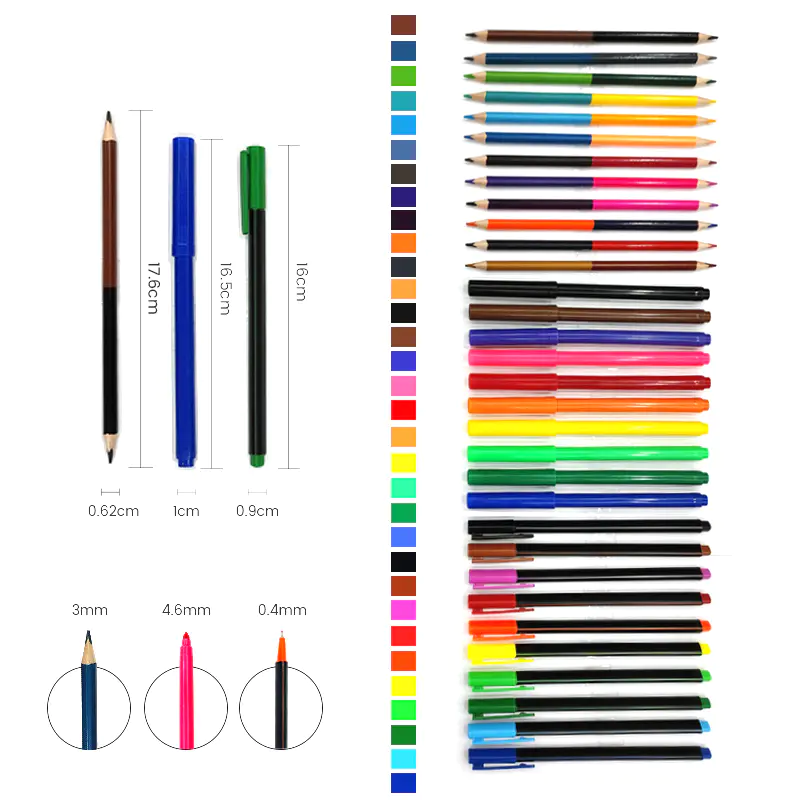
MBTZ-101 Watercolor Marker & Colored Pencil Set
Product OverviewThe MBTZ-101 Watercolor Marker & Colored Pencil Set combines fiber-tip watercolor markers, sharpenable wood-barrel colored pencils...
View More -
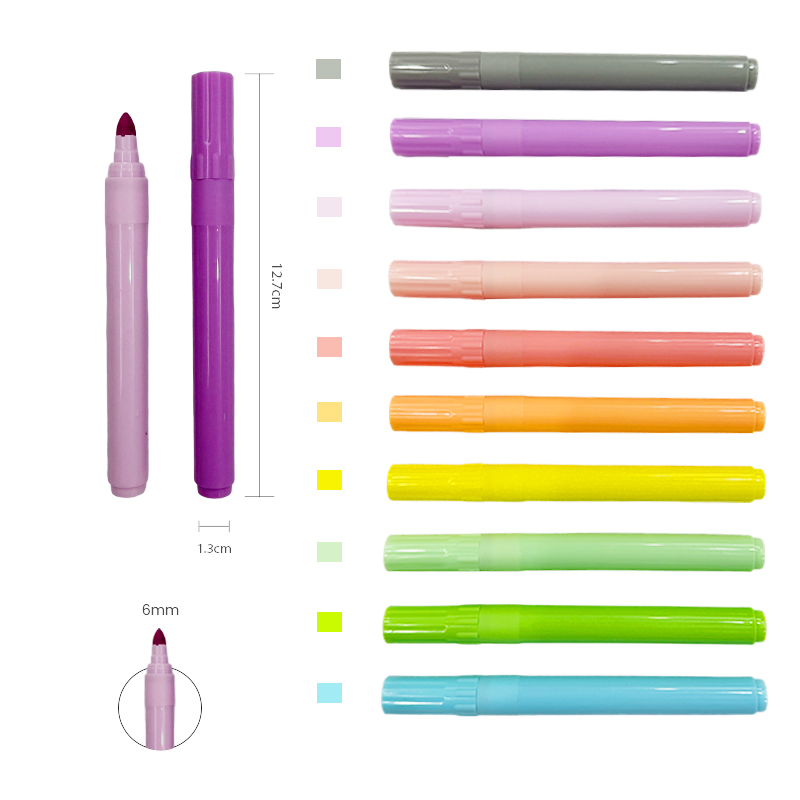
High-Opacity 6mm Round-Tip Watercolor Marker
Product Overview The High-Opacity 6mm Round-Tip Watercolor Marker stands out for its high-coverage gouache ink that colors directly on dark paper – ...
View More -
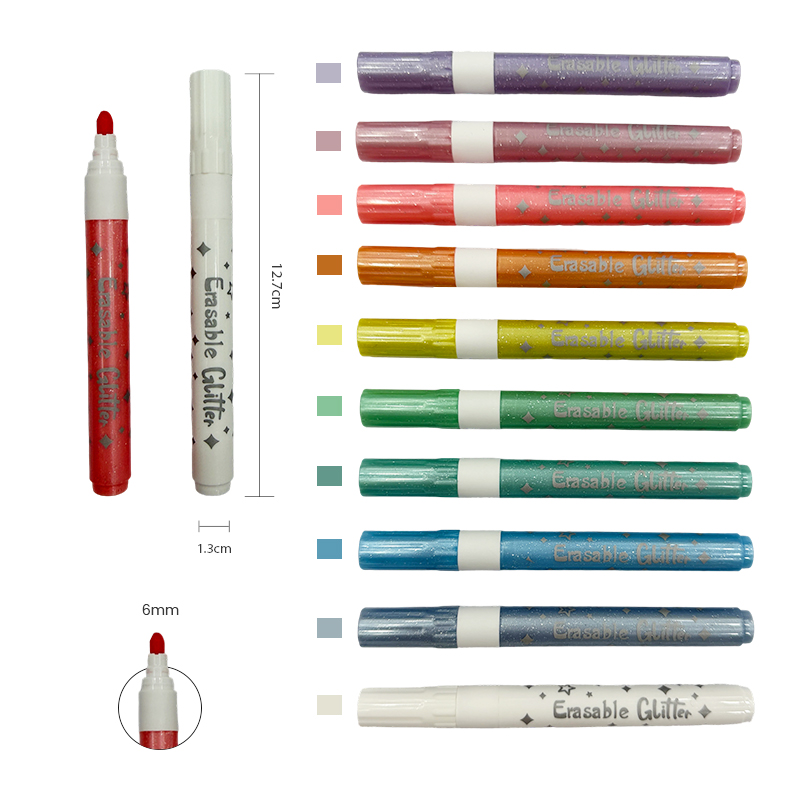
Eco-Friendly 6mm Round-Tip Erasable Highlighter Pen
Product Overview The Eco-Friendly 6mm Round-Tip Erasable Highlighter set includes 9 shimmering colored pens plus 1 dedicated white eraser pen. Featuri...
View More -
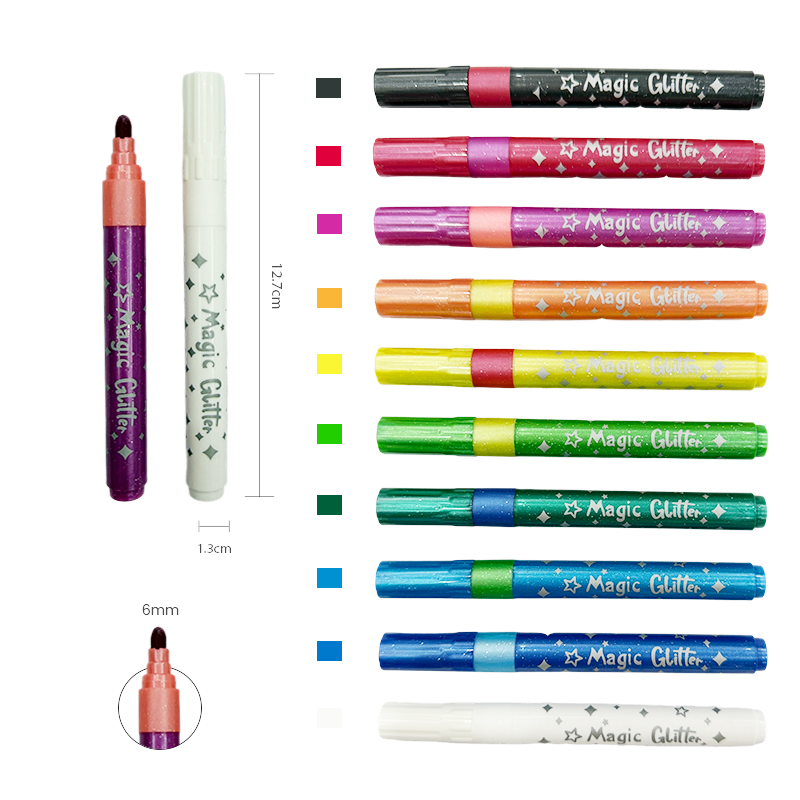
Children's Creative Magic Color-Changing Highlighter Set
Product Overview The Children's Creative Magic Color-Changing Highlighter set includes 9 shimmering colored pens in different color families plus 1 de...
View More -
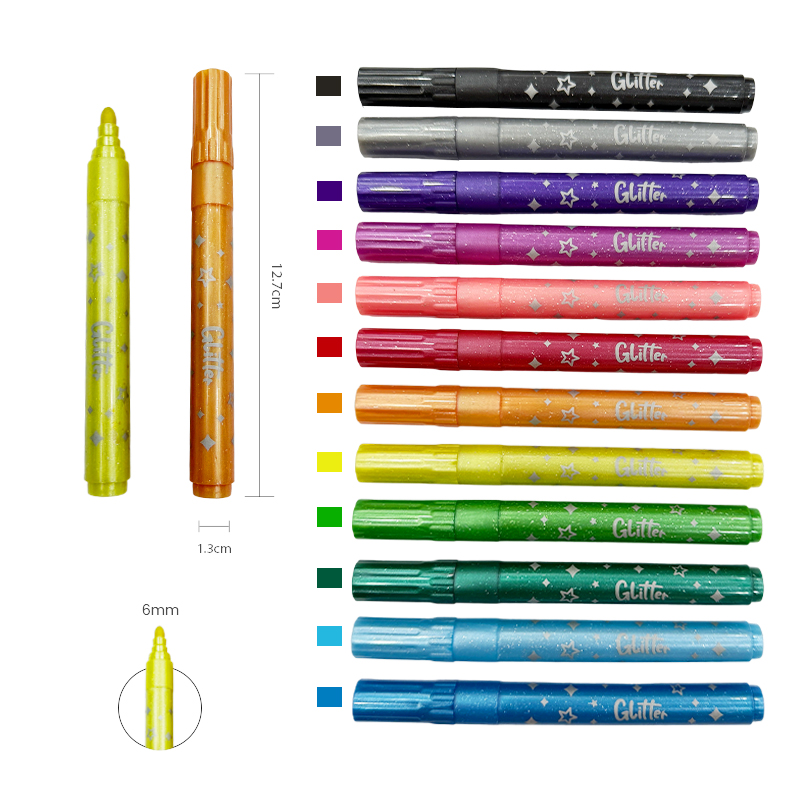
Vibrant 12-Color Single-Tip Highlighter Pen
Product Overview The Vibrant 12-Color Single-Tip Highlighter Pen set includes 12 single-tip shimmering colored pens filled with water-based glitter in...
View More -
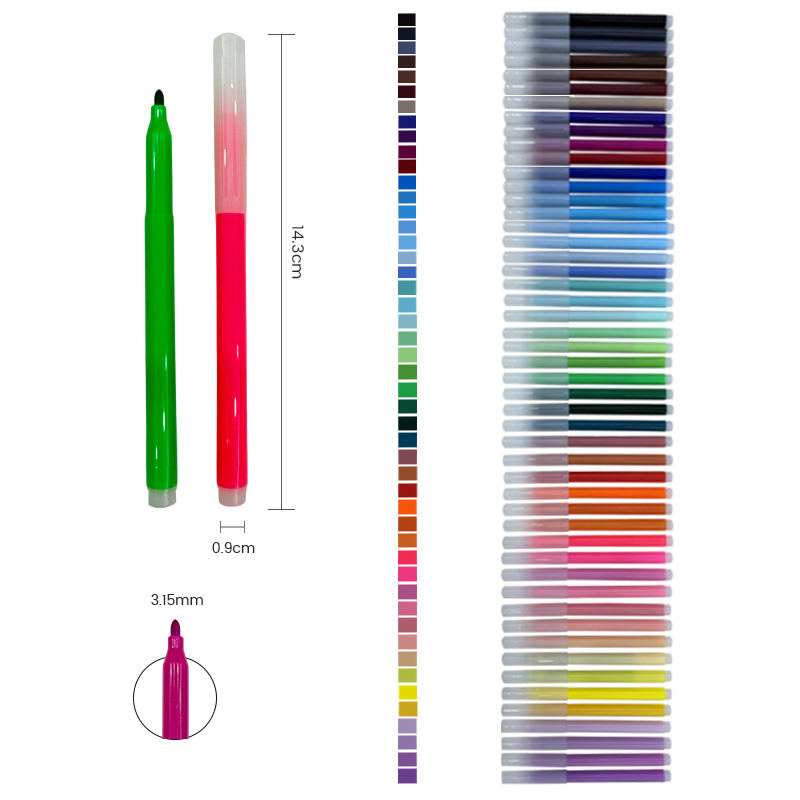
812-50 Smooth-Flowing 50-Color Watercolor Marker
812-50 Smooth-Flowing 50-Color Watercolor Marker is suitable for Art enthusiasts and students. 1. Core Advantages (3-in-1 Value Proposition) Smooth In...
View More -
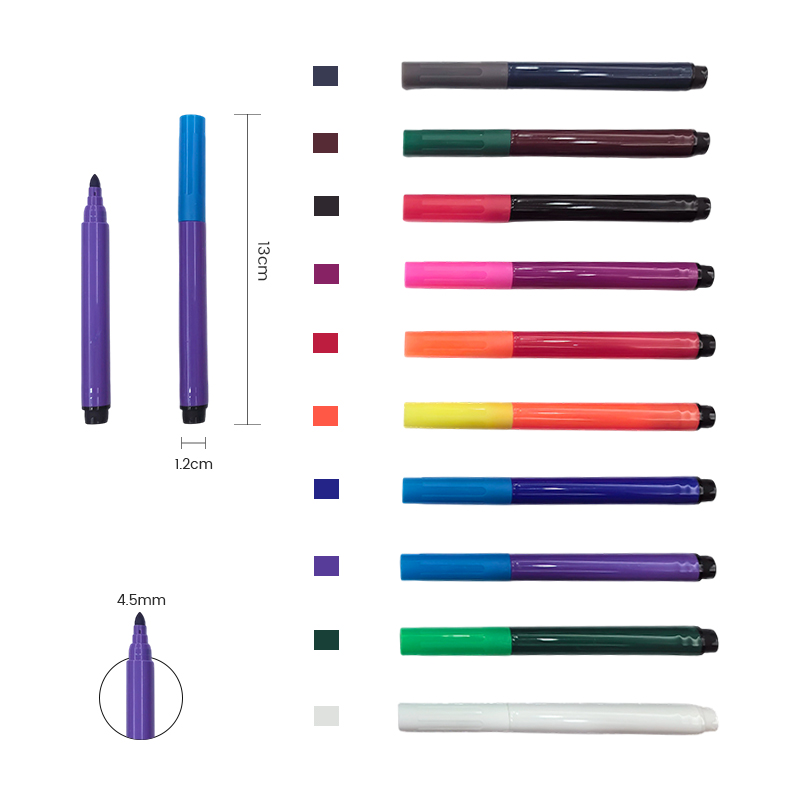
801M-10 Two-Tone Barrel Magic Markers for School
Designed to spark children's creativity and curiosity, these 801M-10 Two-Tone Barrel Magic Markers for School feature a unique characteristic: the ink...
View More -
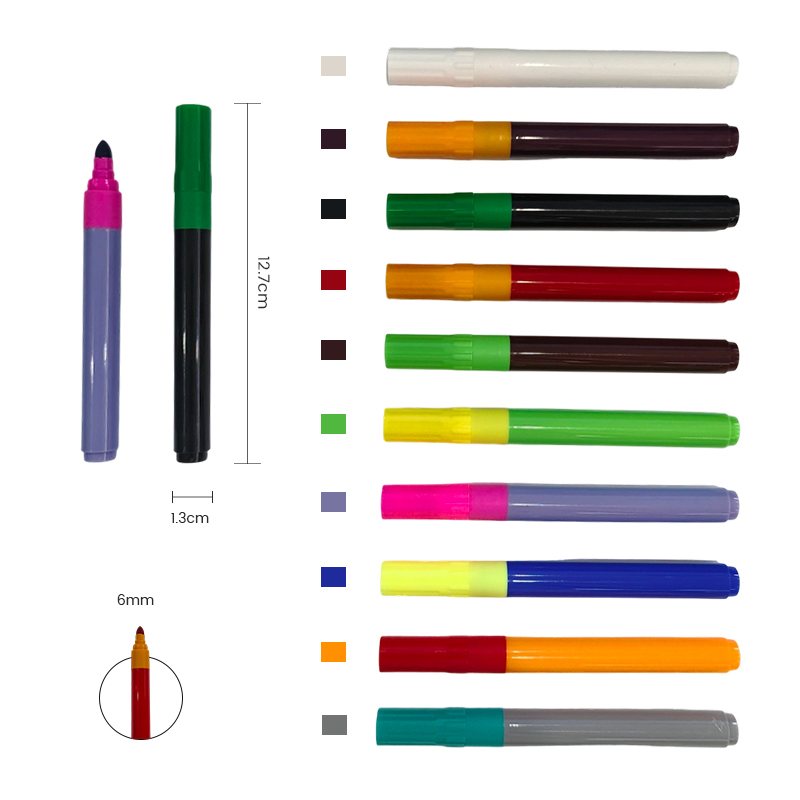
806M-10 Color Changing Magic Markers
806M-10 Color Changing Magic Markers are a set of fun drawing tools designed for children, students, and creative enthusiasts, combining three core fe...
View More


Information
-

TEL & Whatsapp: +86-15773630590
TEL : +86-13676769913
+86-19519895579 -

E-mail : [email protected]
[email protected]
[email protected]
[email protected] -
 Building 18-1, Lot 9, Wanyang Zhizao Town, Bihu Town, Liandu District, Lishui City, Zhejiang Province, China
Links
Contact Us
