

 English
 English
 русский
 Español
- Type:
- Industry News
- Date
- 2026-Sep-18
Industry News
Double-Ended Blade Highlighter Pen: The Marker That Cuts a Clean Line
Highlighters are not pens. They lay down fluorescent ink in wide strokes. The tip is a chisel, a wedge of porous fiber that draws thick lines and thin lines depending on how it hits the page. A double-ended blade highlighter pen puts a chisel tip on each end, usually in two different colors. The user flips the pen instead of grabbing a second marker. Students mark textbooks. Office workers scan reports. Artists layer translucent color. The double-ended design doubles the utility without doubling the pocket space.
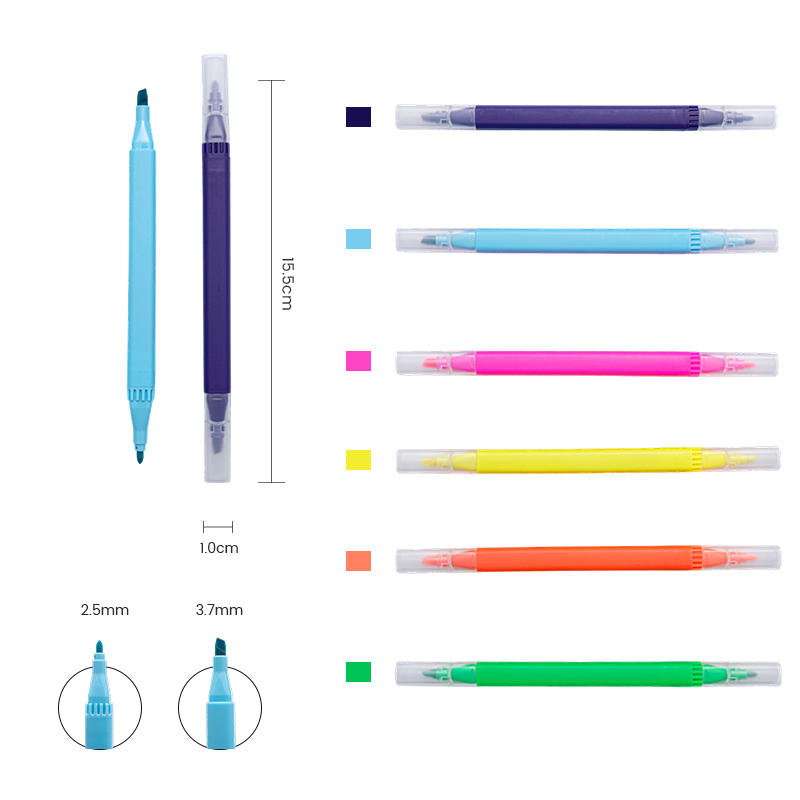
The Chisel Tip That Defines the Tool
A chisel tip has a broad edge and a narrow edge. The broad edge lays down a stripe of color roughly four to five millimeters wide. The narrow edge draws a line about one millimeter across. A double-ended blade highlighter pen with a properly formed chisel on each end gives the user four line widths across two colors.
The tip material is porous fiber, usually polyester or acrylic, bonded into a plastic holder that presses into the barrel. The fiber wicks ink from the reservoir to the tip surface. A double-ended blade highlighter pen with a properly formed tip keeps its chisel shape through repeated use. A tip that mushrooms or frays stops laying down a clean edge.
The tip durability matters more on a highlighter than on a writing pen. The user bears down on the broad edge to get a saturated stripe. A double-ended blade highlighter pen with a firmly seated tip resists being pushed back into the barrel or cracked at the base.
Two Colors in One Barrel
Each end has its own ink reservoir, its own wicking system, and its own tip. The two colors stay separate. A double-ended blade highlighter pen with an internal barrier or two discrete reservoirs prevents the inks from migrating toward the center and mixing.
Color coding is the reason two tips beat one. A student marks definitions in yellow and examples in pink from the same pen. An editor marks deletions in blue and insertions in green without switching tools. A double-ended blade highlighter pen with two colors that visually contrast and do not muddy when overlapping gives the user a system in one barrel.
The caps match the tip colors. Each cap covers its tip and seals it from air. A double-ended blade highlighter pen with ventilated caps that stay on when posted keeps both tips ready.
The Ink That Glows Without Bleeding
Highlighter ink has to be fluorescent enough to catch the eye and transparent enough to leave the text readable. The ink sits on top of the paper. It does not cover the text. A double-ended blade highlighter pen with properly formulated ink filters the light without hiding the words.
Bleed-through is the complaint that kills a highlighter brand. The ink soaks through the paper and stains the next page. A double-ended blade highlighter pen with ink viscosity and surface tension controlled to limit penetration highlights Bible paper, textbook pages, and cheap copy paper without ghosting.
The ink reservoir contains enough liquid to outlast the user's tendency to lose the cap. A double-ended blade highlighter pen with a full reservoir writes until the color runs out, not until the tip dries.
Here is what a double-ended blade highlighter pen needs to deliver:
- Chisel tips formed from dense fiber that holds edge shape
- Two separate reservoirs with a secure barrier
- Fluorescent ink with controlled penetration
- Color-matched caps that seal and post
- Two colors that contrast without muddying
- Reservoir capacity that matches the tip life
The Student and the Editor
The student marks the textbook with two colors, one for the terms, one for the definitions. The double-ended design means one pen in the pencil case, not two. A double-ended blade highlighter pen keeps the study kit lighter.
The editor works through the manuscript with the blue for the cuts and the green for the additions. The double-ended pen sits on the desk, always the right color in hand. A double-ended blade highlighter pen speeds the work.
The artist layers the translucent color, the yellow over the pink, the blue over the green. The chisel tip gives the thick and the thin. A double-ended blade highlighter pen in the art kit works as a color tool.
The Ink That Bleeds Through
The ink soaks through the page and stains the next one. A properly formulated ink stops at the surface. The tip frays and the line widens. A dense, properly bonded fiber tip holds the edge. The cap pops off in the pencil case and one end dries out. A cap that fits tight and stays on keeps both ends alive.
A double-ended blade highlighter pen is a tool for making information visible. It picks out the key words. It color-codes the categories. It turns a page of uniform text into a map of what matters. Choose a pen with properly formed chisel tips, two sealed reservoirs, and ink that stays on the page. The user flips the pen and keeps working. That is the design.
Related Products
-
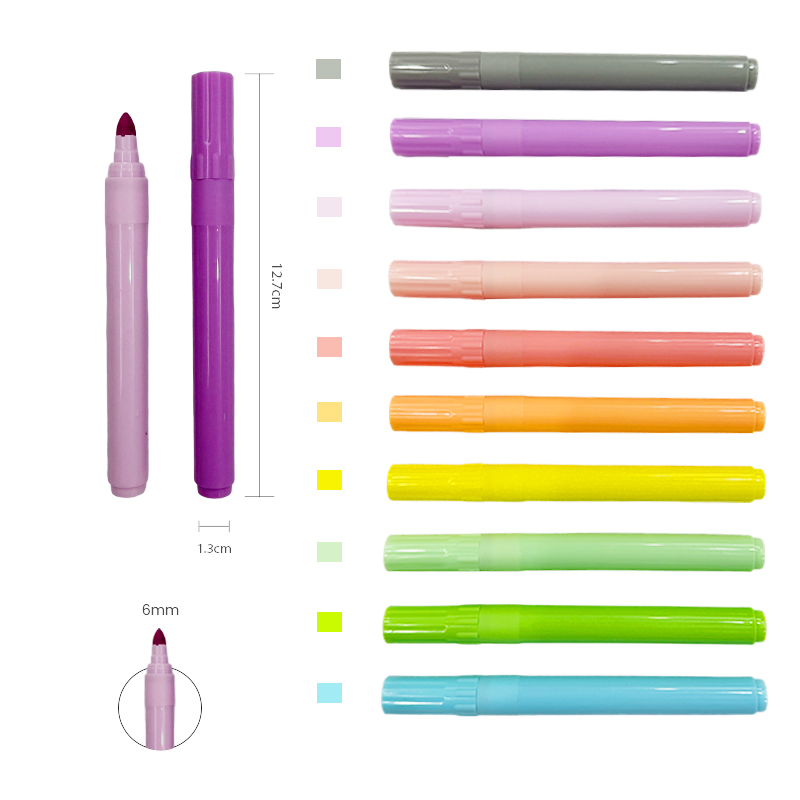
High-Opacity 6mm Round-Tip Watercolor Marker
Product Overview The High-Opacity 6mm Round-Tip Watercolor Marker stands out for its high-coverage gouache ink that colors directly on dark paper – ...
View More -
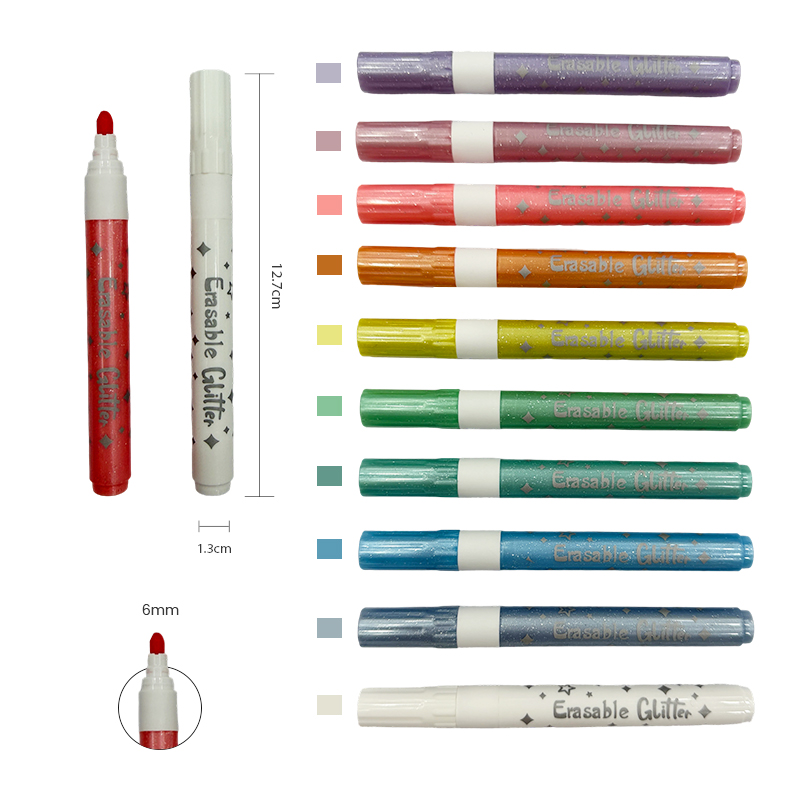
Eco-Friendly 6mm Round-Tip Erasable Highlighter Pen
Product Overview The Eco-Friendly 6mm Round-Tip Erasable Highlighter set includes 9 shimmering colored pens plus 1 dedicated white eraser pen. Featuri...
View More -
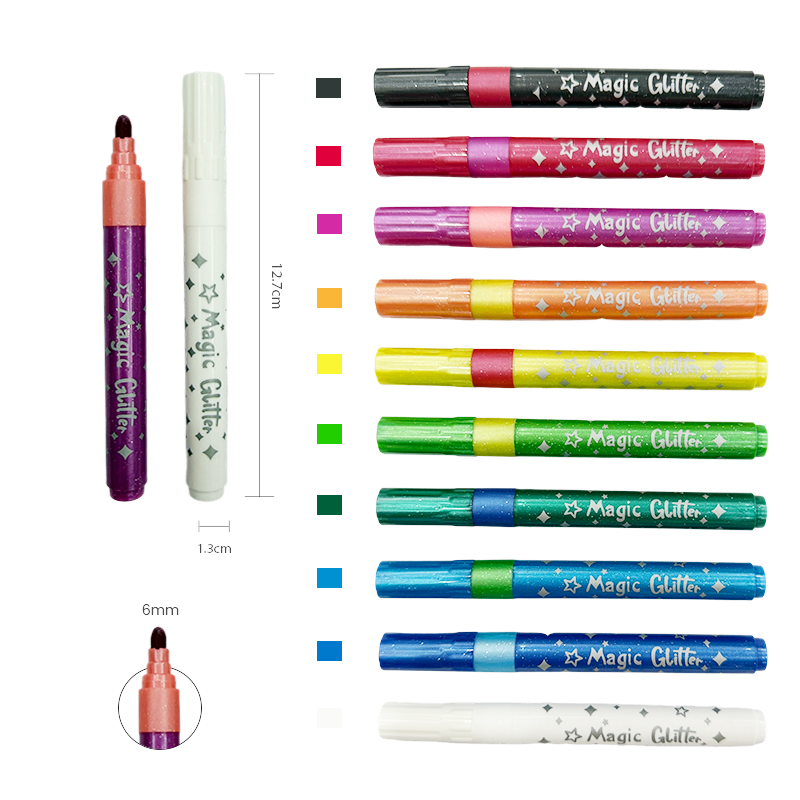
Children's Creative Magic Color-Changing Highlighter Set
Product Overview The Children's Creative Magic Color-Changing Highlighter set includes 9 shimmering colored pens in different color families plus 1 de...
View More -
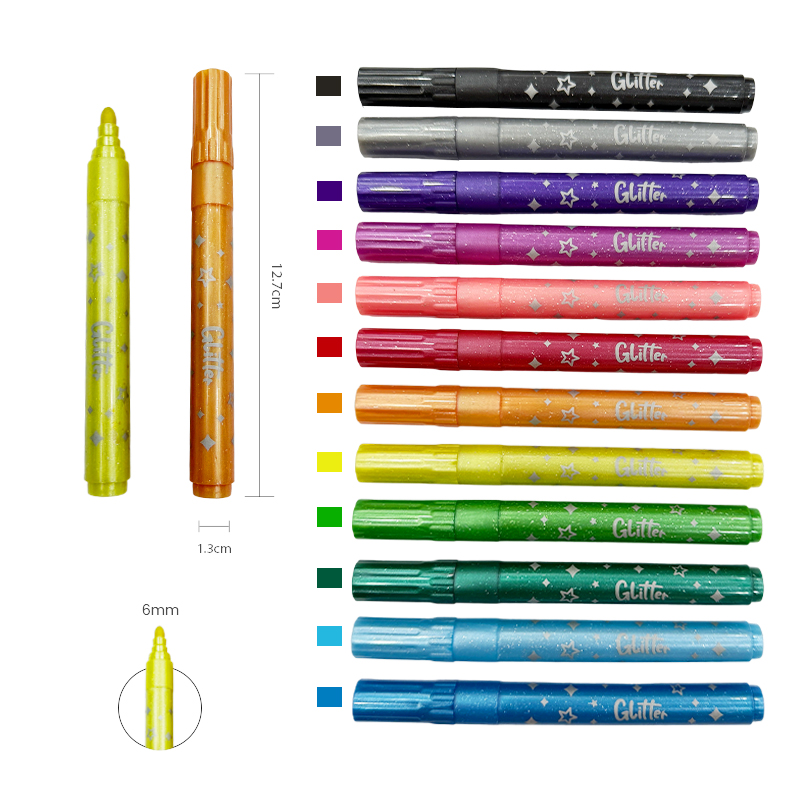
Vibrant 12-Color Single-Tip Highlighter Pen
Product Overview The Vibrant 12-Color Single-Tip Highlighter Pen set includes 12 single-tip shimmering colored pens filled with water-based glitter in...
View More -
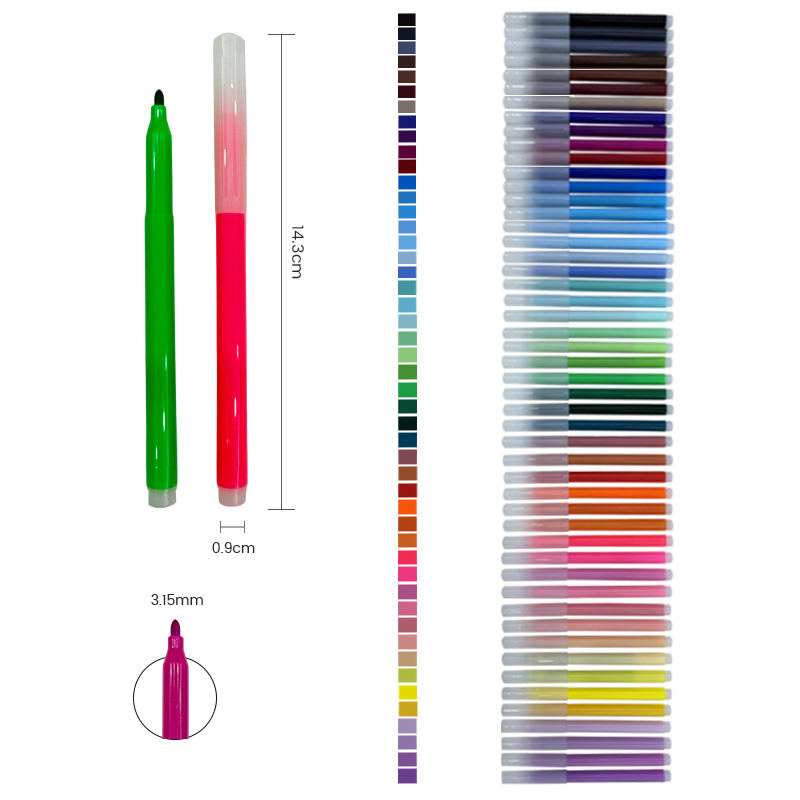
812-50 Smooth-Flowing 50-Color Watercolor Marker
812-50 Smooth-Flowing 50-Color Watercolor Marker is suitable for Art enthusiasts and students. 1. Core Advantages (3-in-1 Value Proposition) Smooth In...
View More -
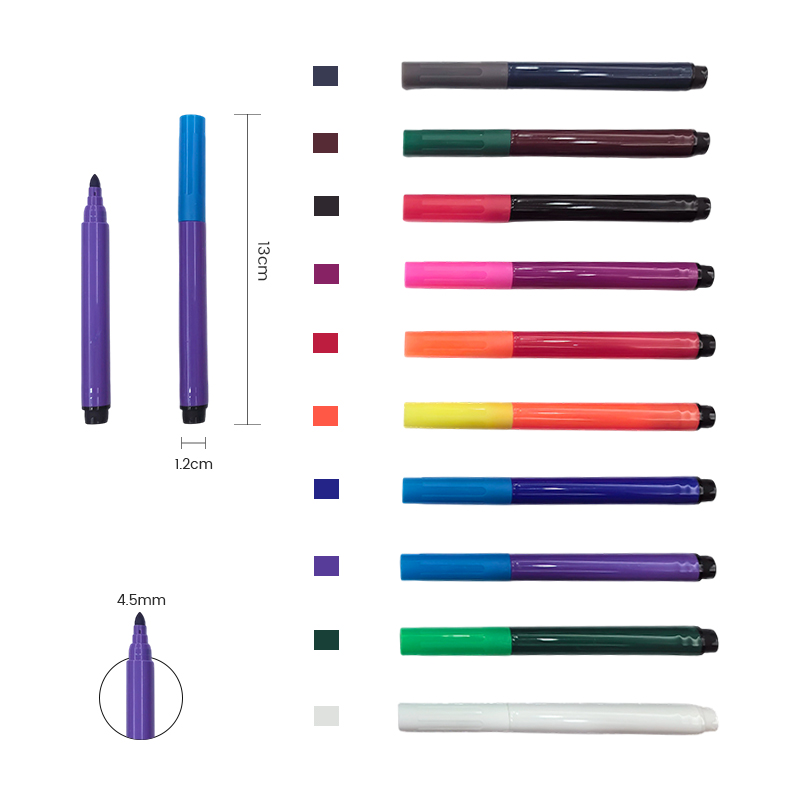
801M-10 Two-Tone Barrel Magic Markers for School
Designed to spark children's creativity and curiosity, these 801M-10 Two-Tone Barrel Magic Markers for School feature a unique characteristic: the ink...
View More -
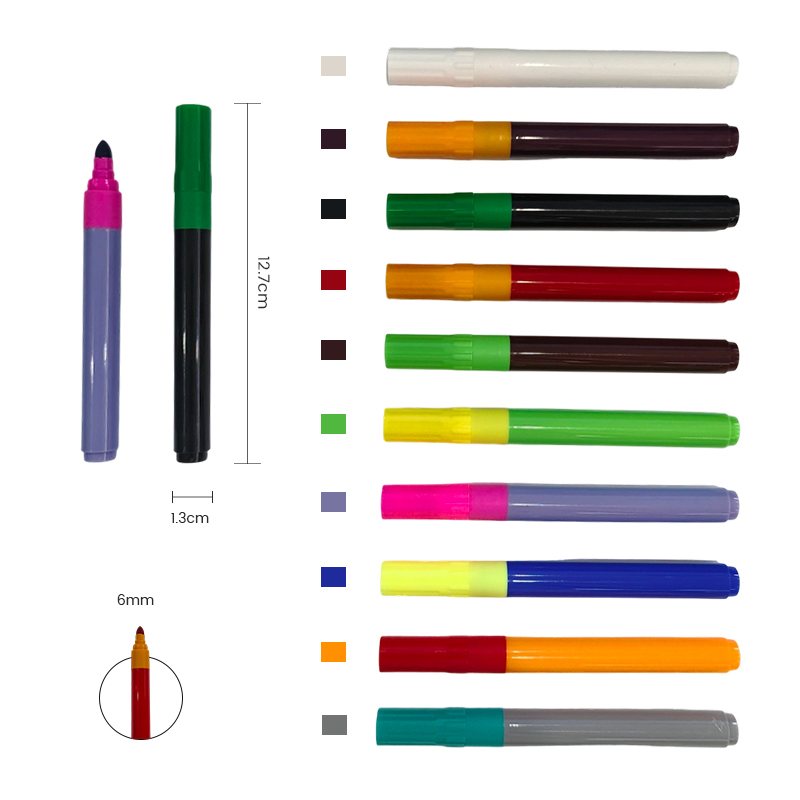
806M-10 Color Changing Magic Markers
806M-10 Color Changing Magic Markers are a set of fun drawing tools designed for children, students, and creative enthusiasts, combining three core fe...
View More -
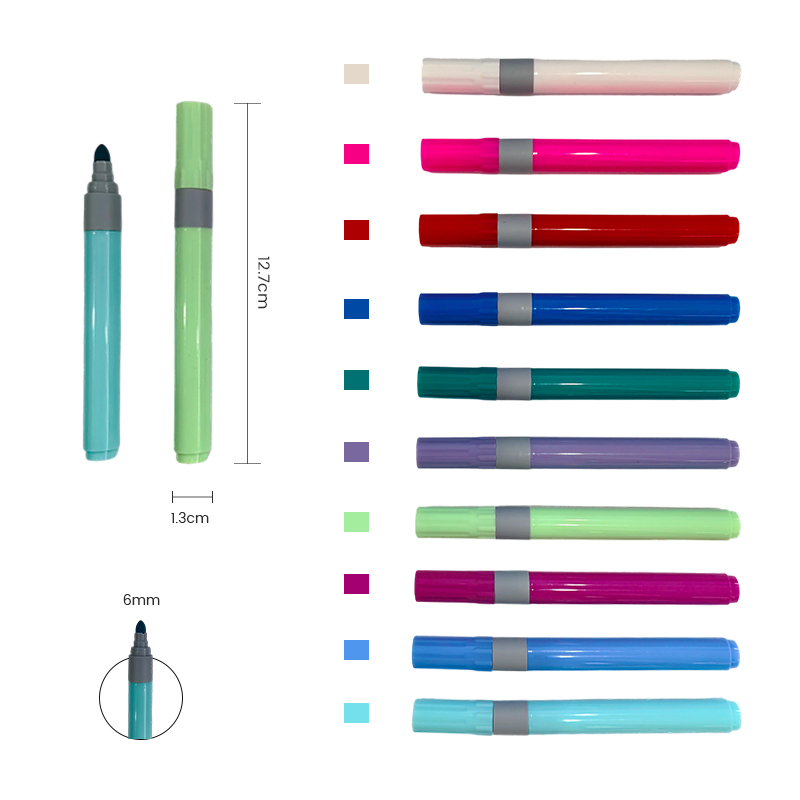
806E-10 Washable Erasable Magic Markers for Kids Drawing
Designed for children, students, and journaling enthusiasts, these magic markers combine three key advantages: safety and non-toxicity, vibrant colors...
View More


Information
-

TEL & Whatsapp: +86-15773630590
TEL : +86-13676769913
+86-19519895579 -

E-mail : [email protected]
[email protected]
[email protected]
[email protected] -
 Building 18-1, Lot 9, Wanyang Zhizao Town, Bihu Town, Liandu District, Lishui City, Zhejiang Province, China
Links
Contact Us
