English
 English
 русский
 Español
- Type:
- Industry News
- Date
- 2026-Nov-13
Industry News
Home / News / Industry News / Double Head Acrylic Marker: The Pen That Paints on Anything and Stays There
A double head acrylic marker has a tip on each end, usually a broad chisel on one side and a fine bullet on the other. The ink is acrylic, water-based, and opaque, so it covers the surface rather than soaking in like a dye. The marker writes on paper, canvas, glass, plastic, metal, and wood, and once the ink dries it is water-resistant. For the artist, the crafter, and the sign painter, one marker gives both the wide fill and the fine detail.
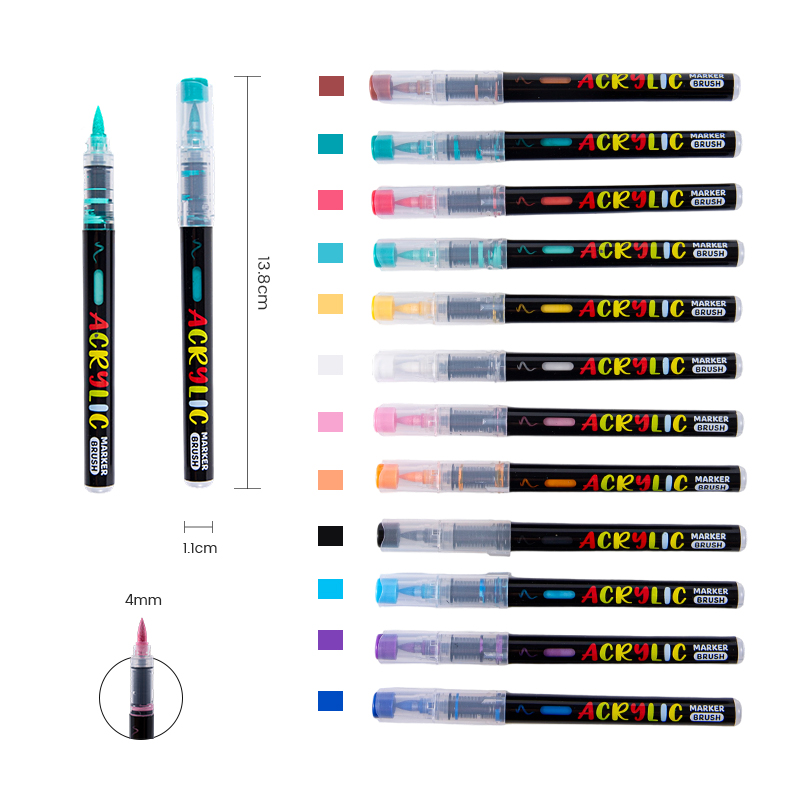
The chisel tip lays down the broad strokes, the bold lettering, and the fills. The fine tip does the outlines, the details, and the small text. The two ends share one barrel and one ink color, so the user does not switch pens between the fill and the detail.
A double head acrylic marker with the chisel and the fine tip formed from the dense fiber holds the line width through the stroke. The tip that mushrooms after a few uses changes the line and the lettering.
The acrylic ink is the pigment suspended in the acrylic emulsion. The pigment sits on the surface and reflects the color, so the ink covers the dark paper and the colored surface. The dye-based marker stains the surface and the color disappears on the dark background.
A double head acrylic marker with the high pigment load covers the black paper in one pass. The low pigment load needs the multiple passes and the color still looks thin.
The acrylic ink dries water-resistant. The artwork on the glass, the plastic, and the metal survives the moisture and the light wipe. The ink that is not fully acrylic washes off with the water.
A double head acrylic marker with the properly formulated binder holds on the non-porous surface. The binder that is too weak peels off the glass after a few days.
The ink is thicker than the dye ink, and the tip has to pass the pigment without clogging. The fiber tip sized for the acrylic ink lays the color down consistently. The tip that is too fine clogs, and the one that is too coarse floods.
What the factory has to deliver:
The artist uses the marker for the sketch and the quick study on the canvas. The crafter uses it on the glass jar and the wooden sign. The sign painter uses it for the lettering on the board. Each one needs the marker that covers and stays.
The color fades because the pigment was not lightfast. The ink peels off the glass because the binder was too weak. The tip mushrooms because the fiber was too soft. The ink clogs because the pigment particle was too large. Each one is a factory decision made before the marker reaches the hand.
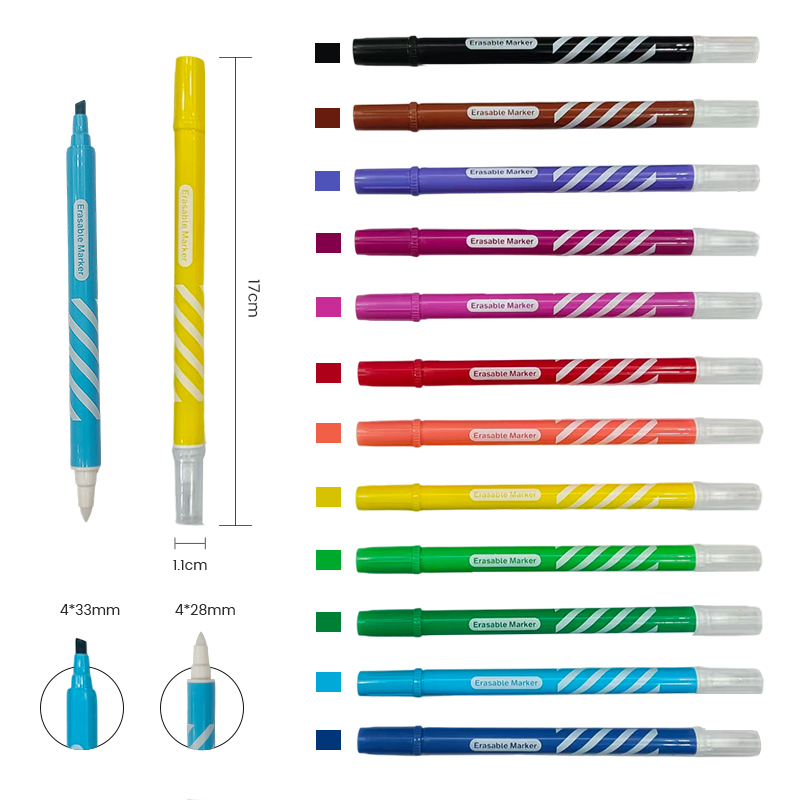
Product OverviewThe 518E Eco-friendly Erasable Dual-Tip Watercolor Marker features a dual-tip design covering both broad and fine work: the wide tip h...
View More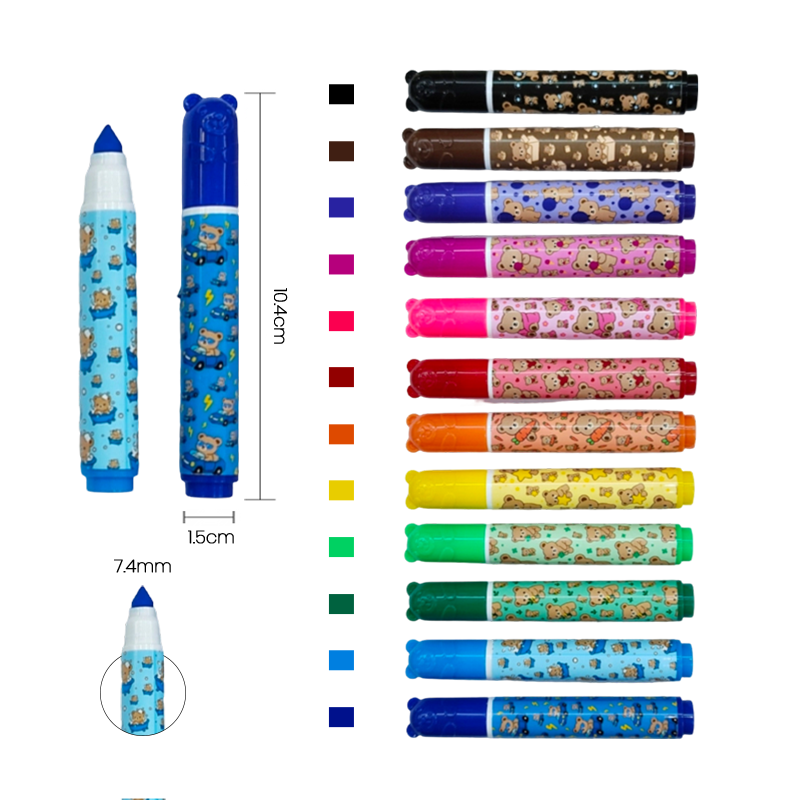
Product OverviewThe 867 Kids Bear Storage Bucket Watercolor Marker pairs a 12-color marker of washable coloring markers with a transparent bear-shaped...
View More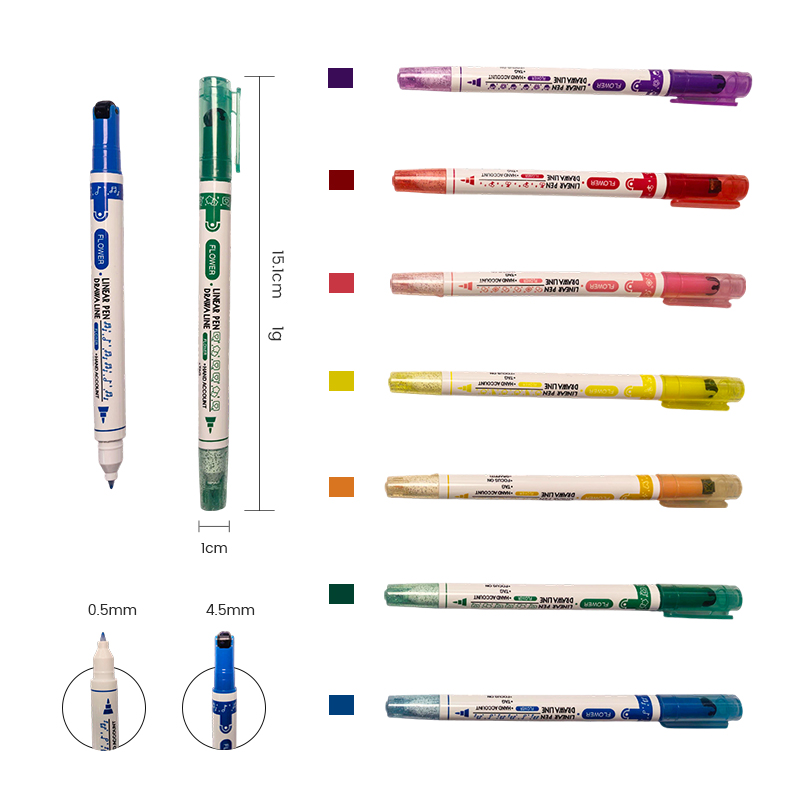
Product OverviewThe 708G 2-in-1 Glitter Roll Duo Marker is an upgraded two-in-one design. It retains the Japanese-imported plastic-coated tip for smoo...
View More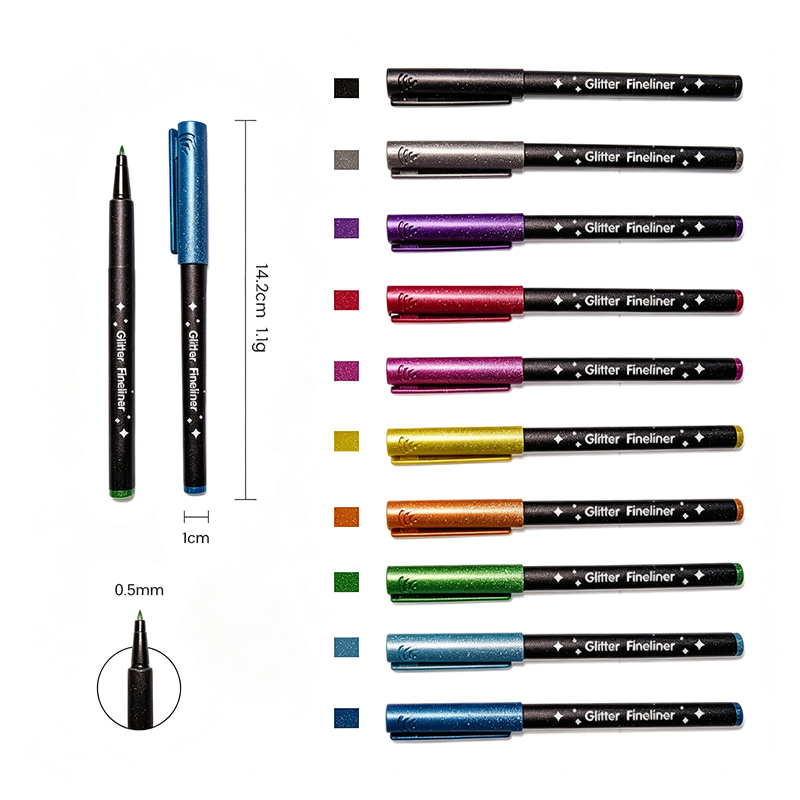
Product OverviewThe 1012G Metallic Luster Glitter Marker Pen features a Japanese-imported plastic-coated tip that is wear-resistant and durable, ensur...
View More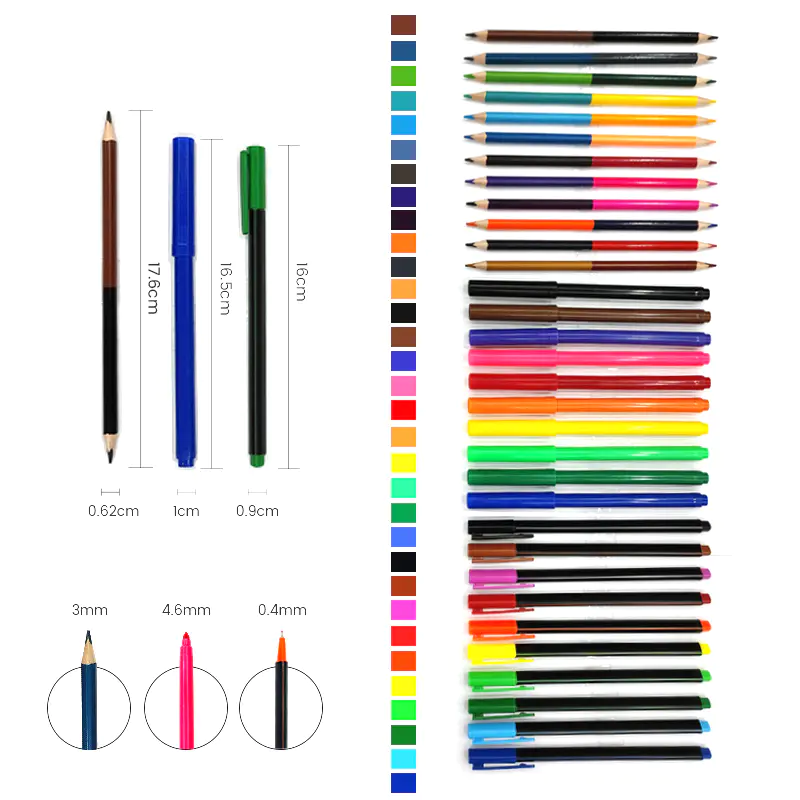
Product OverviewThe MBTZ-101 Watercolor Marker & Colored Pencil Set combines fiber-tip watercolor markers, sharpenable wood-barrel colored pencils...
View More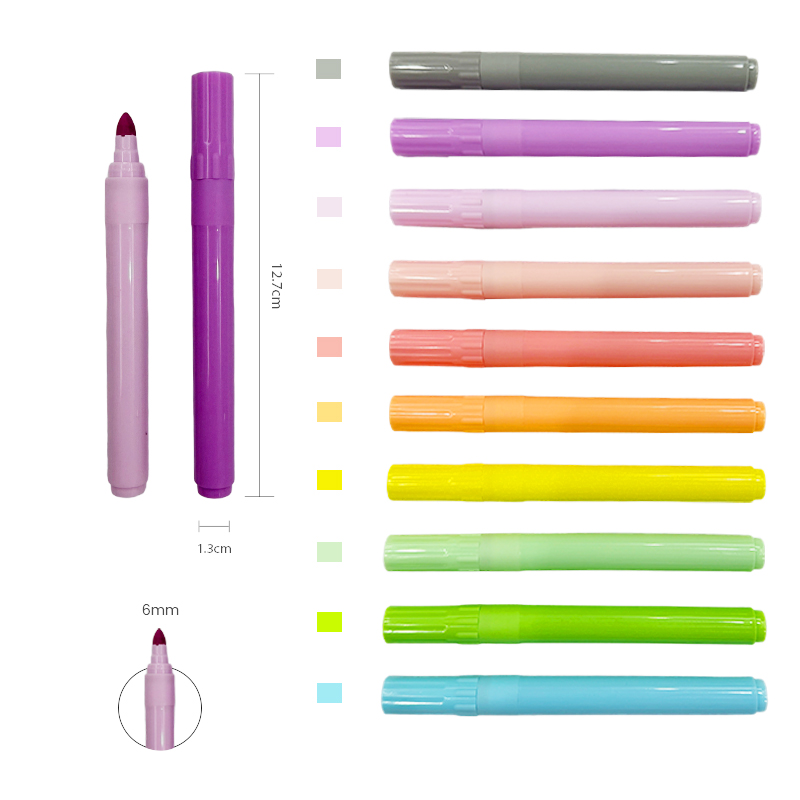
Product Overview The High-Opacity 6mm Round-Tip Watercolor Marker stands out for its high-coverage gouache ink that colors directly on dark paper – ...
View More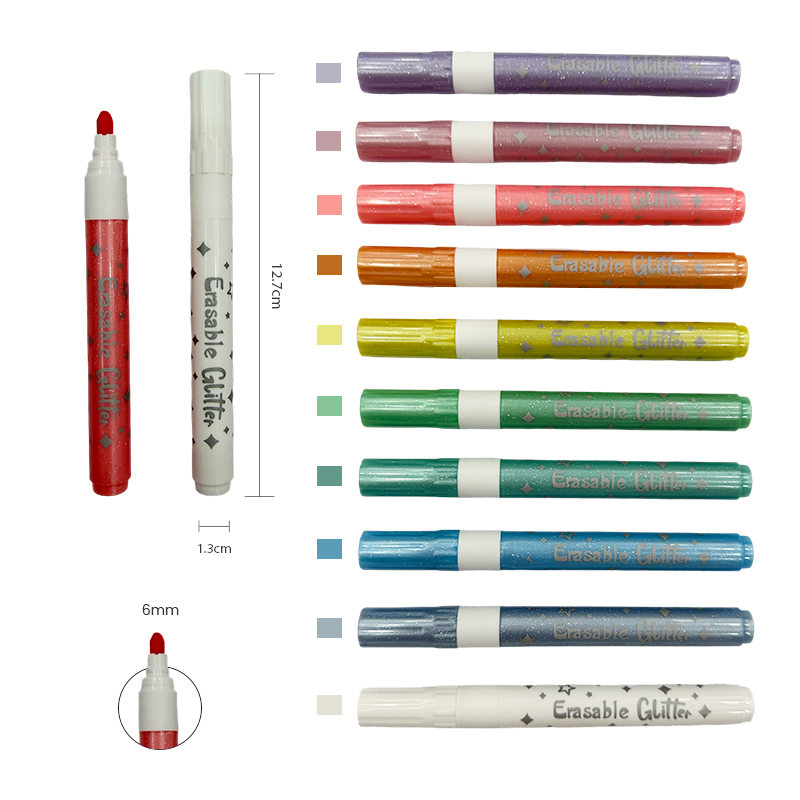
Product Overview The Eco-Friendly 6mm Round-Tip Erasable Highlighter set includes 9 shimmering colored pens plus 1 dedicated white eraser pen. Featuri...
View More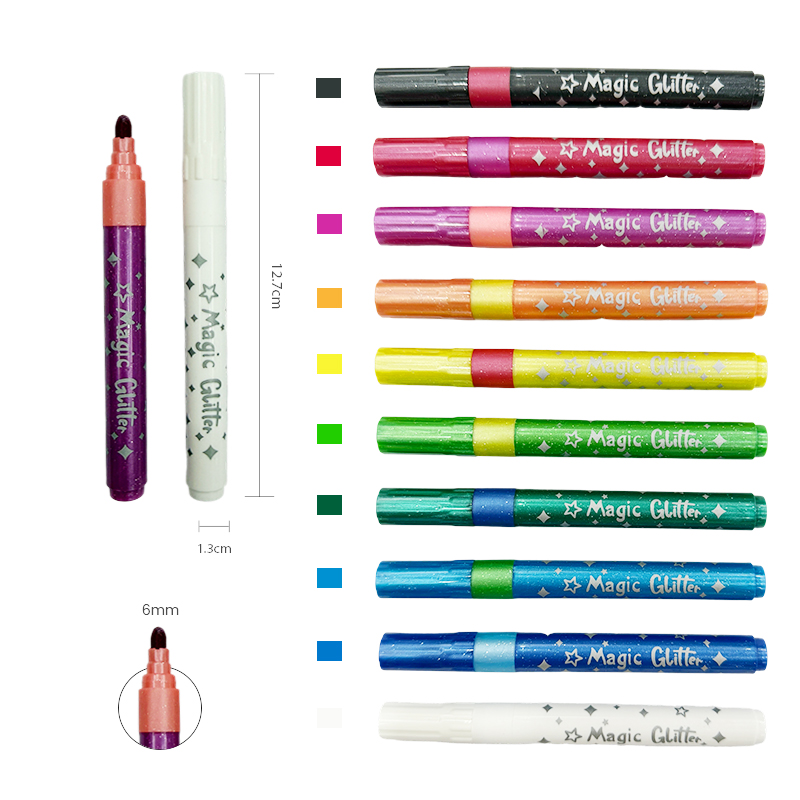
Product Overview The Children's Creative Magic Color-Changing Highlighter set includes 9 shimmering colored pens in different color families plus 1 de...
View More
TEL & Whatsapp: +86-15773630590
TEL :
+86-13676769913
+86-19519895579

E-mail :
[email protected]
[email protected]
[email protected]
[email protected]