

 English
 English
 русский
 Español
- Type:
- Industry News
- Date
- 2026-Jan-16
Industry News
Are Creative Supplies Becoming Strategic Tools for Global Brands?
In recent overseas market discussions, creative stationery is no longer viewed as a niche or seasonal category. Instead, it is increasingly recognized as a strategic product line for brands targeting lifestyle, education, and creative economies. Within this context, the Glitter Color Marker has gained consistent visibility across social platforms and B2B sourcing channels, reflecting a broader shift in how writing tools are positioned and valued by international buyers.
.jpg)
Social Media as a Demand Engine for Creative Products
Platforms such as TikTok, Instagram Reels, and YouTube Shorts have transformed how stationery products gain attention. Short-form videos showcasing lettering effects, color transitions, and decorative writing styles frequently generate strong engagement. These formats favor products with instant visual impact, making decorative markers particularly suitable for organic content exposure.
As a result, distributors and retailers are increasingly monitoring social media trends before making sourcing decisions, linking online visibility directly to offline sales potential.
From Hobby Item to Commercial Opportunity
What was once considered a personal hobby tool has expanded into multiple commercial channels. Creative pens are now commonly used in:
Small business packaging and labeling
Event decoration and promotional materials
Educational content creation and teaching aids
Workshop kits and creative subscription boxes
This expansion has elevated the role of creative stationery from optional accessory to value-adding product, especially in gift, education, and lifestyle sectors.
Buyer Expectations in Overseas Markets
International buyers today focus on more than appearance. Discussions in B2B forums and sourcing platforms often highlight consistency, usability, and product stability. Buyers want confidence that a product performs reliably across different use cases and environments.
Clear ink flow, comfortable grip, and stable color output are often mentioned as key evaluation points, especially for products intended for resale or long-term programs.
The Importance of Product Storytelling
In global markets, storytelling has become a powerful sales tool. Products that communicate a clear purpose—such as creativity, self-expression, or joyful design—tend to resonate more strongly with end users.
Decorative markers are frequently marketed not just as tools, but as enablers of creativity. This narrative-driven approach supports higher engagement rates and stronger brand recall across digital channels.
Educational Institutions Driving Steady Demand
Beyond consumer markets, educational institutions play an important role in sustaining demand. Teachers and learning coordinators increasingly incorporate creative tools into visual learning strategies.
Markers that combine color variety with ease of use are often selected for classroom activities, presentation boards, and creative exercises. This educational relevance contributes to stable, repeat purchasing cycles.
Packaging and Presentation as Decision Factors
Overseas buyers often emphasize packaging suitability for retail display and e-commerce fulfillment. Clean design, clear color identification, and protective packaging help reduce friction in distribution.
Well-presented products also perform better in online listings, where visual clarity directly influences conversion rates.
Flexibility for Private Label and OEM Projects
Customization has become a standard expectation rather than a premium option. International distributors frequently seek partners capable of supporting private label projects, seasonal designs, or region-specific packaging.
Suppliers that demonstrate flexibility in color selection, set configuration, and branding integration are more likely to build long-term partnerships.
Balancing Creativity with Responsible Manufacturing
Sustainability awareness continues to influence purchasing behavior. While creative appeal remains central, buyers increasingly favor products designed for longer-term use rather than novelty consumption.
Markers with consistent performance and durable construction align better with responsible sourcing expectations, helping brands maintain credibility in competitive markets.
Long-Term Market Outlook
As creativity becomes a core element of communication, branding, and education, demand for expressive writing tools is expected to remain resilient. Rather than following short-lived trends, products that combine functionality with visual appeal are positioned for sustainable growth.
For manufacturers and distributors, aligning product development with real-world usage scenarios is key to maintaining relevance.
The global stationery market is evolving from basic utility toward creative empowerment. Brands that understand how visual expression influences communication and purchasing behavior are better positioned to succeed internationally. By supporting creativity across education, business, and lifestyle use cases, products like the Flash Pen continue to demonstrate strong market potential in overseas markets.
Related Products
-
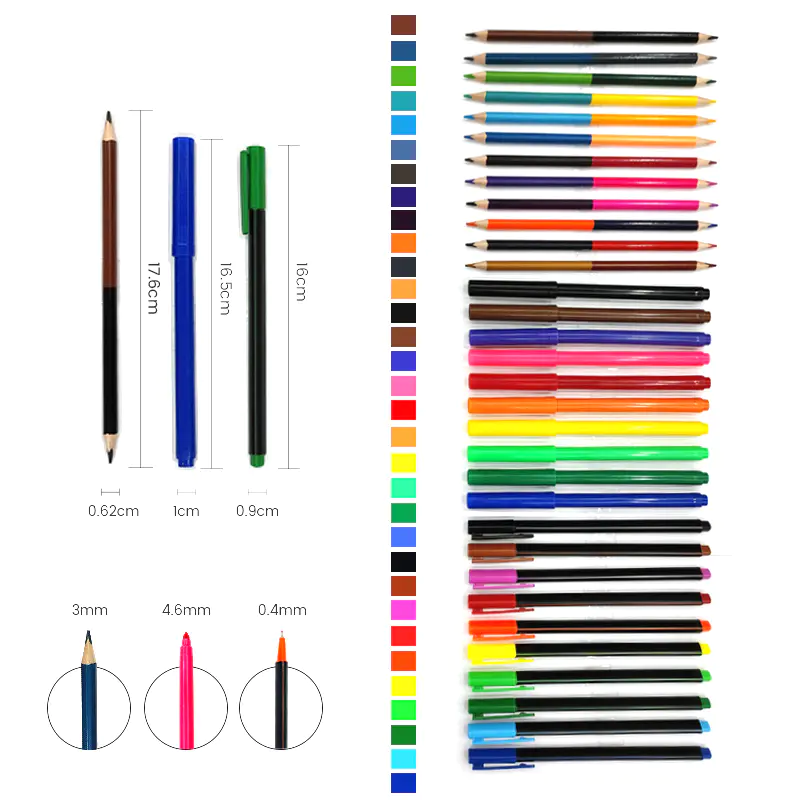
MBTZ-101 Watercolor Marker & Colored Pencil Set
Product OverviewThe MBTZ-101 Watercolor Marker & Colored Pencil Set combines fiber-tip watercolor markers, sharpenable wood-barrel colored pencils...
View More -
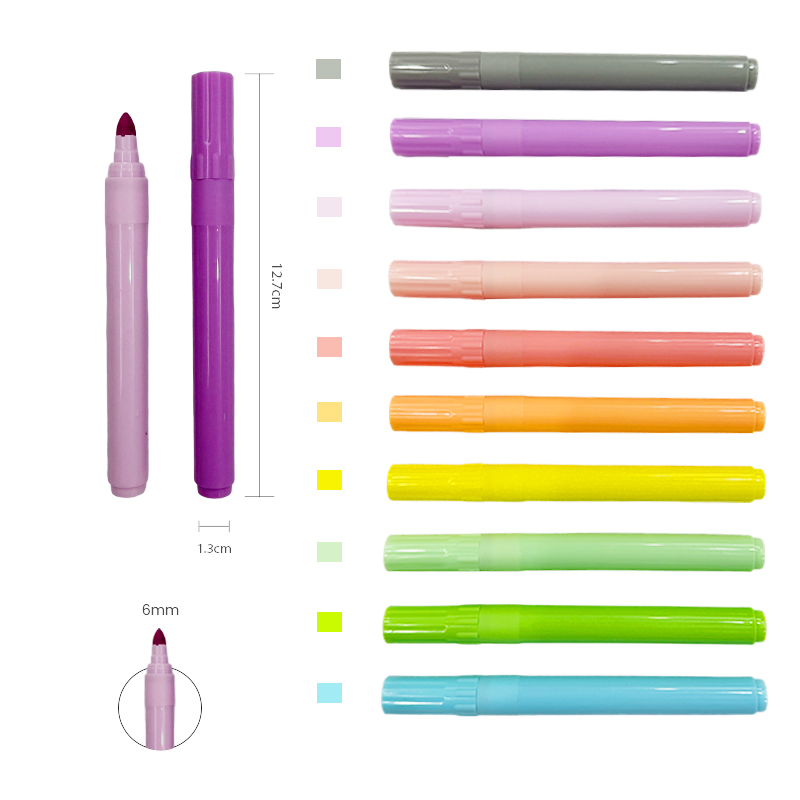
High-Opacity 6mm Round-Tip Watercolor Marker
Product Overview The High-Opacity 6mm Round-Tip Watercolor Marker stands out for its high-coverage gouache ink that colors directly on dark paper – ...
View More -
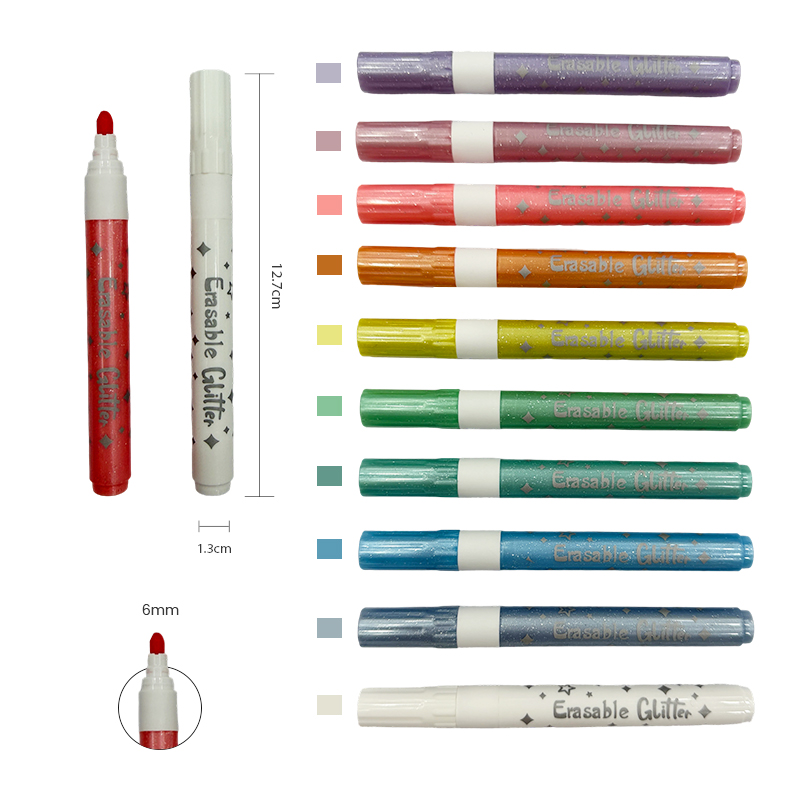
Eco-Friendly 6mm Round-Tip Erasable Highlighter Pen
Product Overview The Eco-Friendly 6mm Round-Tip Erasable Highlighter set includes 9 shimmering colored pens plus 1 dedicated white eraser pen. Featuri...
View More -
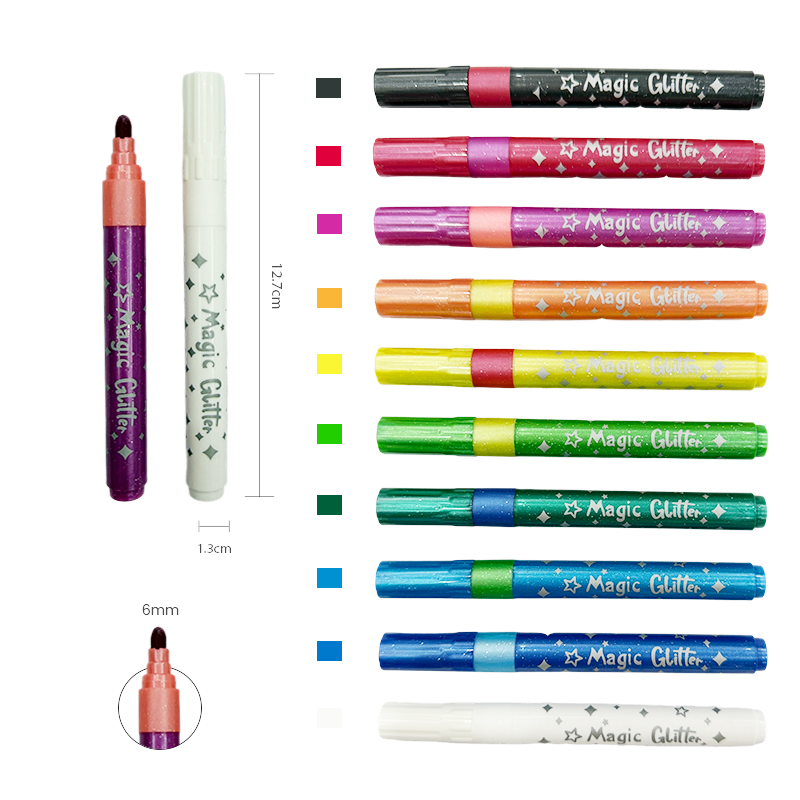
Children's Creative Magic Color-Changing Highlighter Set
Product Overview The Children's Creative Magic Color-Changing Highlighter set includes 9 shimmering colored pens in different color families plus 1 de...
View More -
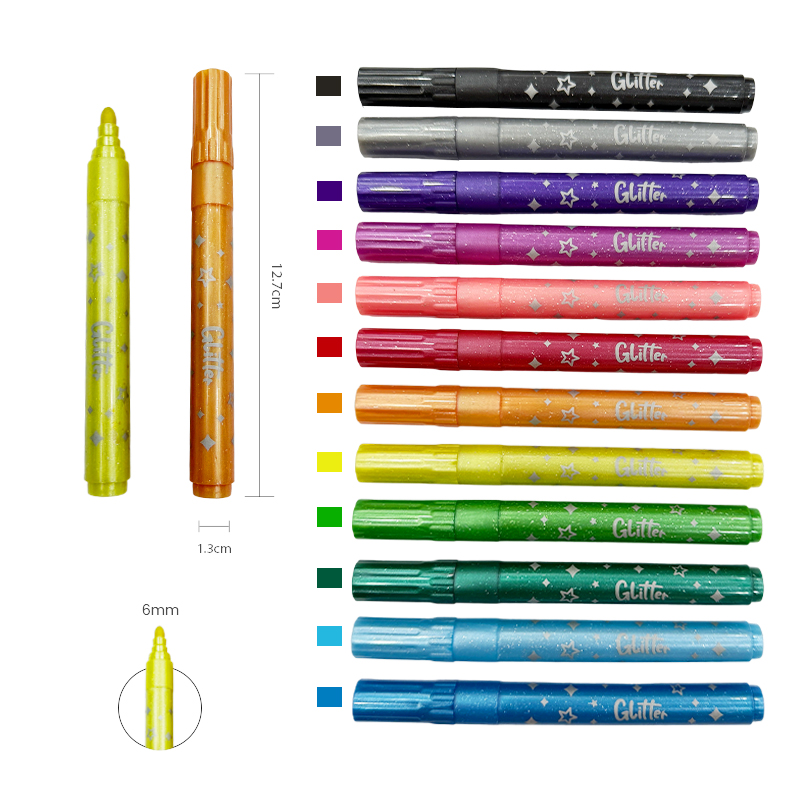
Vibrant 12-Color Single-Tip Highlighter Pen
Product Overview The Vibrant 12-Color Single-Tip Highlighter Pen set includes 12 single-tip shimmering colored pens filled with water-based glitter in...
View More -
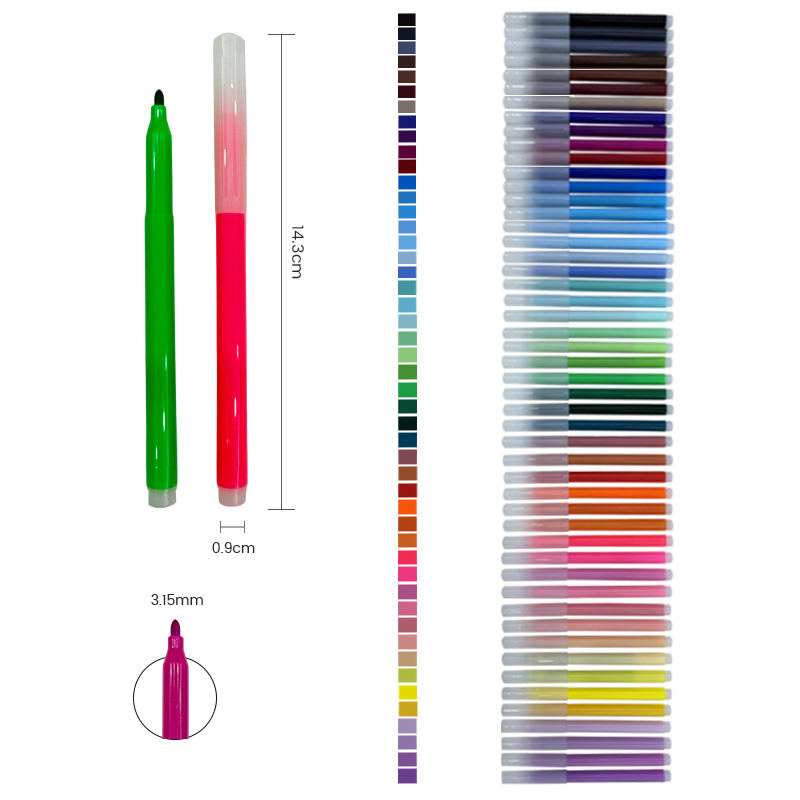
812-50 Smooth-Flowing 50-Color Watercolor Marker
812-50 Smooth-Flowing 50-Color Watercolor Marker is suitable for Art enthusiasts and students. 1. Core Advantages (3-in-1 Value Proposition) Smooth In...
View More -
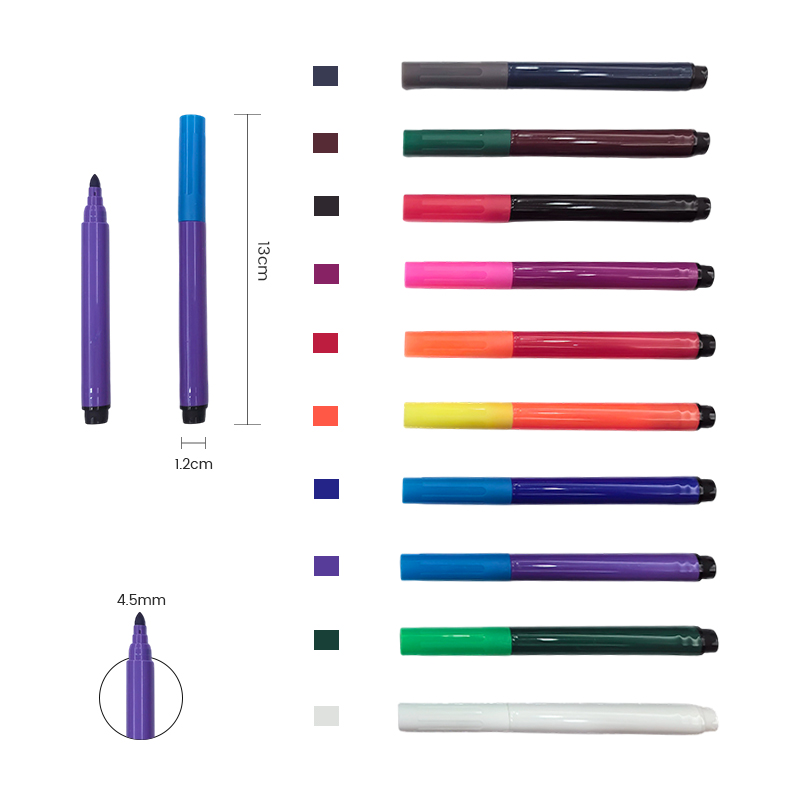
801M-10 Two-Tone Barrel Magic Markers for School
Designed to spark children's creativity and curiosity, these 801M-10 Two-Tone Barrel Magic Markers for School feature a unique characteristic: the ink...
View More -
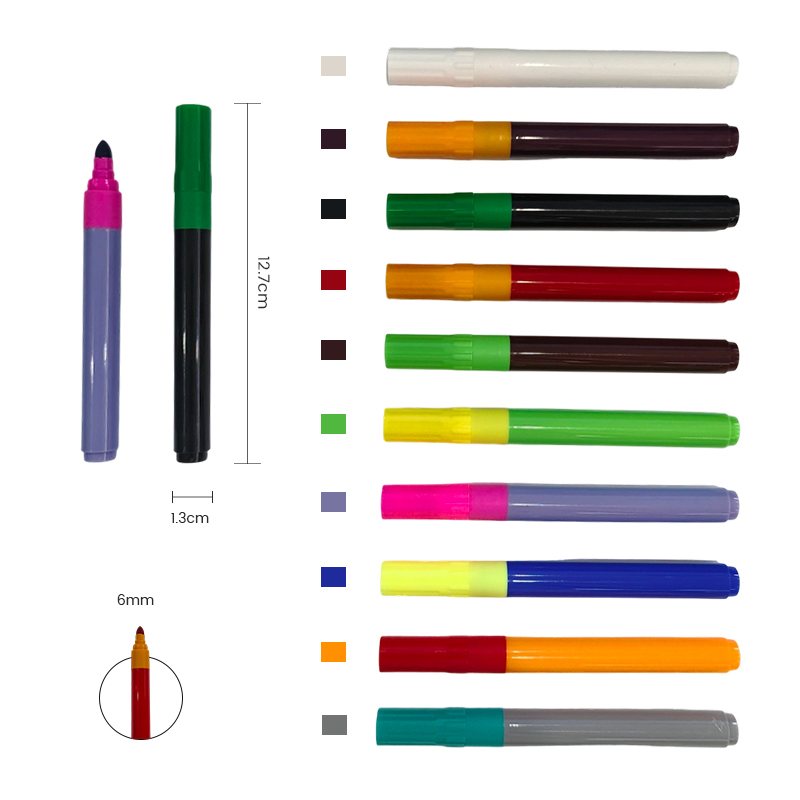
806M-10 Color Changing Magic Markers
806M-10 Color Changing Magic Markers are a set of fun drawing tools designed for children, students, and creative enthusiasts, combining three core fe...
View More


Information
-

TEL & Whatsapp: +86-15773630590
TEL : +86-13676769913
+86-19519895579 -

E-mail : [email protected]
[email protected]
[email protected]
[email protected] -
 Building 18-1, Lot 9, Wanyang Zhizao Town, Bihu Town, Liandu District, Lishui City, Zhejiang Province, China
Links
Contact Us
